Architecture patterns, animated.
Self-explaining, looping diagrams of architecture styles, cloud design patterns, auth flows, the classic GoF design patterns and the algorithms underneath them, for solutions architects and developers. Pick a pattern, press play, or step through it one frame of the story at a time.
- 206 animated
- 0 planned
- 17 categories

Application Architecture
The big-picture shapes: how a system is split into parts and how those parts talk to each other.
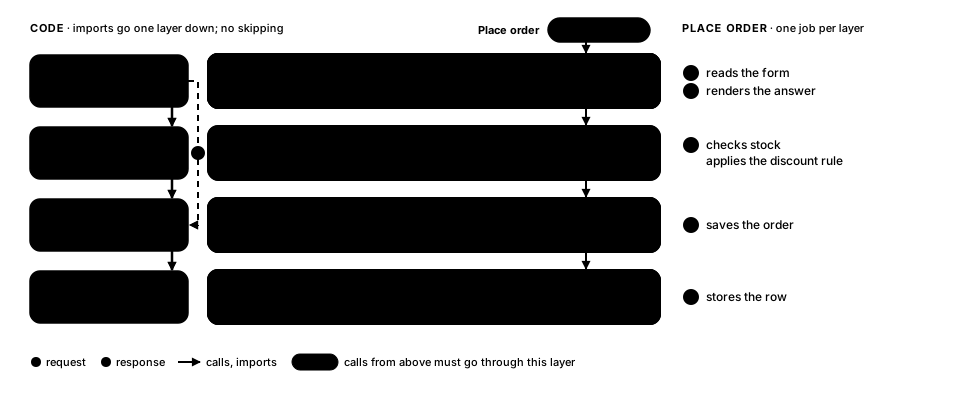
Layered (N-Tier)
Presentation, business and data layers; each layer only calls the one directly below it.
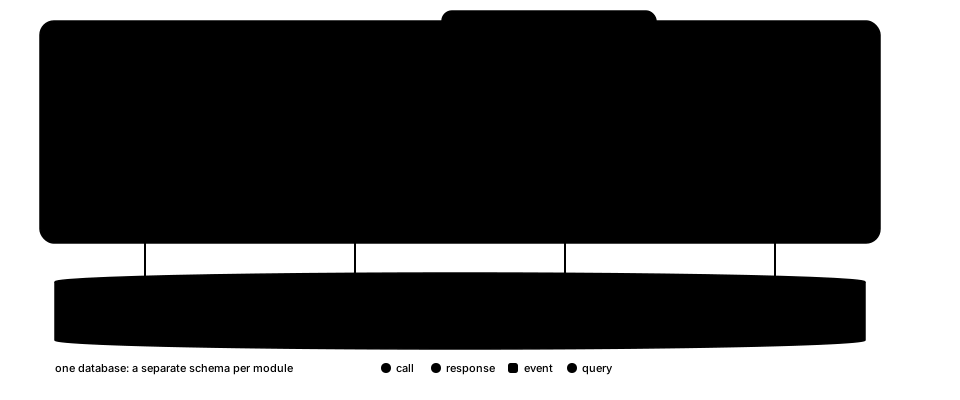
Modular Monolith
One deployable unit built from strongly bounded modules that talk through explicit interfaces.
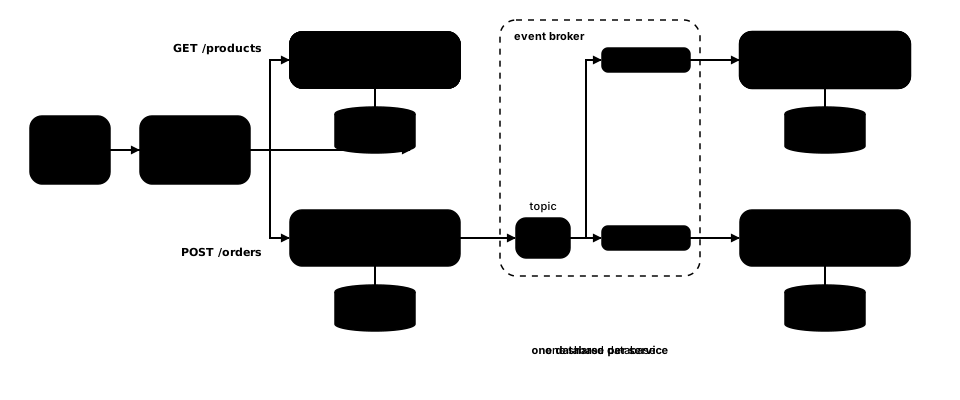
Microservices
Small, independently deployable services, each owning one business capability and its data.
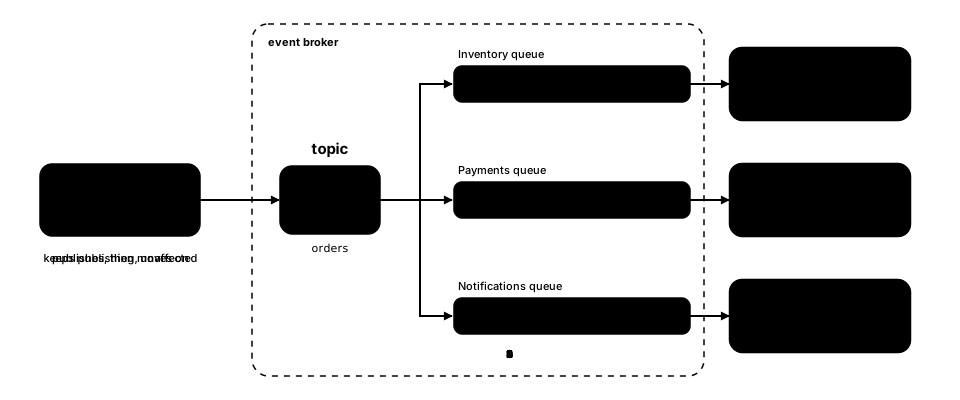
Event-Driven Architecture
Producers publish events to a broker; any number of consumers react on their own schedule.
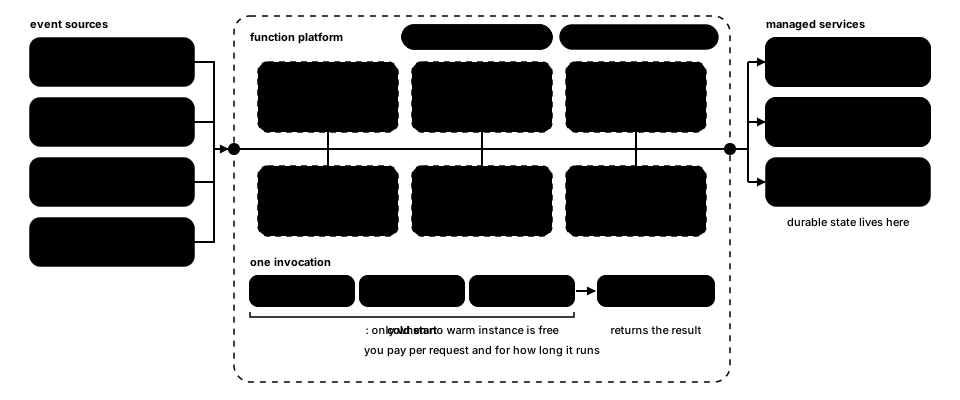
Serverless (Functions)
Functions start per event, scale out automatically and scale to zero when idle.
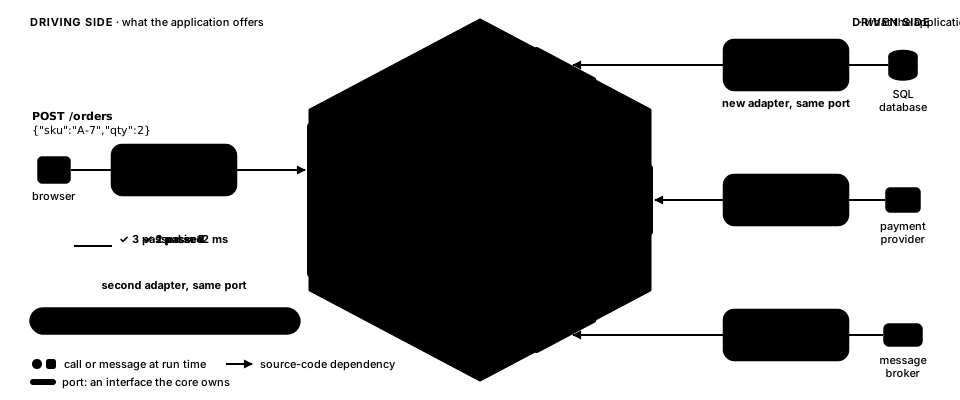
Hexagonal (Ports & Adapters)
Domain logic at the core; UIs, databases and queues plug in through ports and adapters.
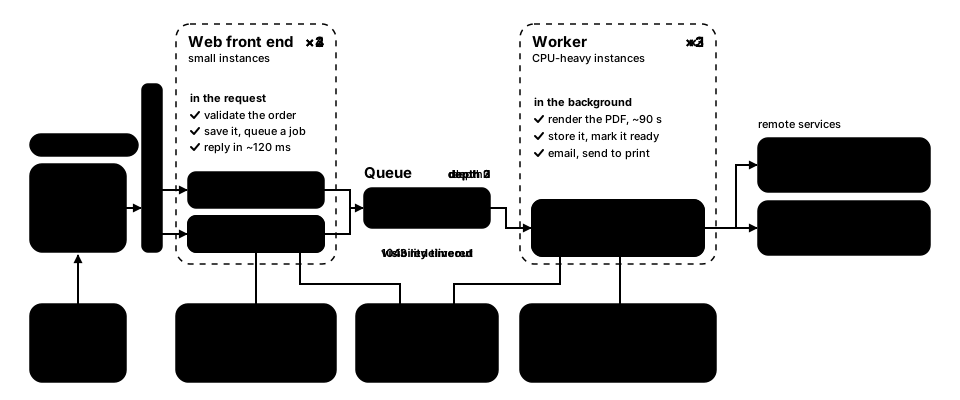
Web-Queue-Worker
A web front end hands slow work to background workers through a queue.
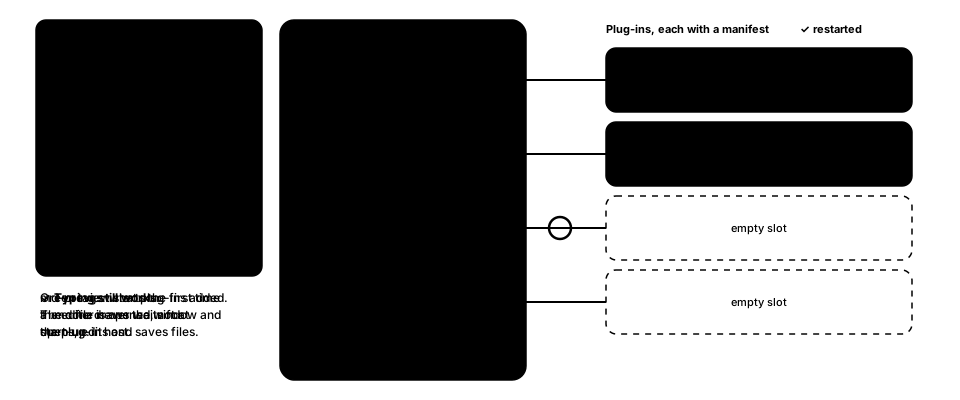
Microkernel (Plug-in)
A minimal core system extended by independent plug-in modules.
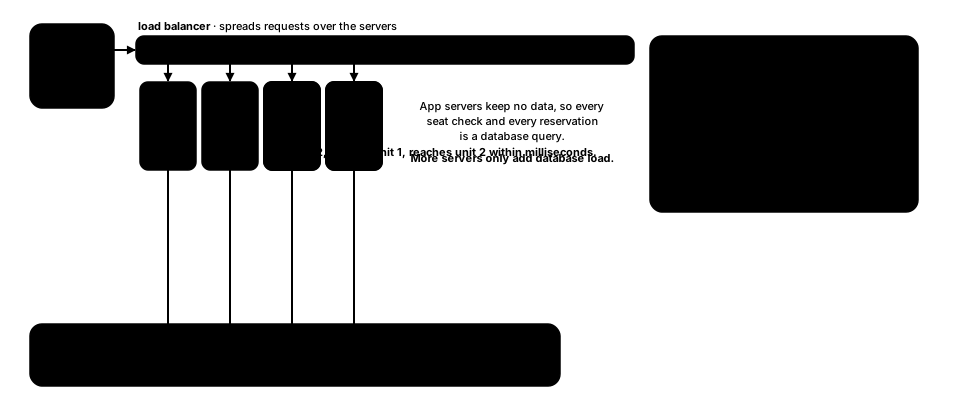
Space-Based
Processing units share an in-memory data grid, taking the database off the hot path.
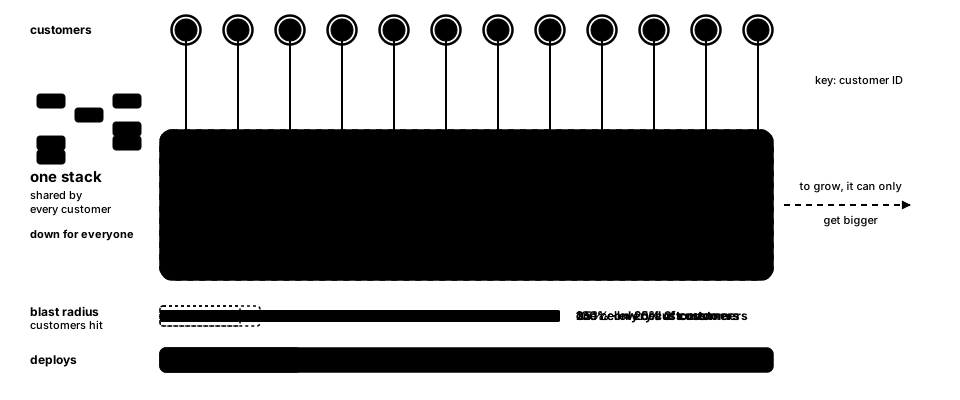
Cell-Based Architecture
Many isolated, identical cells behind a thin router contain the blast radius of any failure.
Cloud Infrastructure
Where workloads run, and how they scale, stay available and recover from disaster.
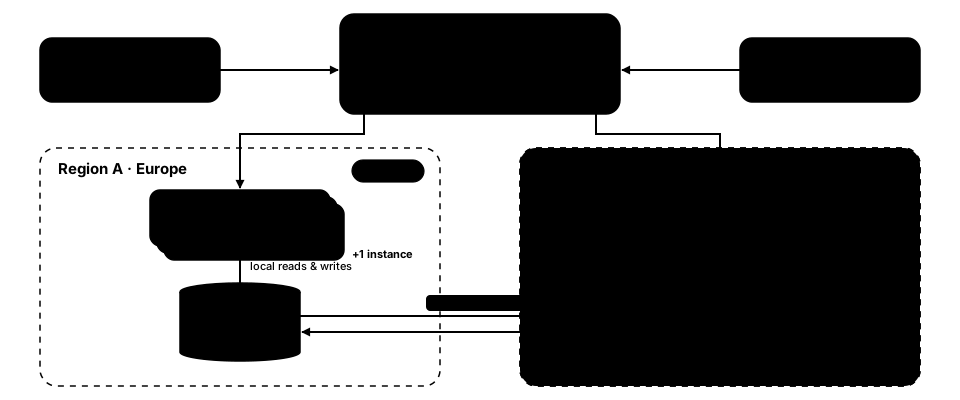
Multi-Region Active-Active
Serve users from several regions at once and shift traffic away from a region that fails.
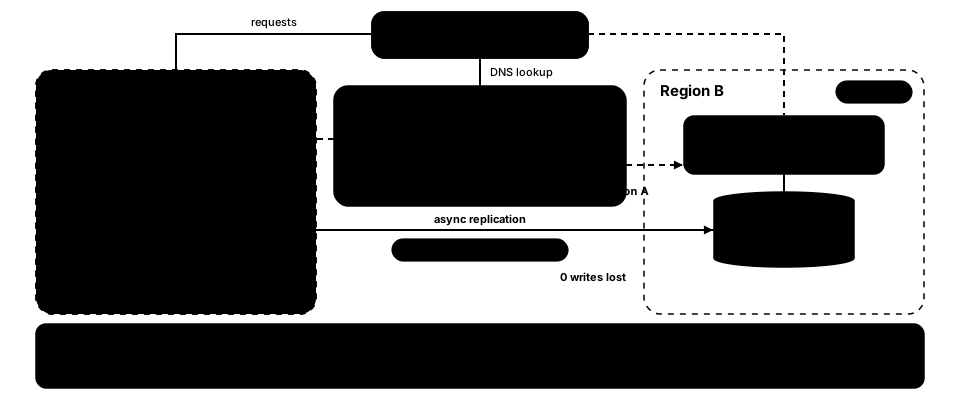
Active-Passive Failover
A warm standby region is promoted when the primary region goes down.
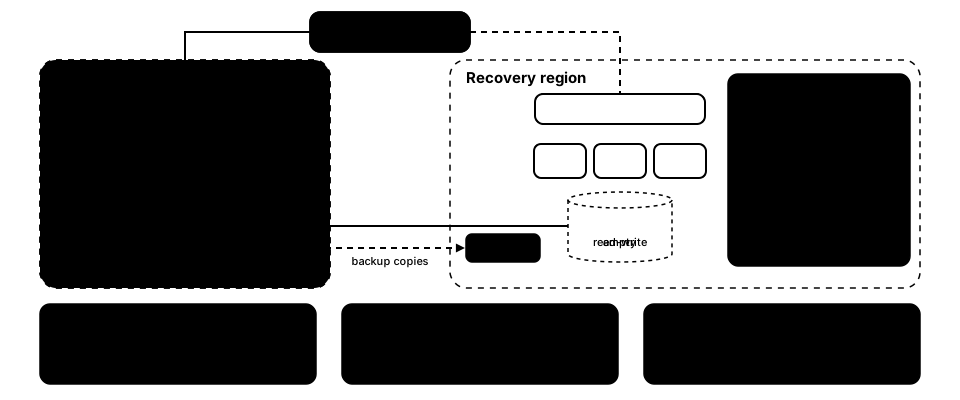
Disaster Recovery Strategies
Backup & restore, pilot light, warm standby, active-active: trading cost against RTO and RPO.
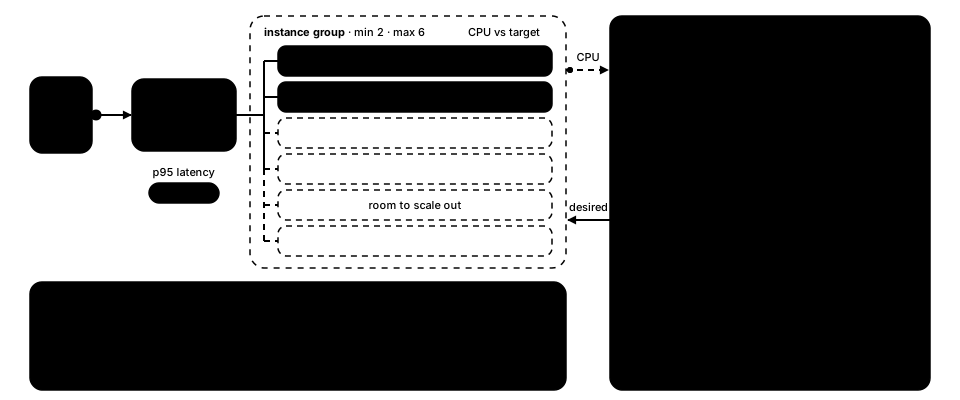
Autoscaling
Add and remove instances automatically as load rises and falls.
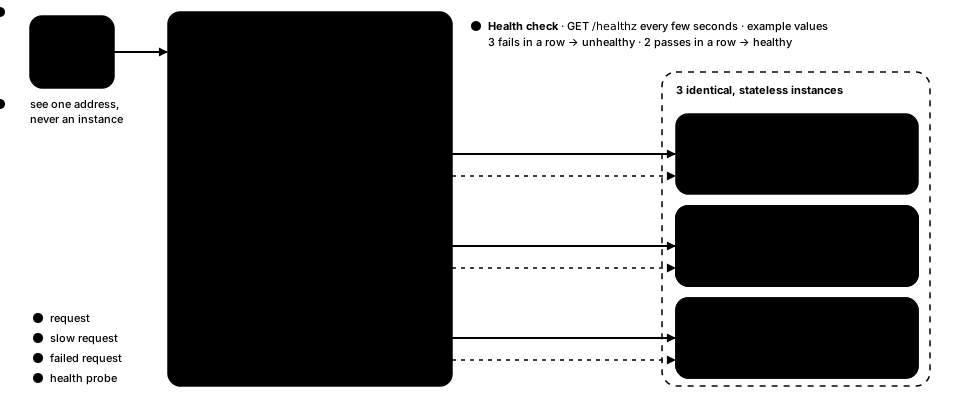
Load Balancing
Spread requests across healthy instances and stop sending to unhealthy ones.
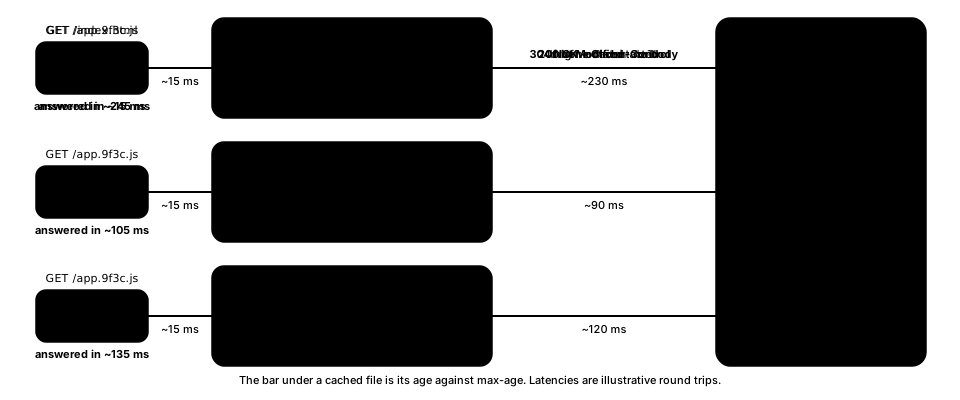
CDN & Edge Caching
Serve static content from edge locations close to users; only cache misses reach the origin.
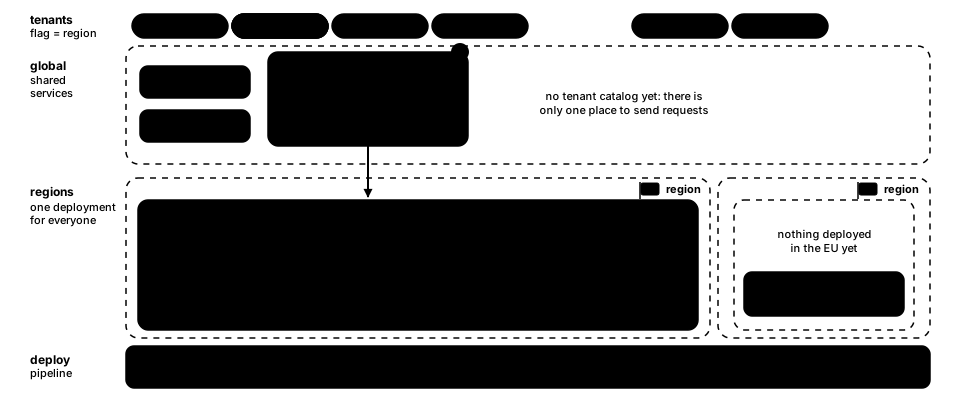
Deployment Stamps
Deploy many independent copies of the whole stack, each serving a subset of tenants.
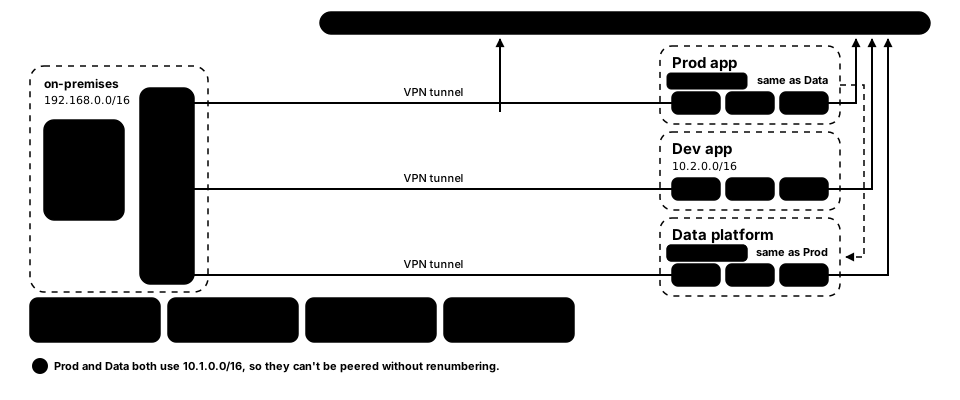
Hub-and-Spoke Network
Shared services and egress in a central hub network; workloads live in peered spokes.
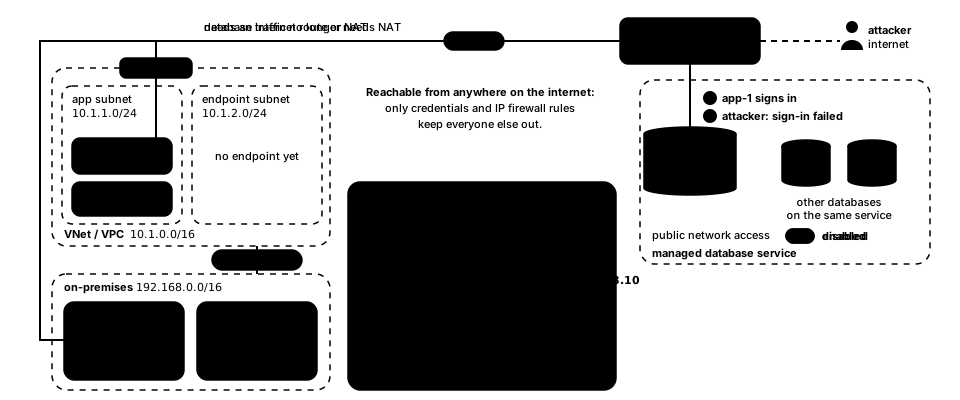
Private Endpoints
Reach managed cloud services over private IPs instead of the public internet.
Identity & Access (Auth)
Authentication and authorization flows: who is calling, and what they are allowed to do.
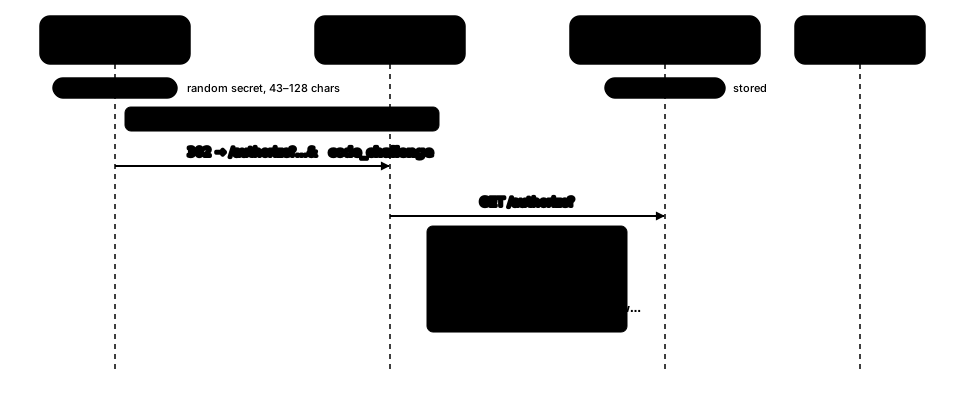
OAuth 2.0 Authorization Code + PKCE
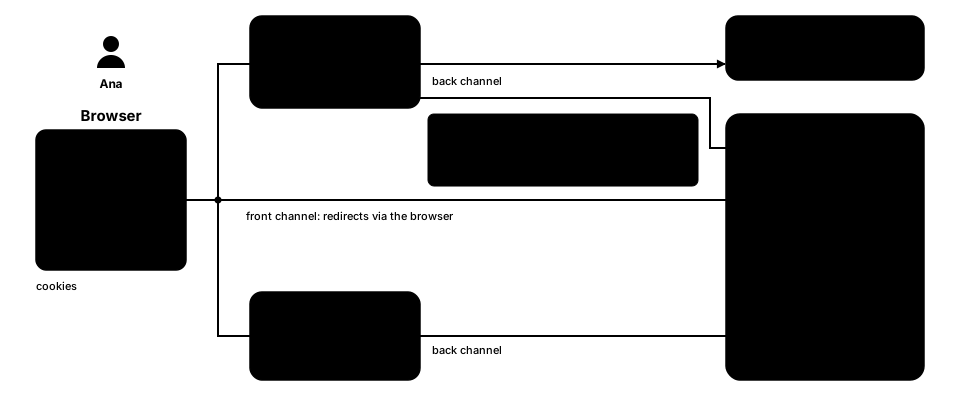
The standard sign-in flow for web, mobile and single-page apps: code via the browser, tokens via the back channel.
OpenID Connect (OIDC)
An ID token on top of OAuth 2.0 tells the app who signed in.
OAuth 2.0 Client Credentials
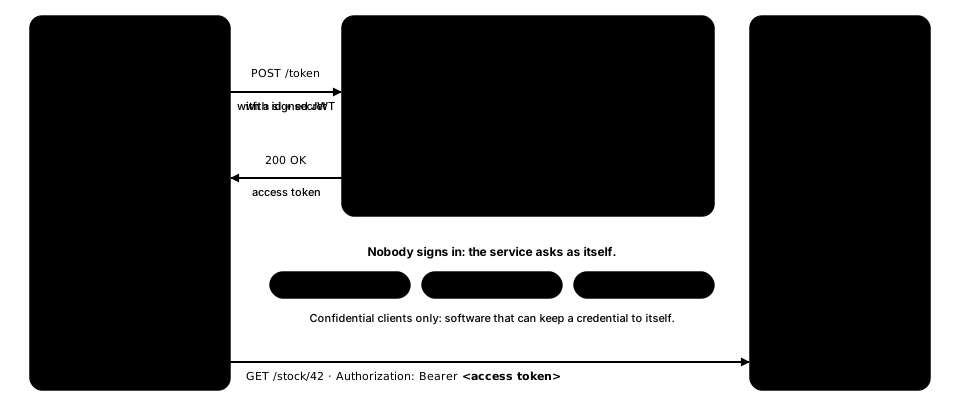
Machine-to-machine access tokens, with no user involved.
JWT Validation
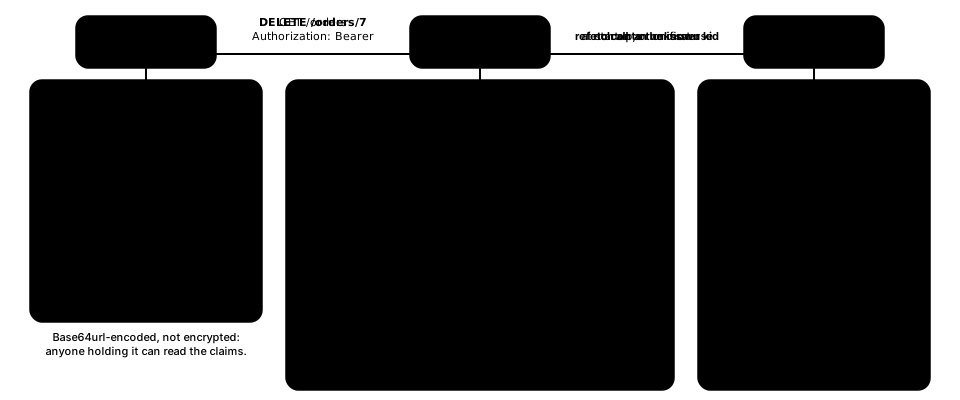
APIs verify token signatures and claims locally, using the issuer's cached public keys (JWKS).
Refresh Token Rotation
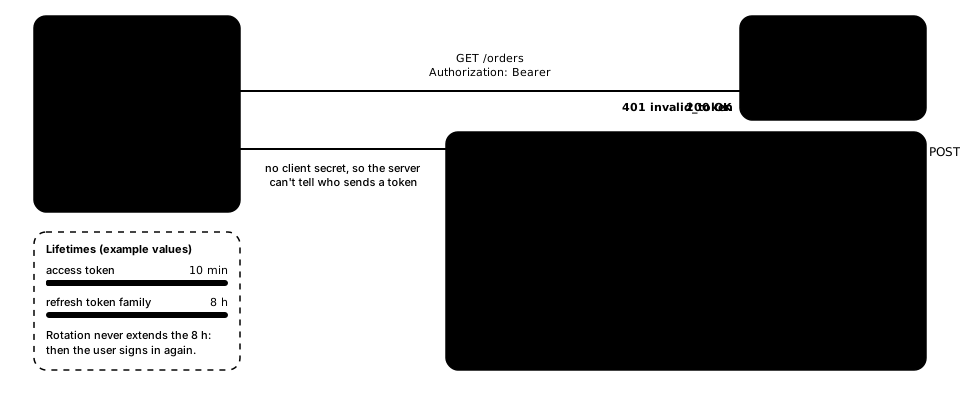
Short-lived access tokens, single-use refresh tokens, and reuse detection that revokes the whole family.
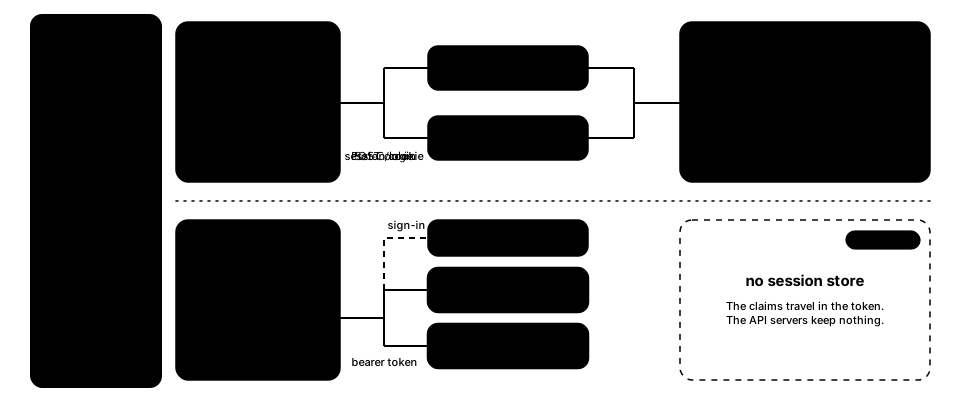
Sessions vs Tokens
Server-side sessions versus self-contained tokens: where the state lives and how you revoke it.
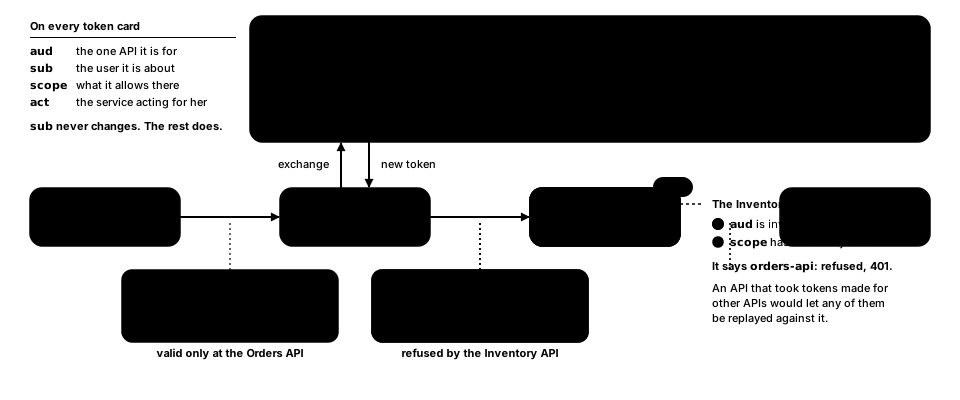
Token Exchange (On-Behalf-Of)
Swap an incoming user token for a narrowly scoped one before calling a downstream API.
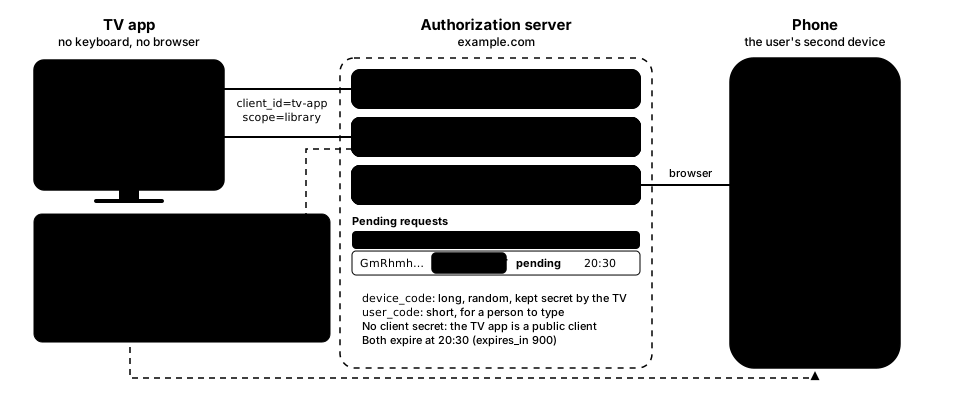
Device Authorization Grant
Sign in on a TV or CLI by approving a short code on your phone.
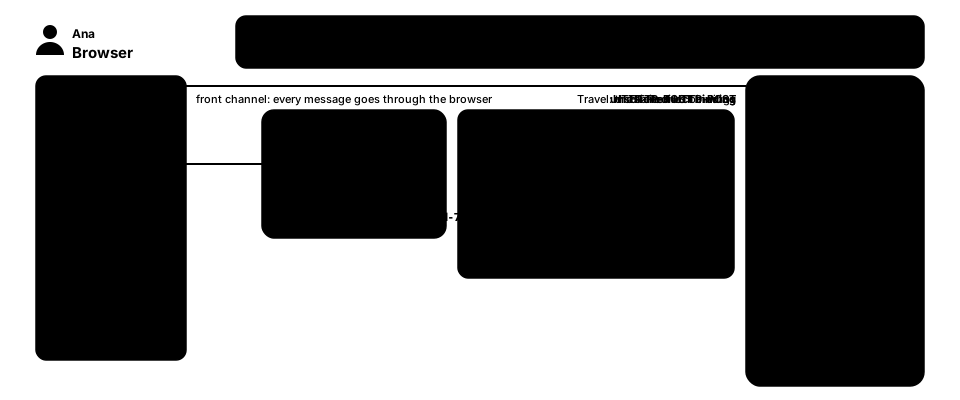
SAML 2.0 Single Sign-On
Enterprise SSO: the identity provider posts a signed assertion to the app through the browser.
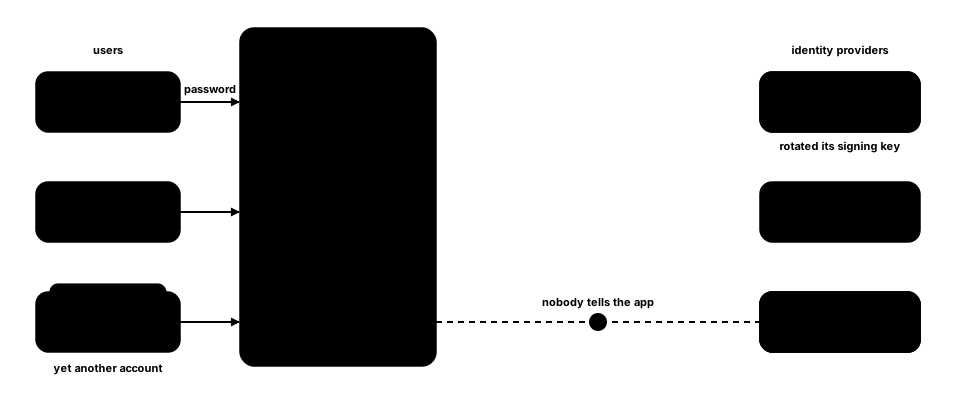
Federated Identity
Let an external identity provider authenticate users; the application trusts its tokens.
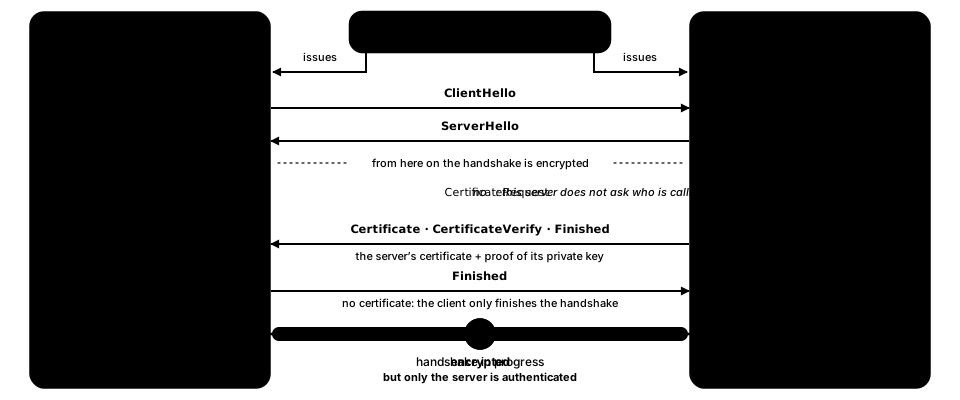
Mutual TLS (mTLS)
Client and server both present certificates, so every connection is authenticated both ways.
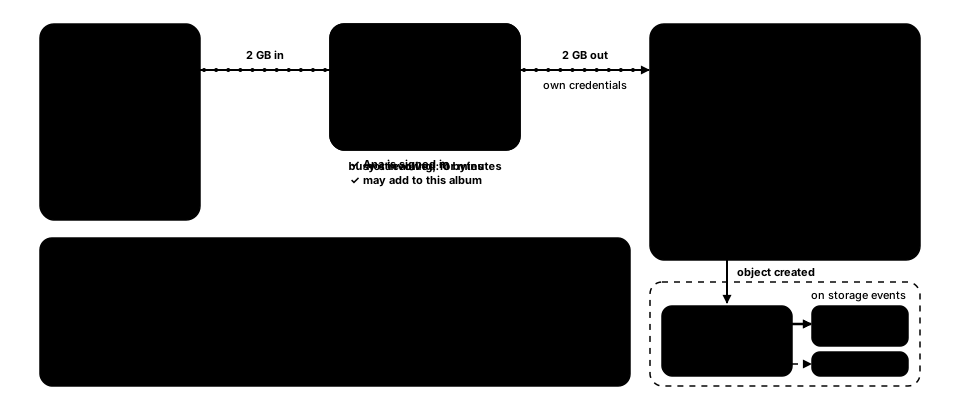
Valet Key
Give clients a short-lived, narrowly scoped URL to read or write storage directly.
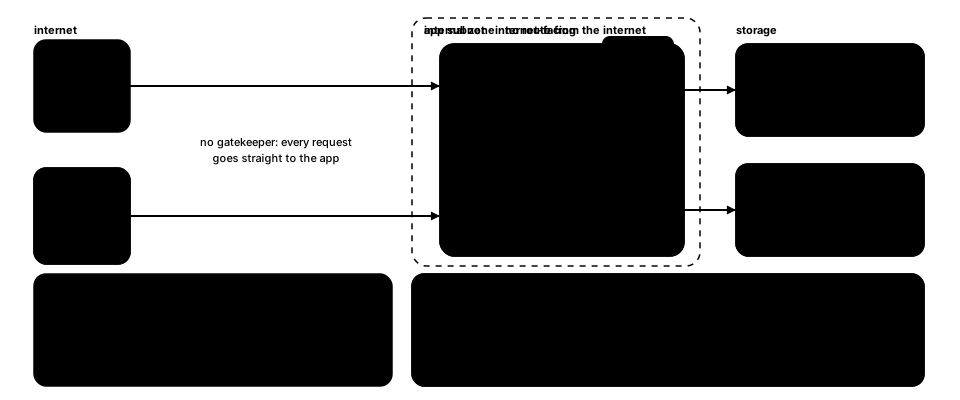
Gatekeeper
A hardened broker validates and sanitises requests before they reach trusted hosts.
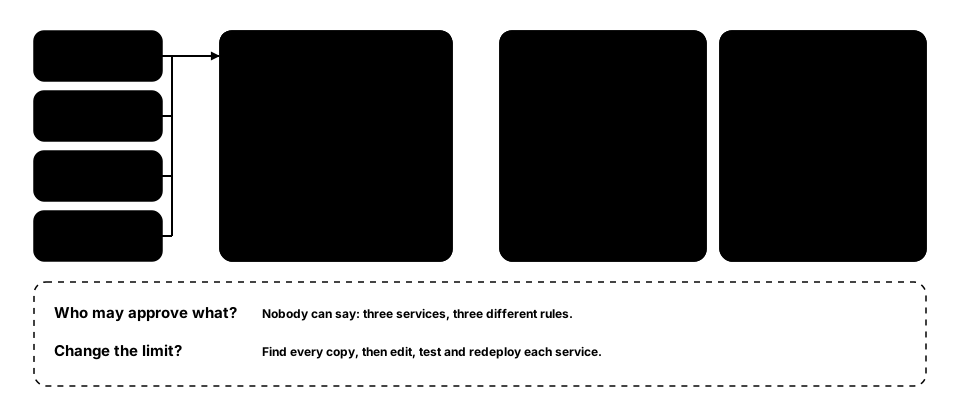
Policy-Based Authorization
Services ask a central policy engine for allow/deny decisions (RBAC, ABAC, ReBAC).
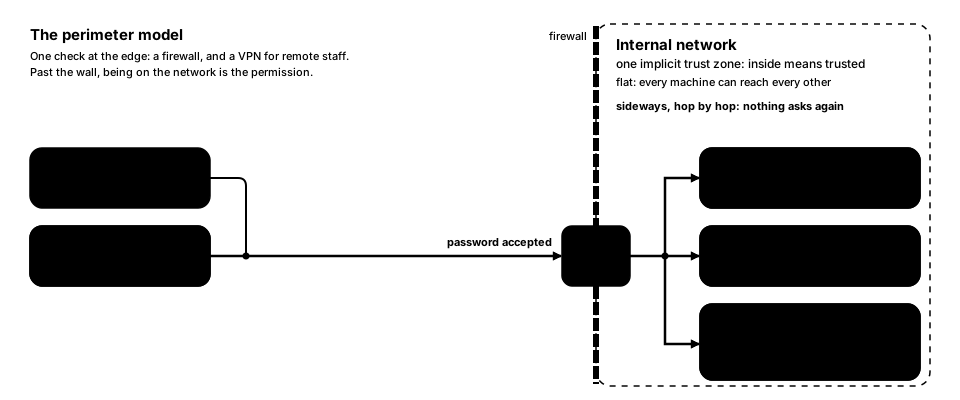
Zero Trust Access
No implicit trust from network location: verify identity, device and context on every request.
API & Edge
The front door: how clients reach services, and where cross-cutting concerns live.
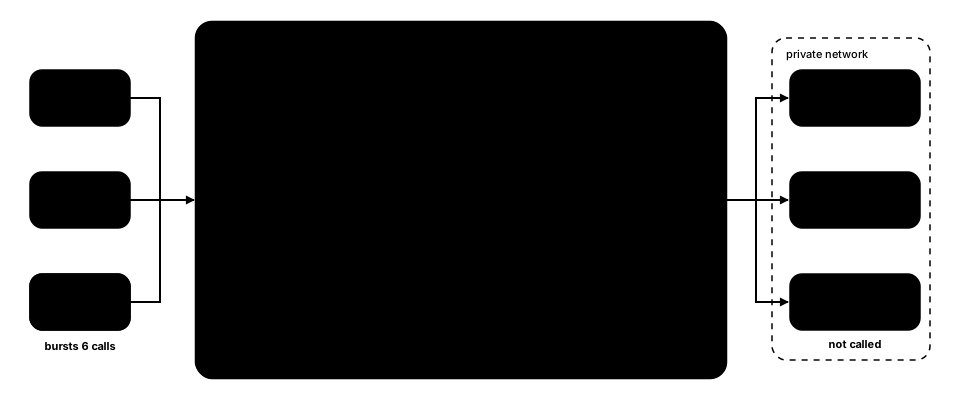
API Gateway
One entry point that authenticates, rate-limits and routes calls to backend services.
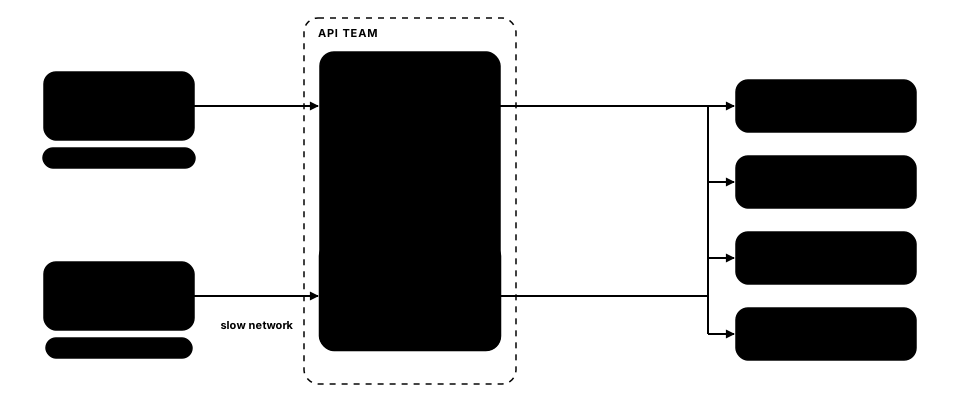
Backends for Frontends (BFF)
A dedicated backend per client type, shaped for exactly what that UI needs.
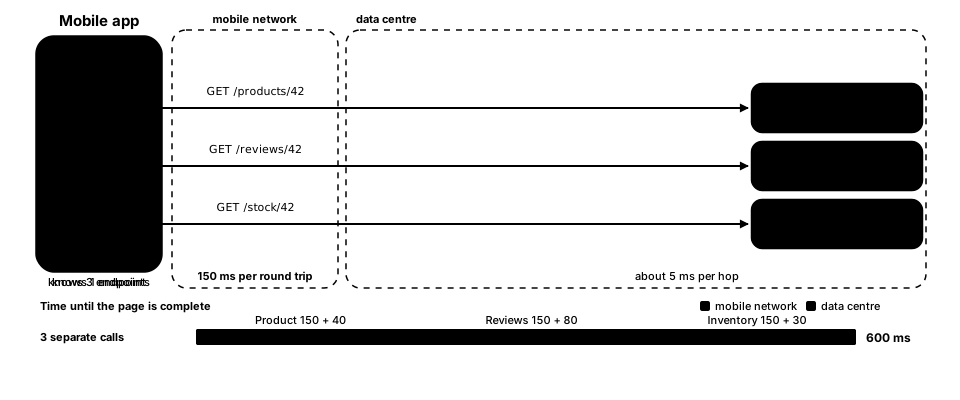
Gateway Aggregation
Fan one client request out to several services and merge the answers into one response.
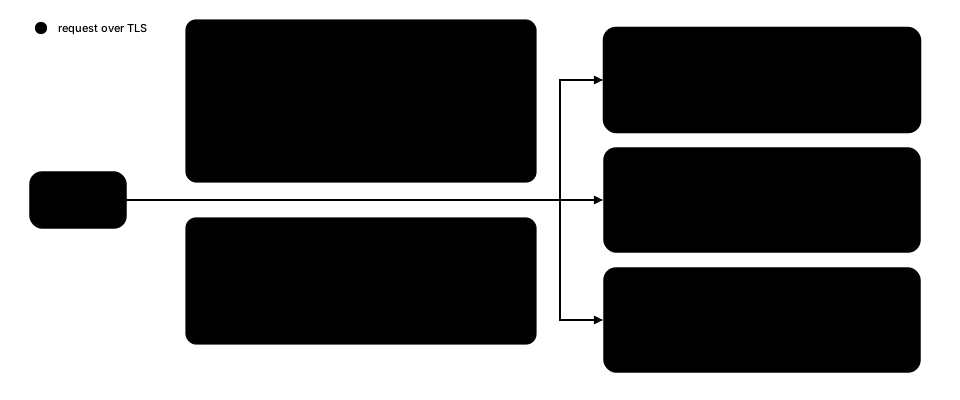
Gateway Offloading
Move TLS termination, authentication and compression out of every service into the gateway.
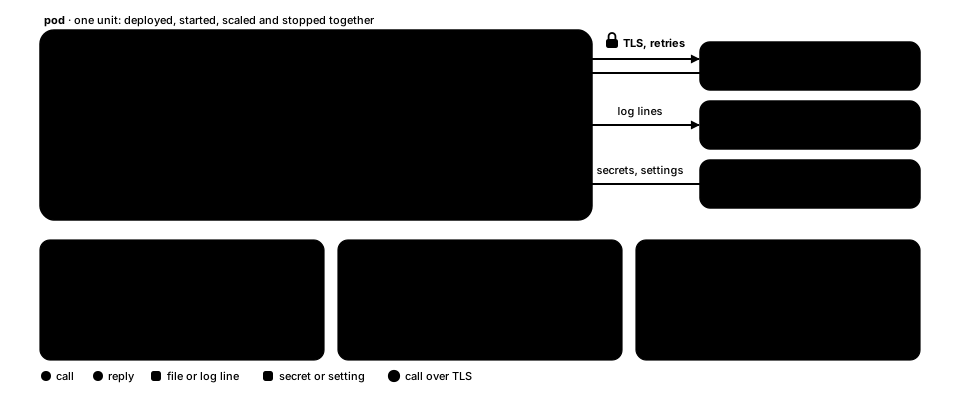
Sidecar
Run helper capabilities (proxy, logging, config) in a separate process next to the app.
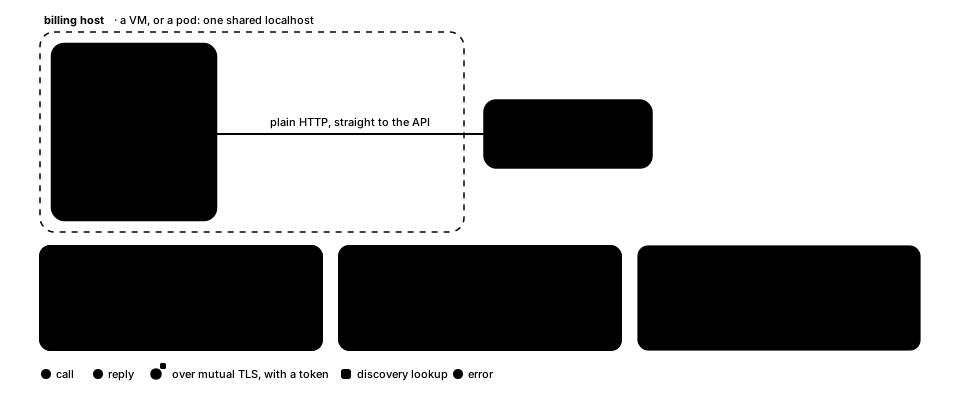
Ambassador
An out-of-process proxy that handles outbound connectivity (retries, TLS, routing) for a client.
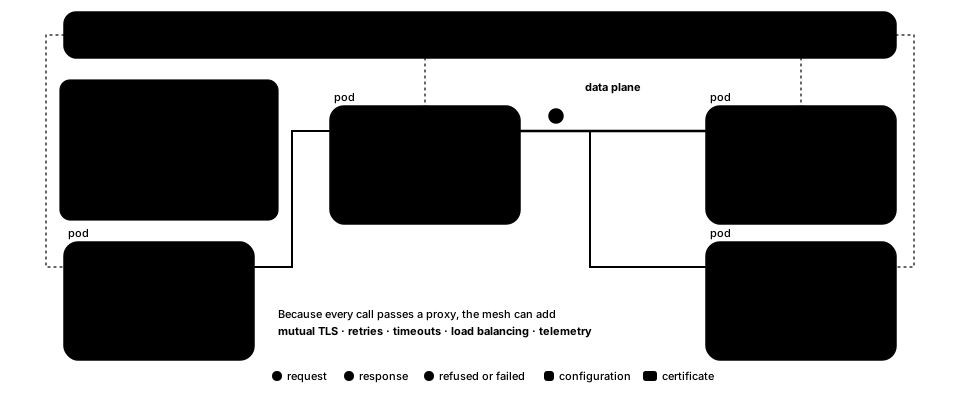
Service Mesh
Sidecar proxies plus a control plane: mTLS, retries and traffic shifting without touching app code.
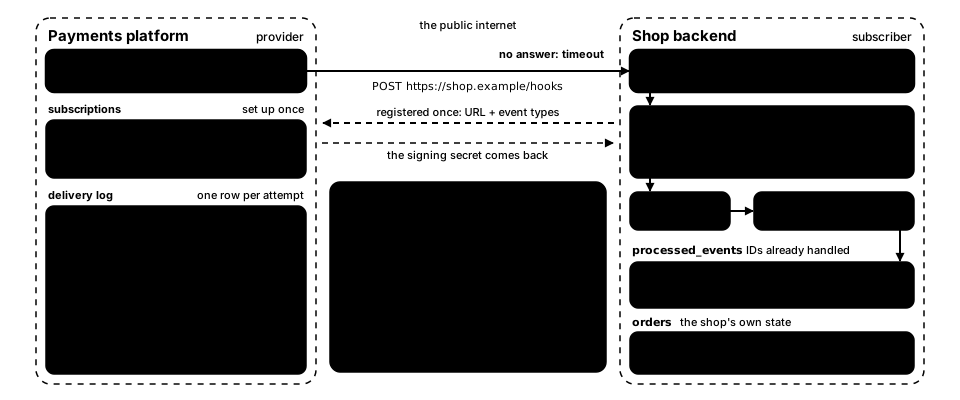
Webhooks
Notify subscribers by calling their HTTP endpoints, with signatures, retries and idempotency.
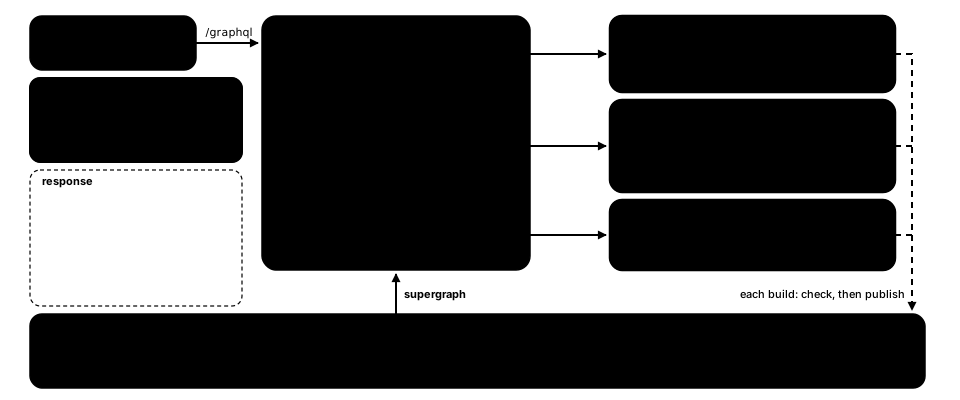
GraphQL Federation
Subgraphs from many services compose into one graph; a router plans each query across them.
Messaging & Integration
Asynchronous communication, and coordinating work that spans several services.
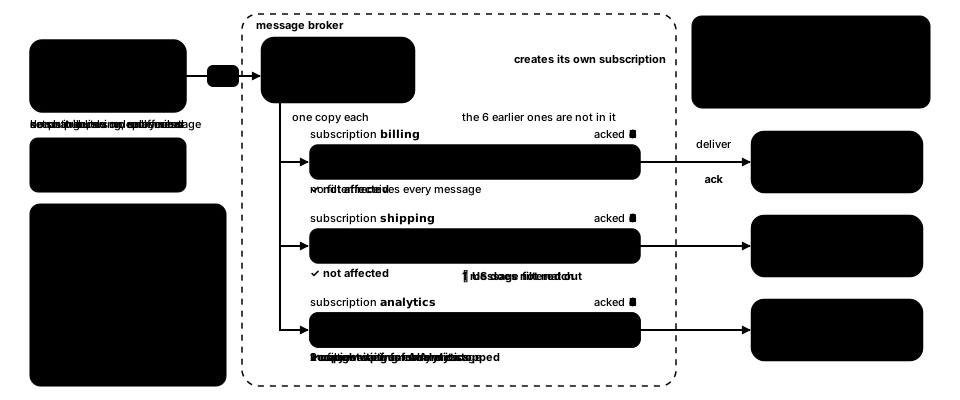
Publish-Subscribe
Broadcast each message to every interested subscriber through a topic.
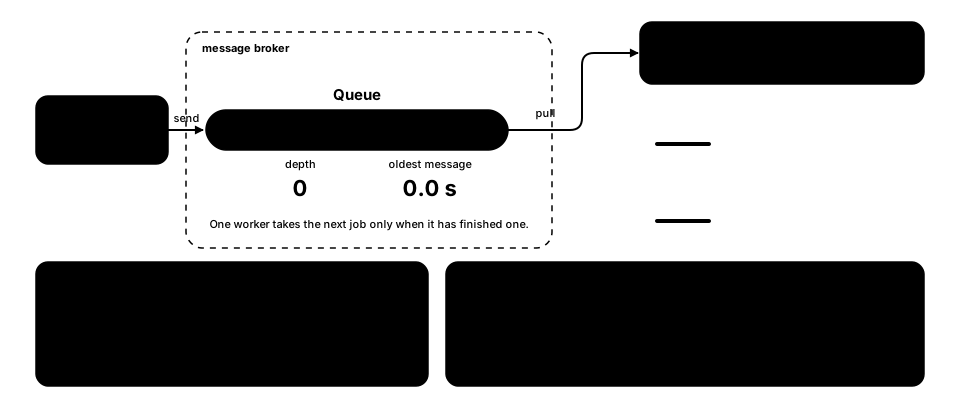
Competing Consumers
Several workers pull from one queue, so work is shared and throughput scales out.
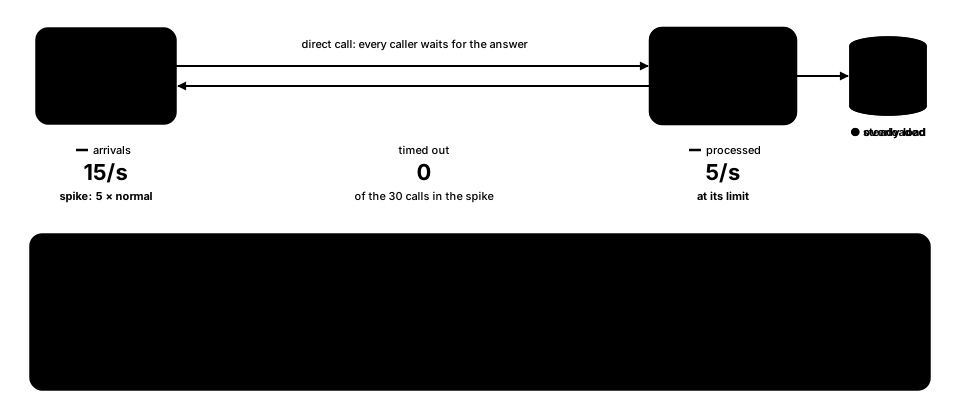
Queue-Based Load Leveling
A queue absorbs traffic spikes so the backend can work at a steady pace.
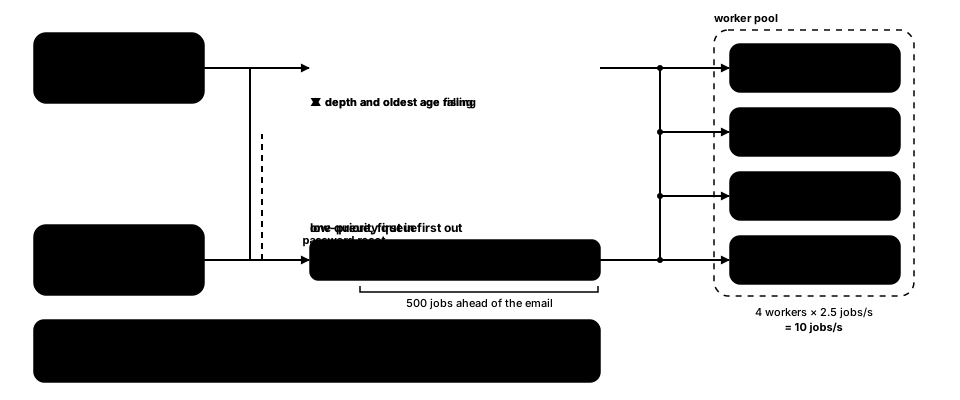
Priority Queue
Urgent messages are processed ahead of routine ones.
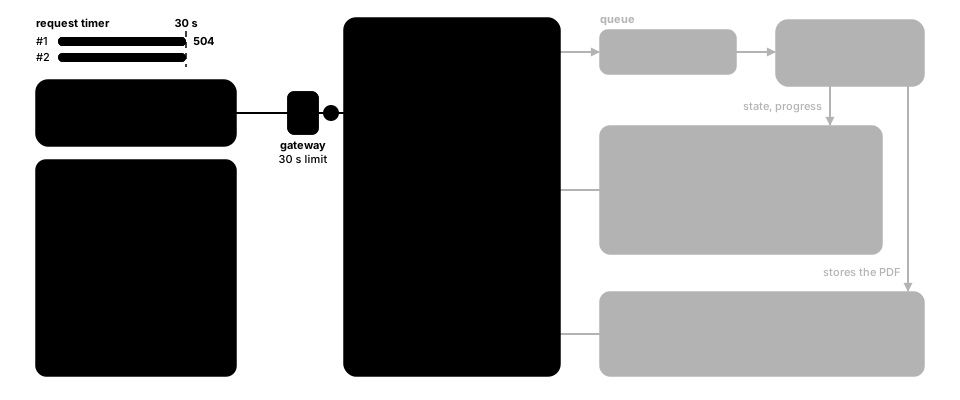
Asynchronous Request-Reply
Accept now with 202, process in the background, and let the client poll a status URL.
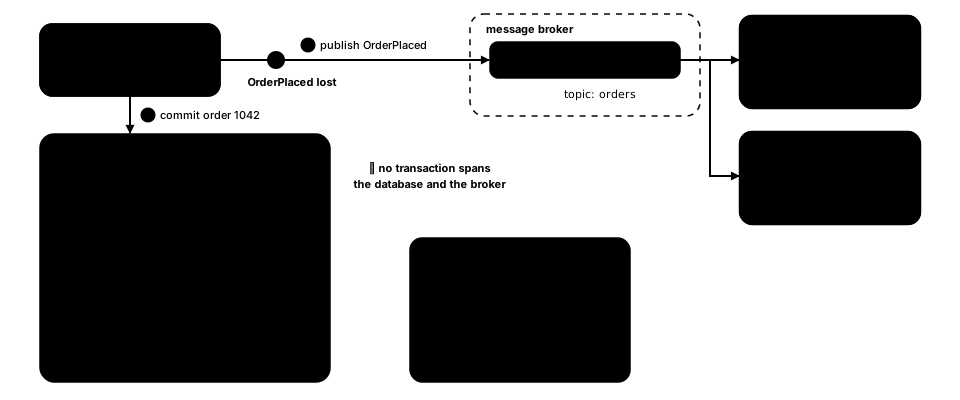
Transactional Outbox
Save the event in the same database transaction as the data, then relay it: no dual-write gap.
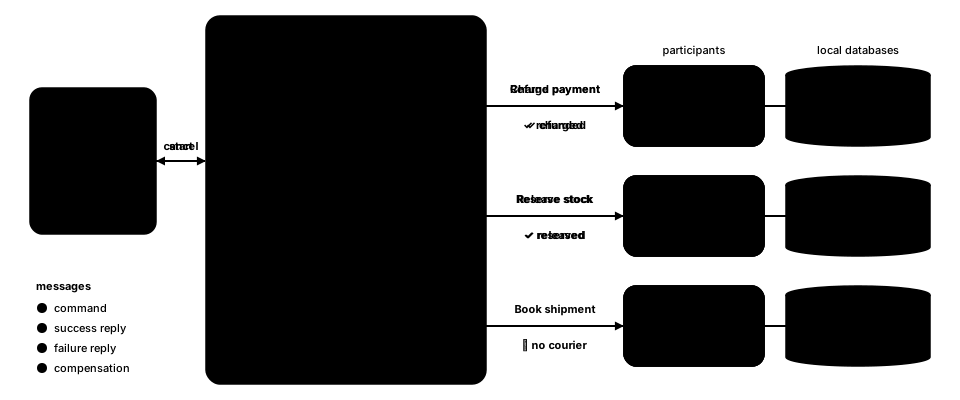
Saga (Orchestration)
A coordinator runs local transactions in sequence and triggers compensations when one fails.
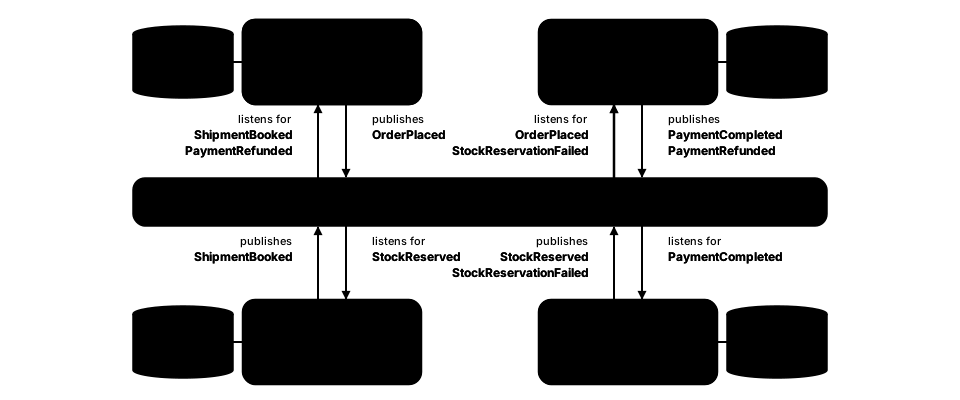
Saga (Choreography)
Services react to each other's events to complete a workflow, with no central coordinator.
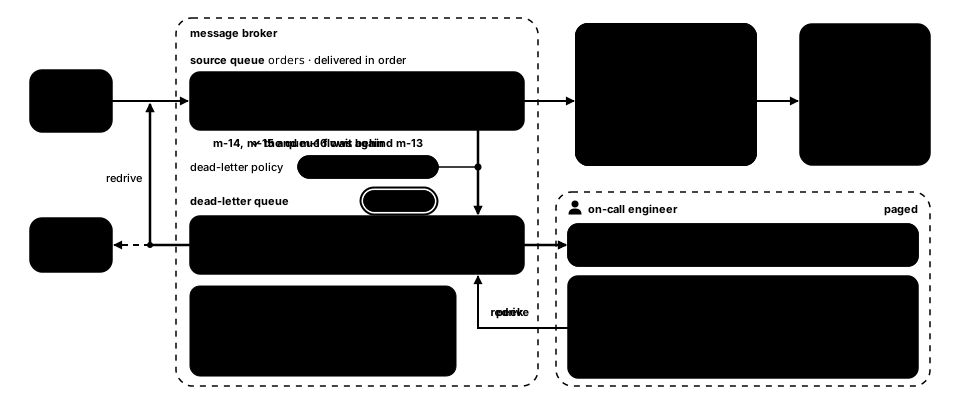
Dead-Letter Queue
Park messages that keep failing so they stop blocking the queue and can be inspected.
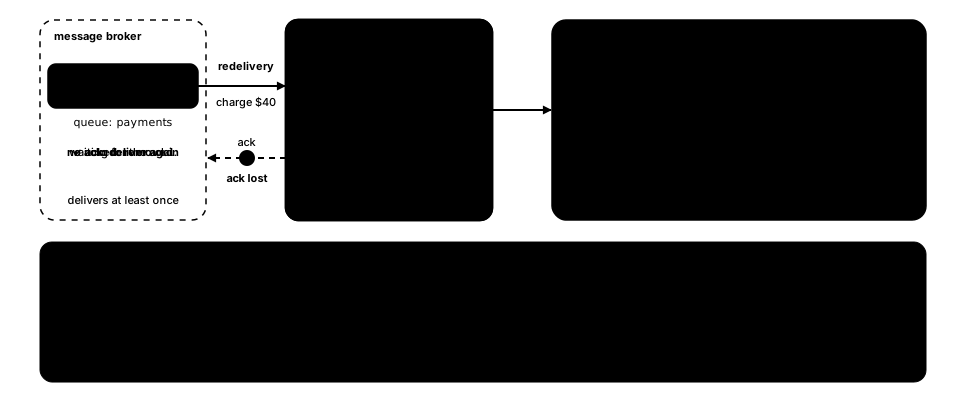
Idempotent Consumer
Remember processed message IDs so a redelivered message has no extra effect.
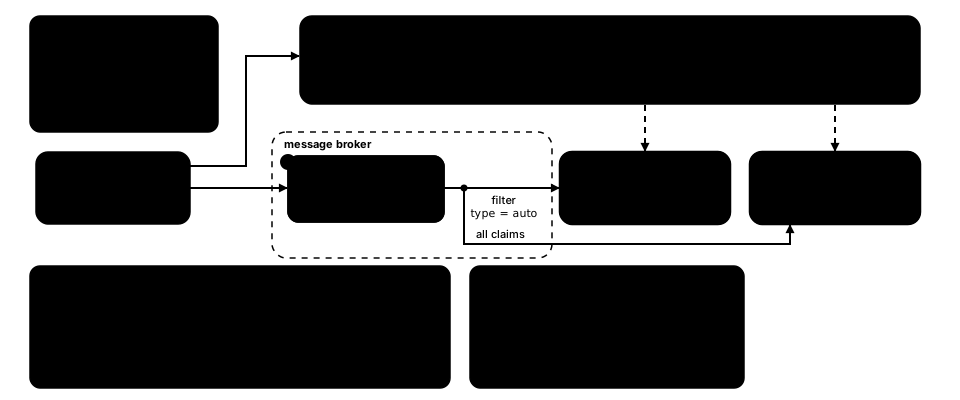
Claim Check
Put the large payload in storage and send only a reference through the broker.

Pipes and Filters
Split processing into independent stages connected by channels.
Data Management
Storing, scaling, caching and synchronising data across services.
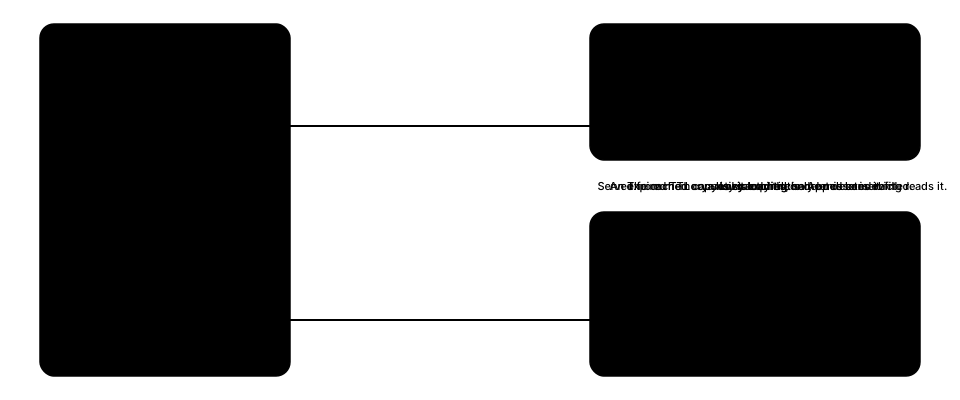
Cache-Aside
Read from the cache first; on a miss load from the database and populate the cache.
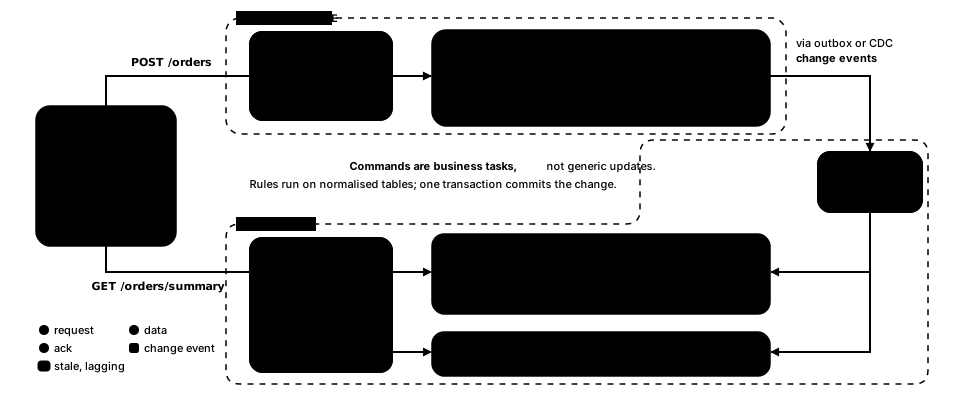
CQRS
Separate the write model (commands) from read models (queries), each optimised for its job.
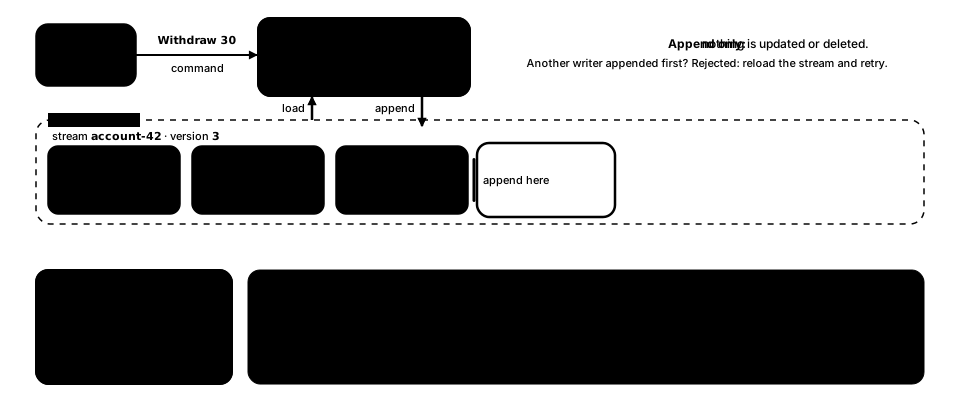
Event Sourcing
Store every change as an immutable event and rebuild state by replaying them.
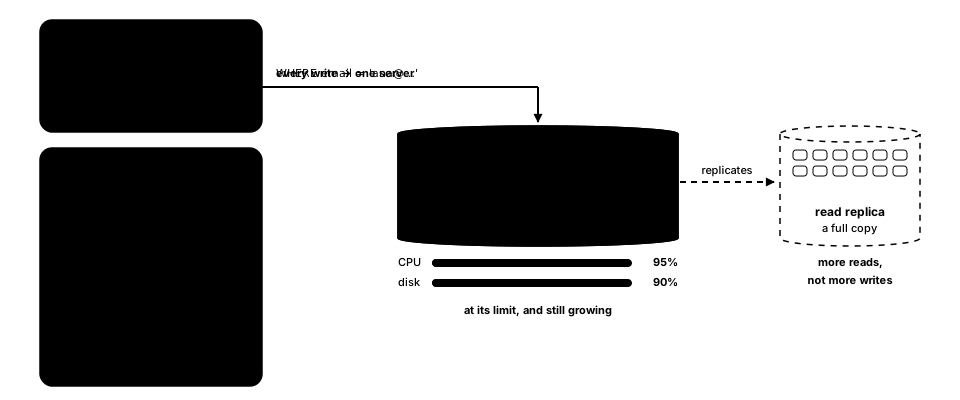
Sharding
Split data horizontally across databases using a shard key.
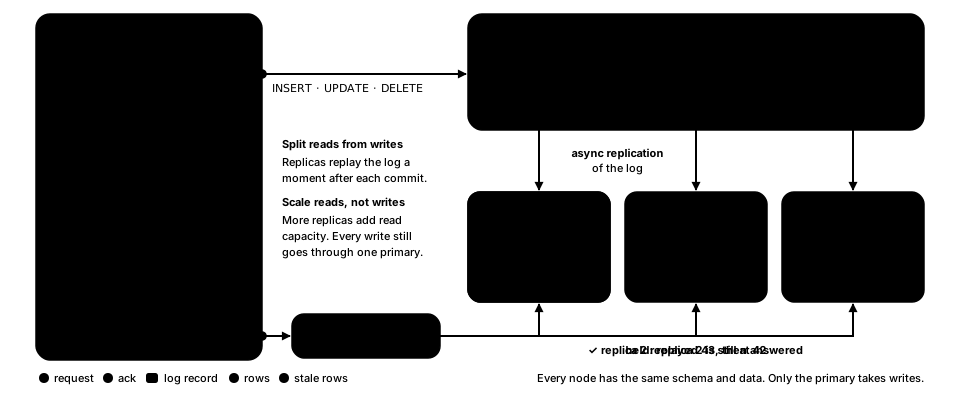
Read Replicas
Send writes to the primary and spread reads across asynchronously updated replicas.
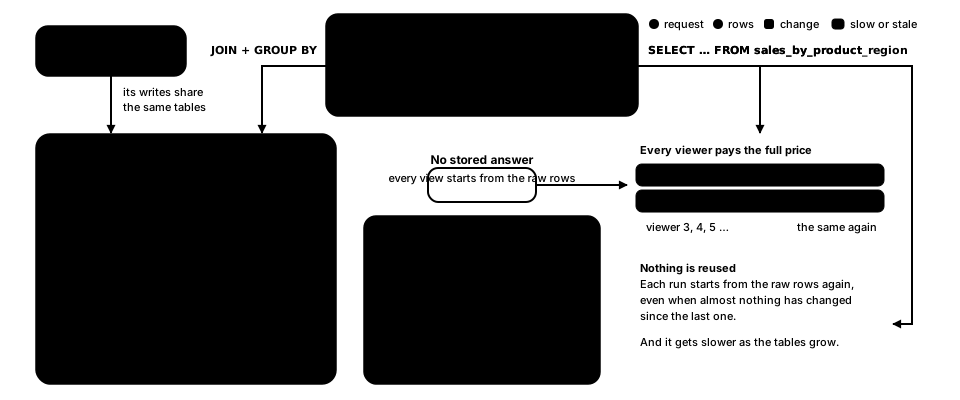
Materialized View
Precompute query-shaped views so reads don't pay for joins and aggregations.
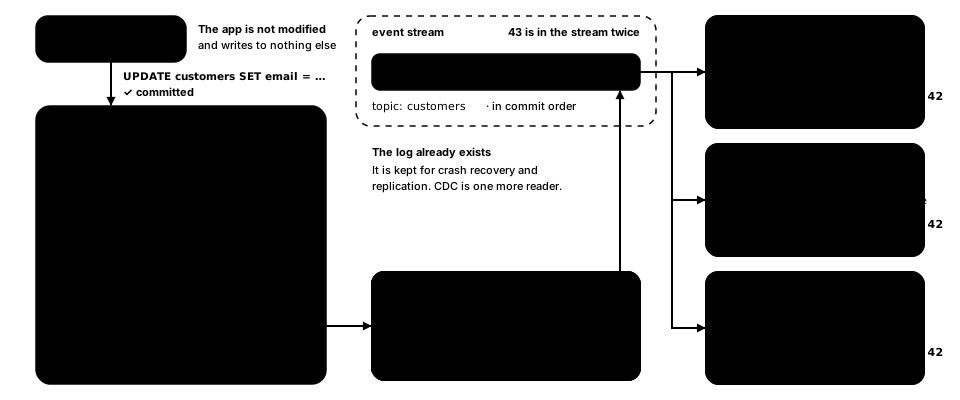
Change Data Capture (CDC)
Stream every committed change from the database log to other systems.
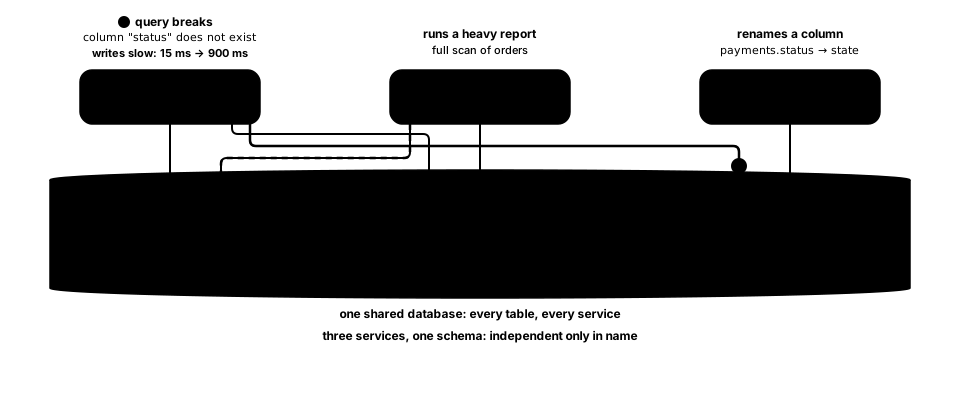
Database per Service
Each service owns its data; others go through its API or events, never its tables.
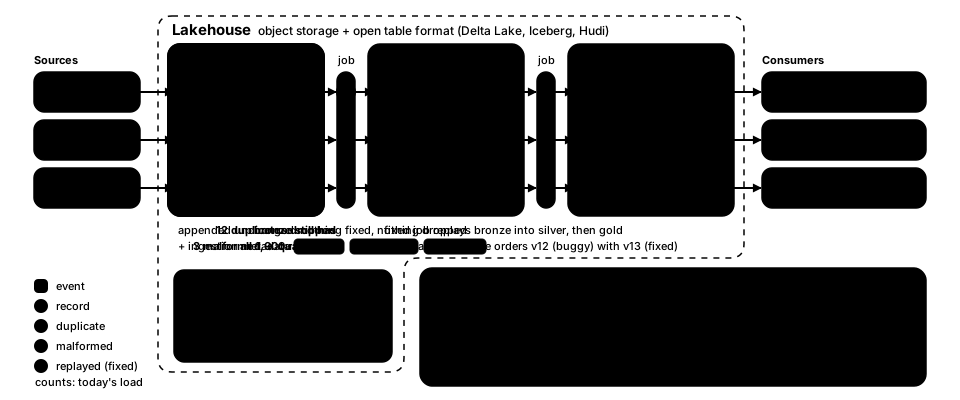
Medallion Architecture
Bronze, silver, gold: raw data is refined in layers inside a lakehouse.
Database Internals & Performance
How databases find, store and protect data: indexes, query plans, transactions and storage engines, and how to use them well.
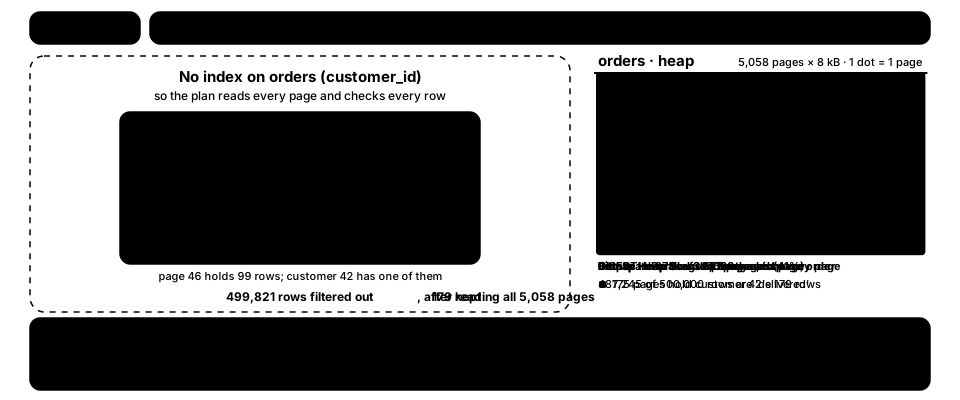
B-Tree Index
How a B-tree index finds a row in three or four page reads, serves ranges in order, and what every insert costs to keep it sorted.
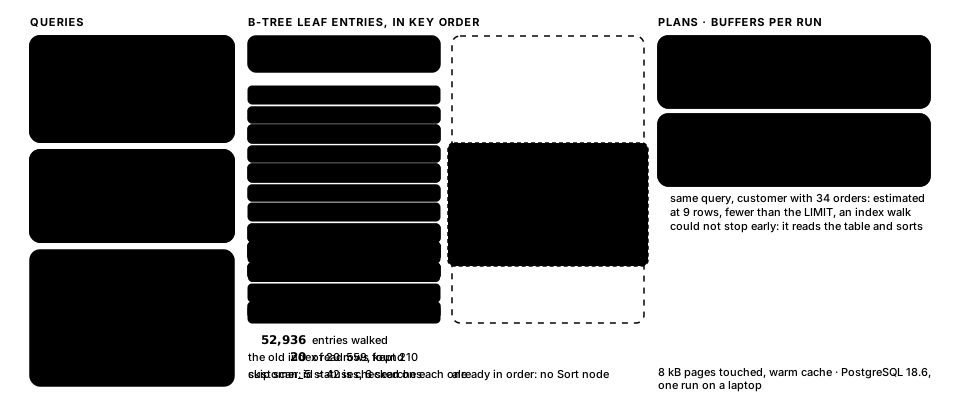
Composite Index
A multi-column index serves queries that use its leading columns: put equality columns first and the range or sort column last.
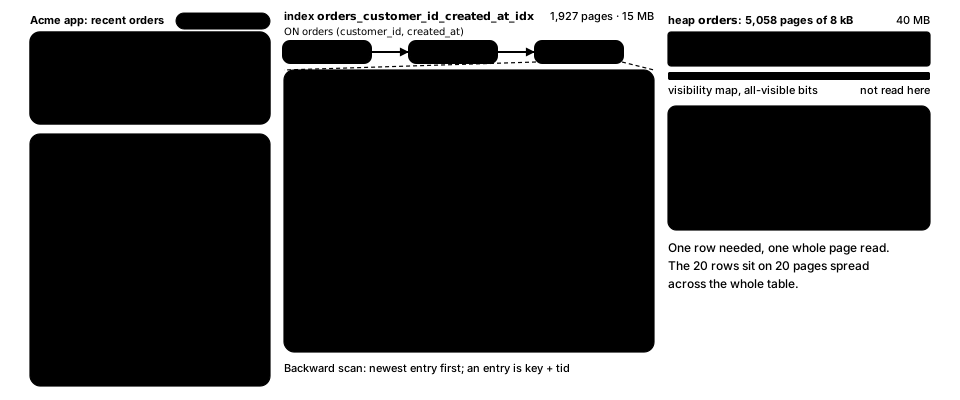
Covering Index
Answer a query from the index alone: include the columns it selects, so the table is never read, and the scan is index-only.
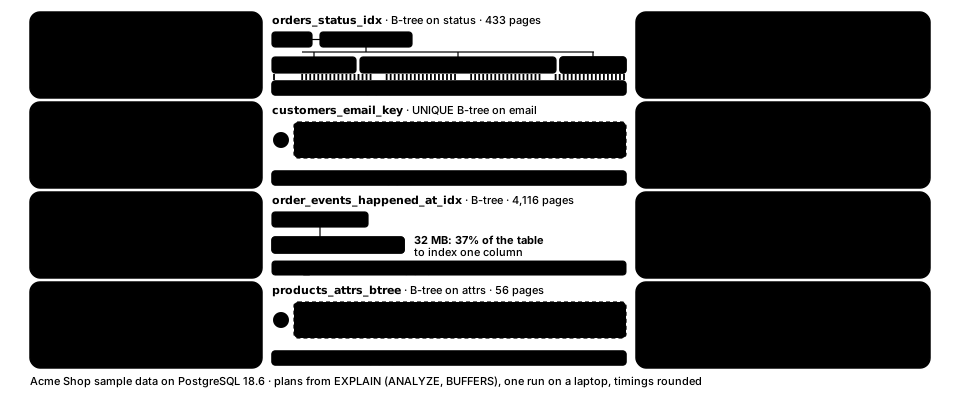
Index Types
Beyond B-trees: hash, GIN for arrays, JSON and text, GiST, BRIN for time-ordered data, and partial and expression indexes.
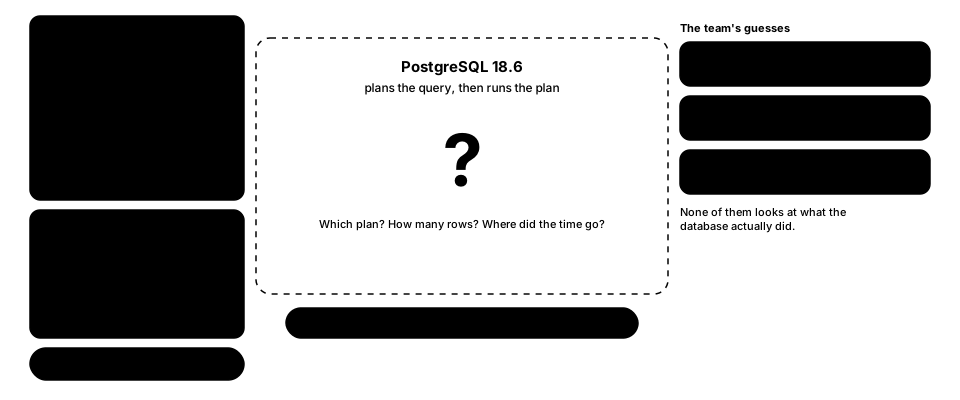
Query Execution Plans
Read EXPLAIN the way the planner thinks: scans, joins, estimated against actual rows, and the statistics behind each choice.

Join Algorithms
Nested loop, hash join and merge join: how each joins two tables, what it costs, and when the planner picks it.
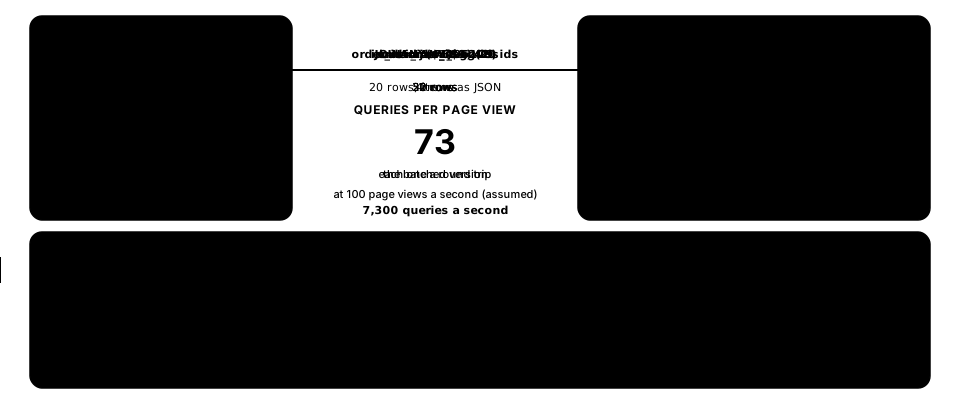
N+1 Queries
One query for a list, then one more for every row: how ORMs fall into it, how to spot it, and how batching or a join fixes it.
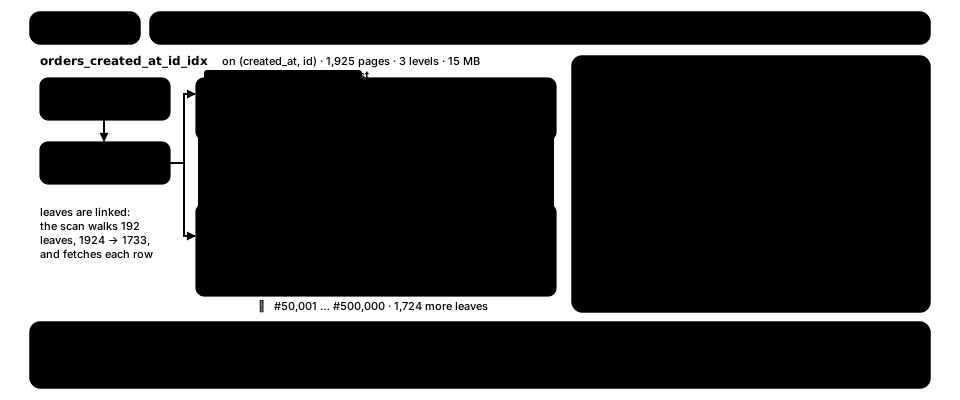
Keyset Pagination
Page with WHERE key > last seen instead of OFFSET, so page 1,000 is as fast as page 1 and no row repeats or goes missing.
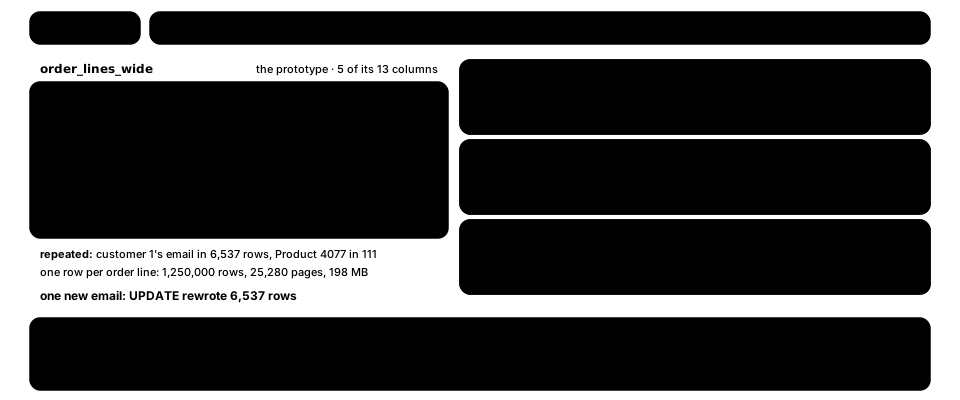
Normalization & Denormalization
Store each fact once to keep data consistent, then copy some on purpose where reads must be fast, and keep the copies in step.
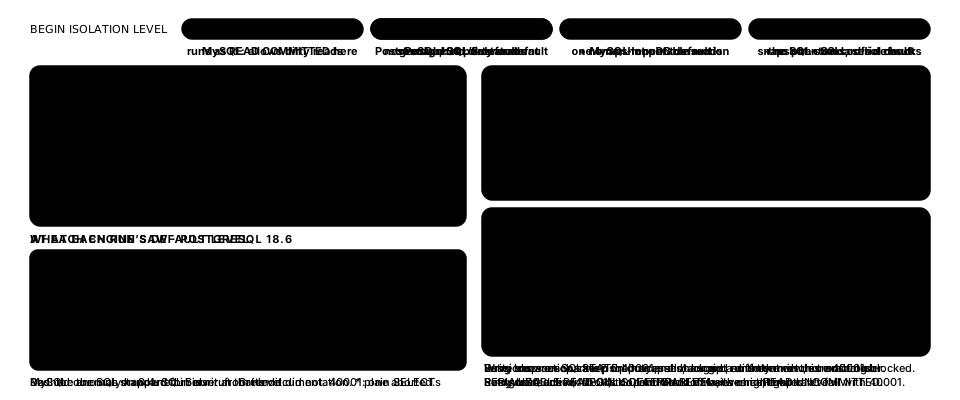
Transaction Isolation Levels
What concurrent transactions can see of each other: the anomalies each isolation level allows and the defaults engines use.
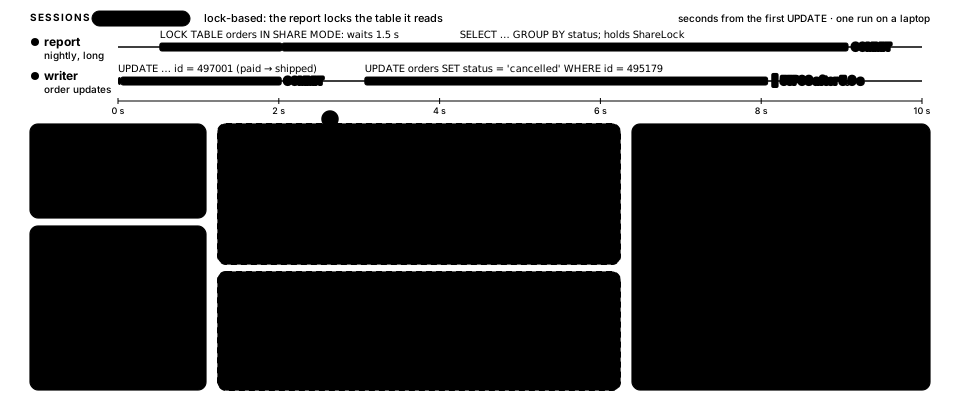
MVCC
Multi-version concurrency control: an update writes a new row version, readers see a snapshot, and vacuum removes dead versions.
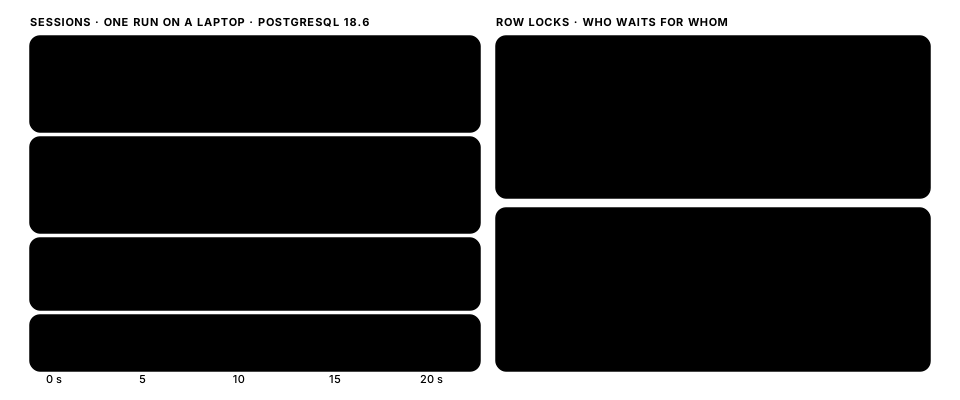
Locks & Deadlocks
Row locks make writers wait for each other; two transactions waiting on each other is a deadlock, and the database aborts one.

Optimistic Concurrency Control
Update a row only if it is unchanged since you read it, using a version column, and retry on conflict instead of holding locks.
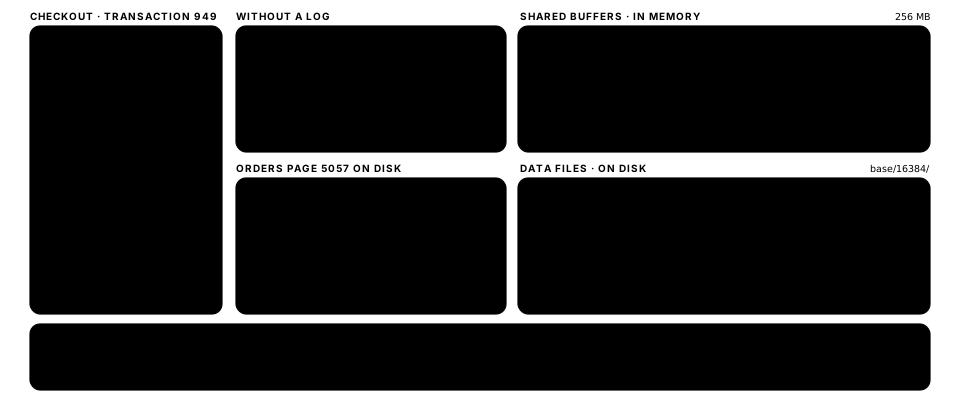
Write-Ahead Log
Log each change before applying it, so a commit survives a crash, recovery replays the log, and replicas and backups follow it.
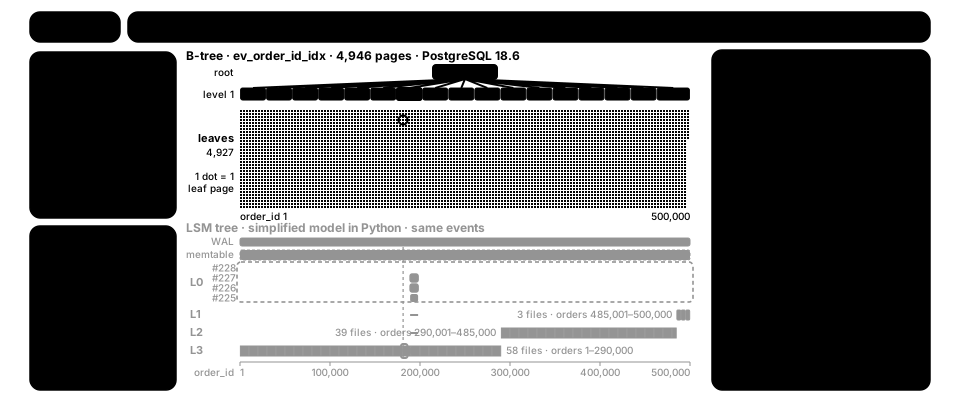
LSM Tree vs B-Tree
Two storage engine designs: update pages in place, or append in memory and merge sorted files, and what each costs to read and write.
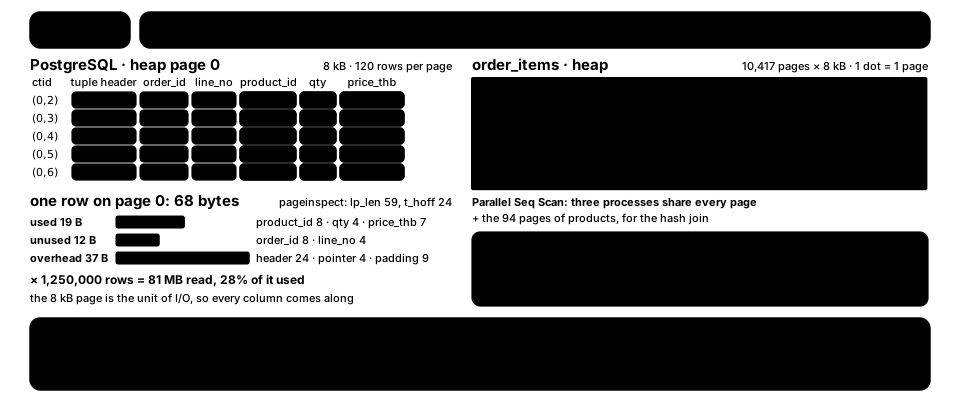
Row vs Column Storage
Store rows together for transactions or columns together for analytics, and why a column store scans and compresses so much faster.
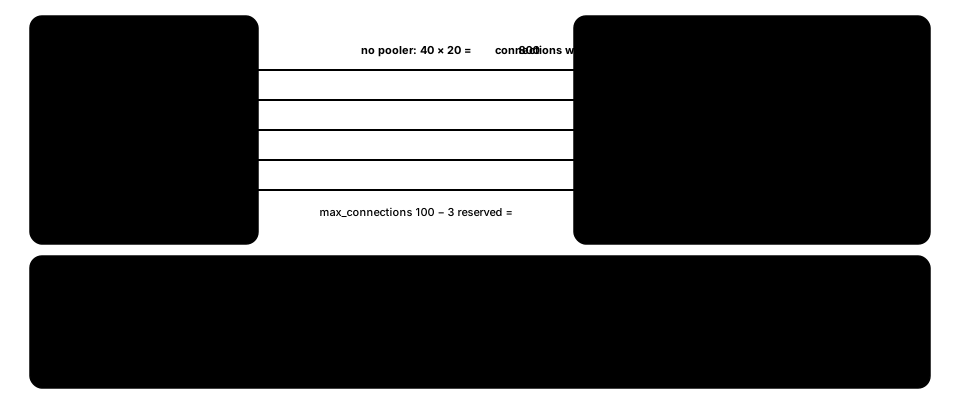
Connection Pooling
Share a few database connections among many requests, so connection setup and per-connection memory stop limiting the database.
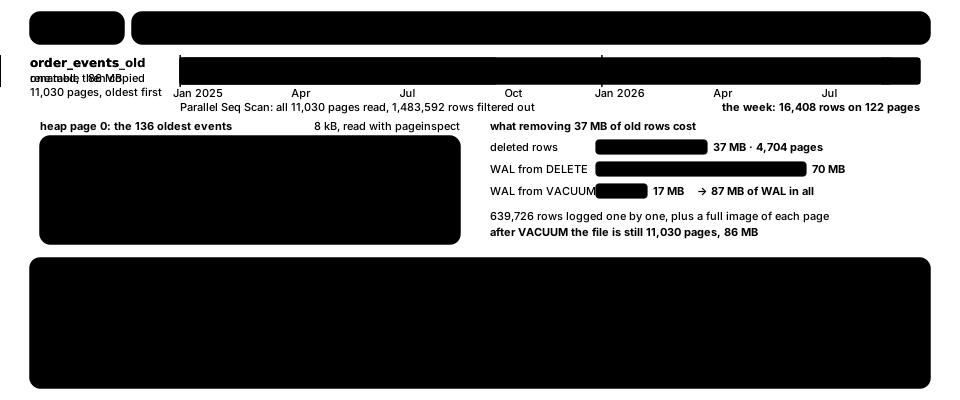
Table Partitioning
Split a large table into partitions by range, list or hash, so queries skip partitions and old data is dropped in an instant.
Resilience & Reliability
Keep serving when dependencies are slow, overloaded or down.
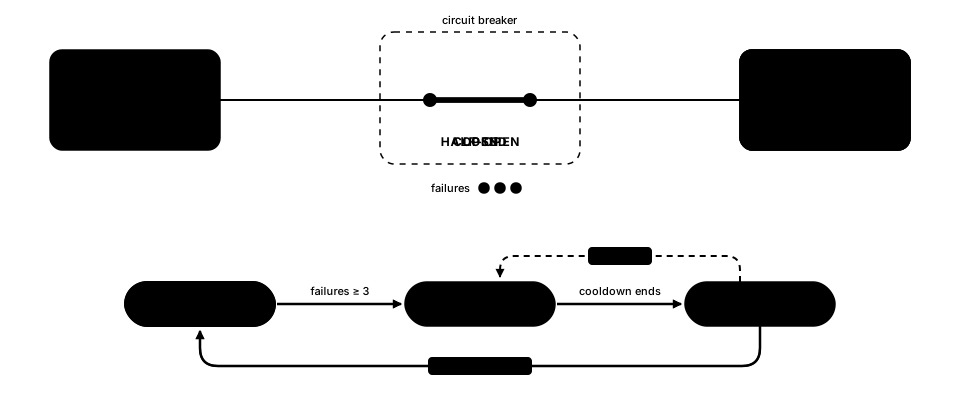
Circuit Breaker
Stop calling a failing dependency, fail fast with a fallback, and probe until it recovers.
Retry with Backoff & Jitter
Retry transient failures with growing, randomised delays so clients don't stampede.
Bulkhead
Give each dependency its own pool of resources so one failure can't sink the whole ship.
Timeout & Fallback
Bound every remote call and degrade gracefully when the time runs out.
Rate Limiting & Throttling
Cap how fast each client may call (token bucket) and shed the excess with 429s.
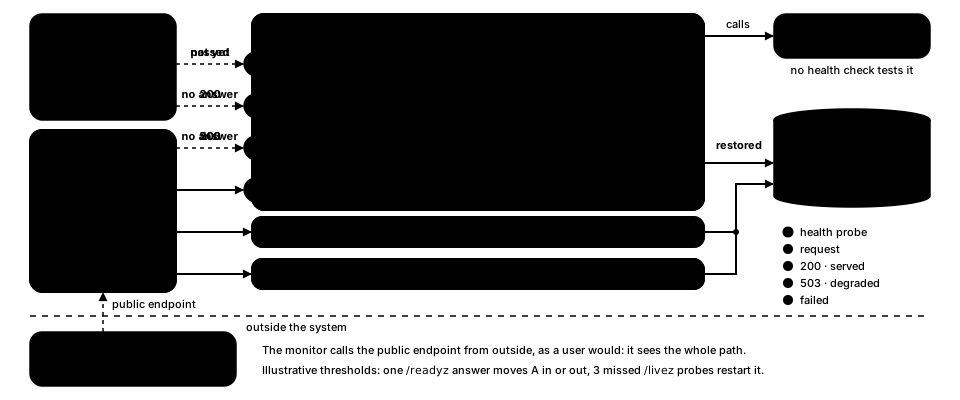
Health Endpoint Monitoring
Expose liveness and readiness checks that load balancers and monitors probe.
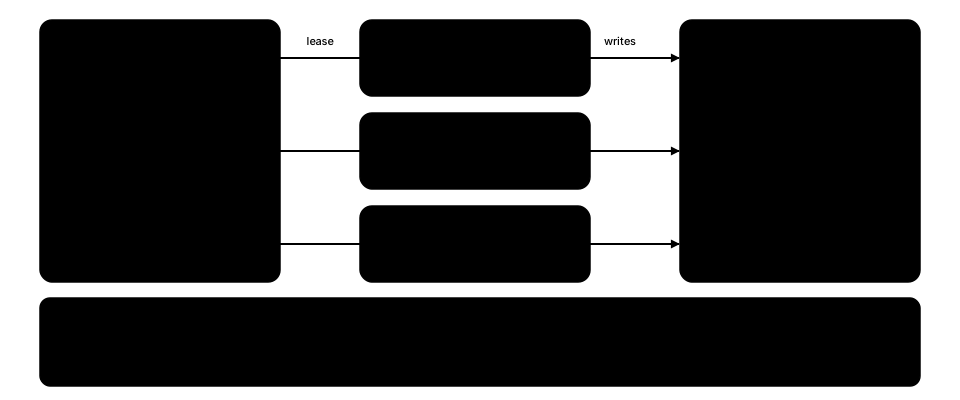
Leader Election
Instances elect one coordinator; another takes over when its lease expires.
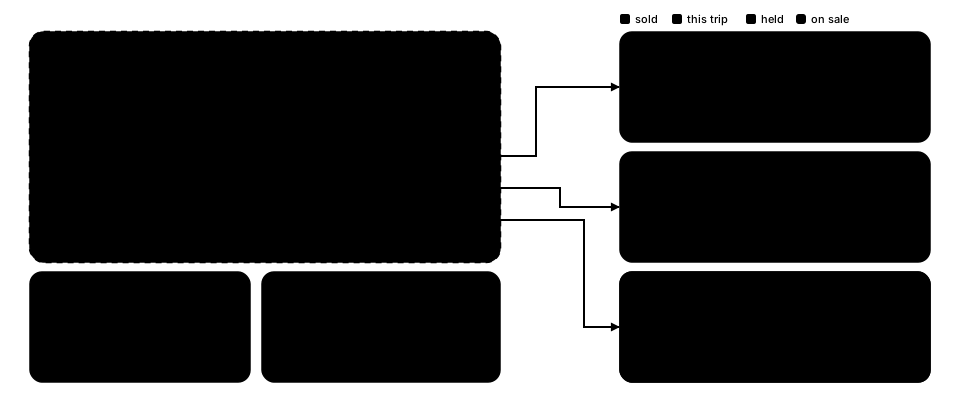
Compensating Transaction
Undo the completed steps of a multi-step operation that failed part-way.
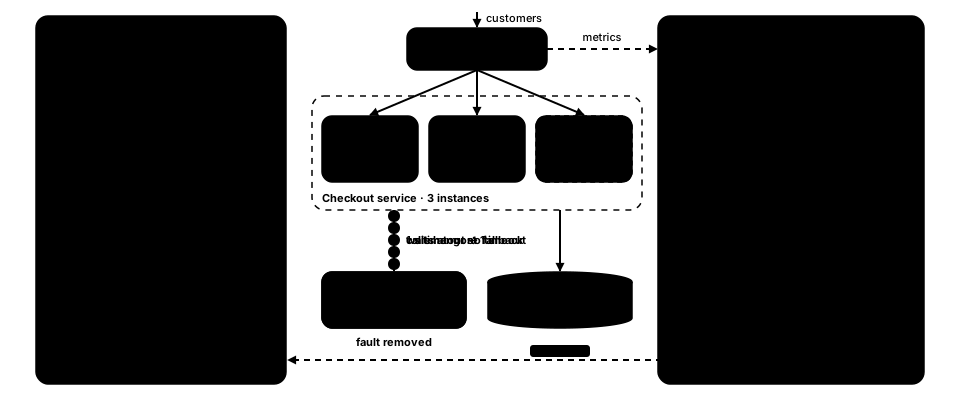
Chaos Engineering
Inject failures on purpose to prove the system degrades the way you expect.
Deployment & Release
Ship changes safely, watch them in production, and roll back fast.
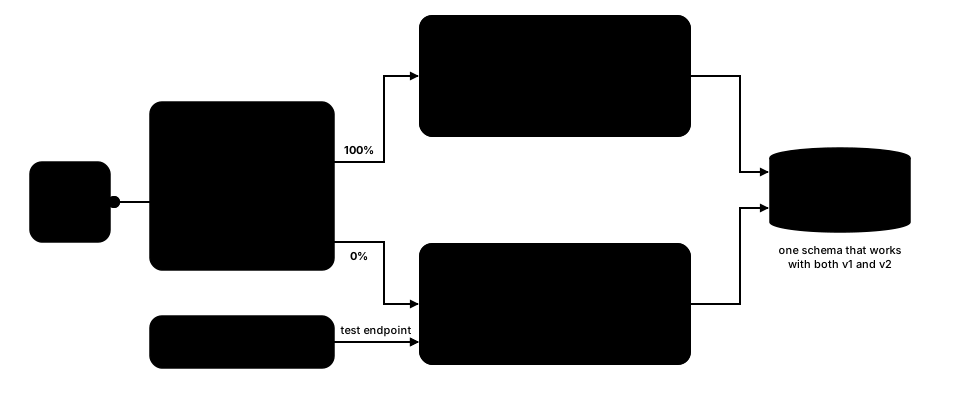
Blue-Green Deployment
Run the new version beside the old one and switch all traffic in one step.
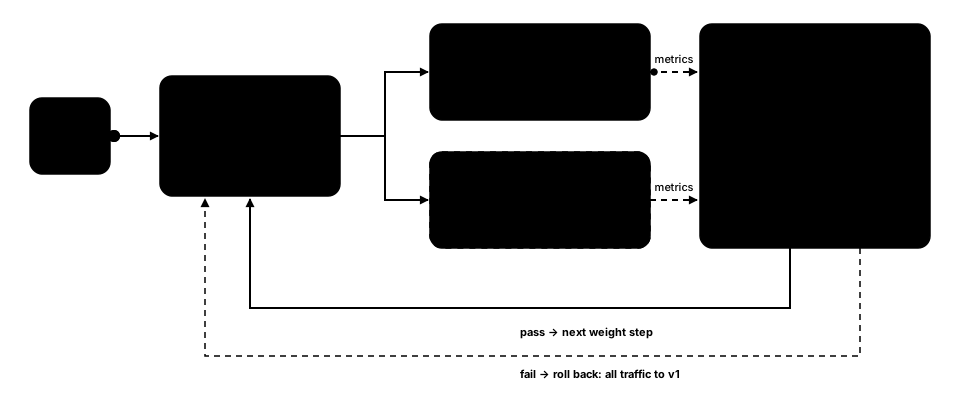
Canary Release
Route a small slice of traffic to the new version, watch its metrics, then ramp up or roll back.
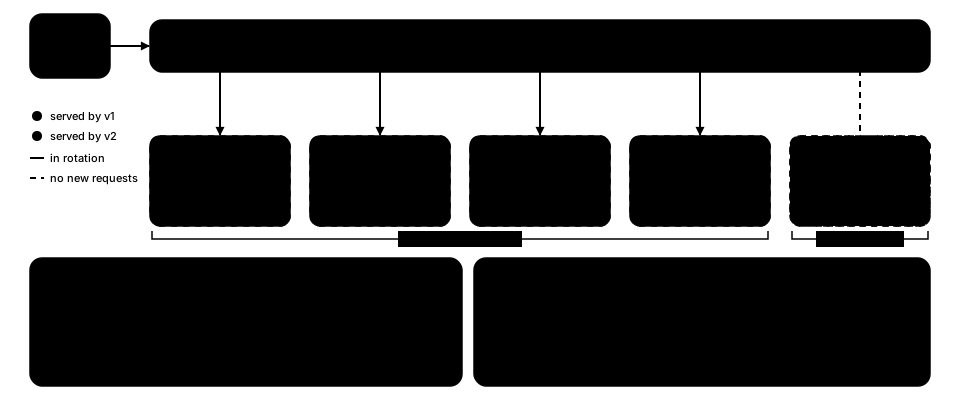
Rolling Update
Replace instances batch by batch while the service stays up.
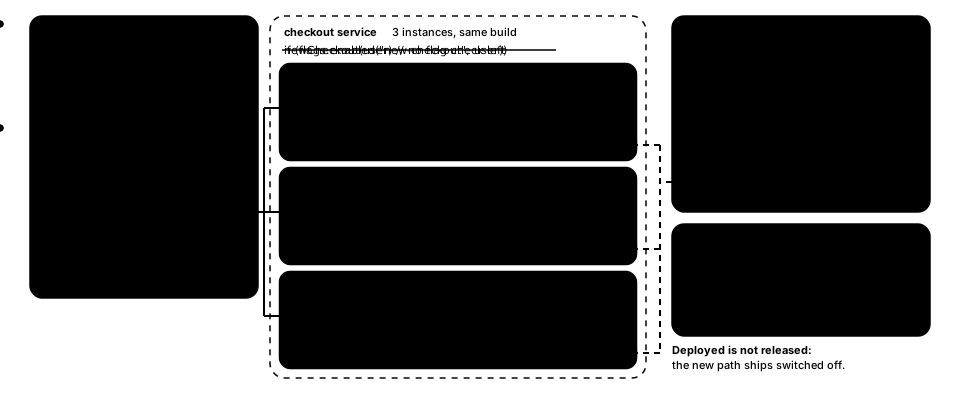
Feature Flags
Deploy code dark, then turn features on per user or percentage at runtime.
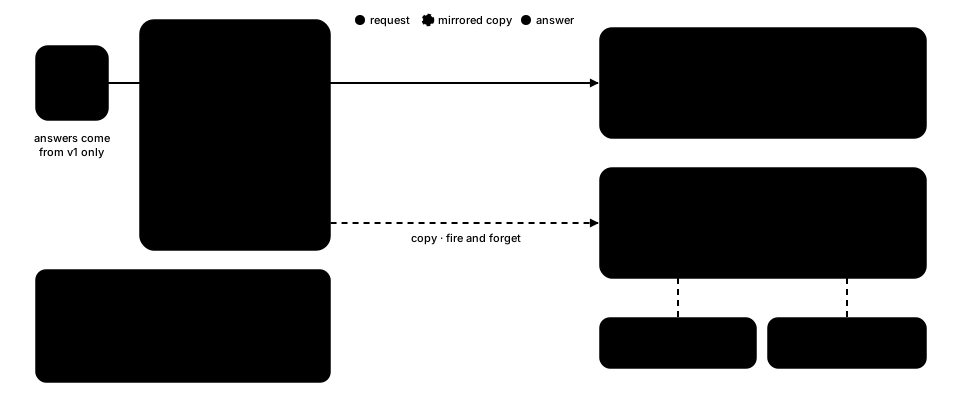
Shadow Traffic
Mirror live requests to the new version and compare results without affecting users.
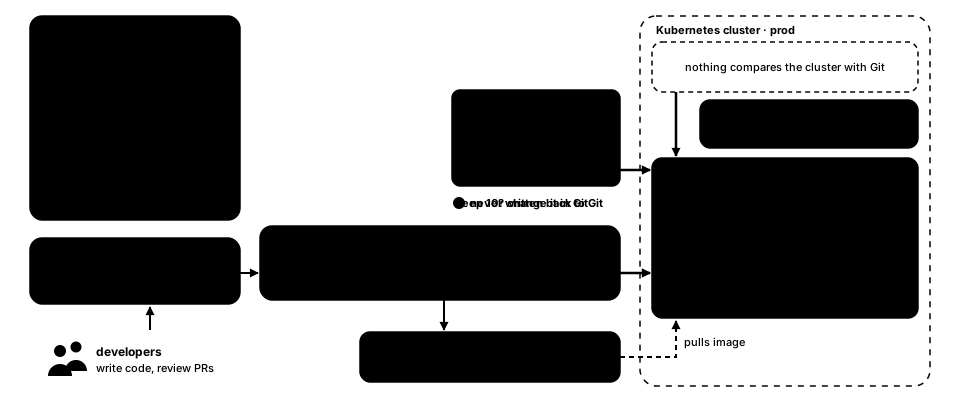
GitOps
Git holds the desired state; an agent continuously reconciles the cluster to match it.
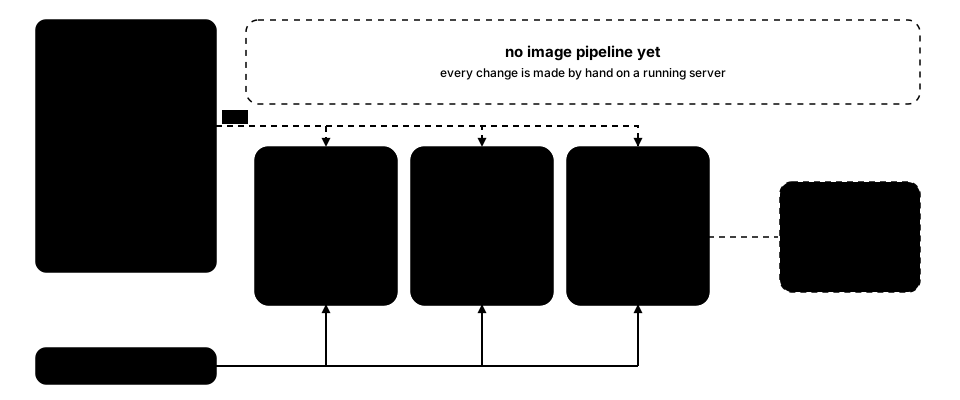
Immutable Infrastructure
Never patch servers in place: bake a new image and replace them.
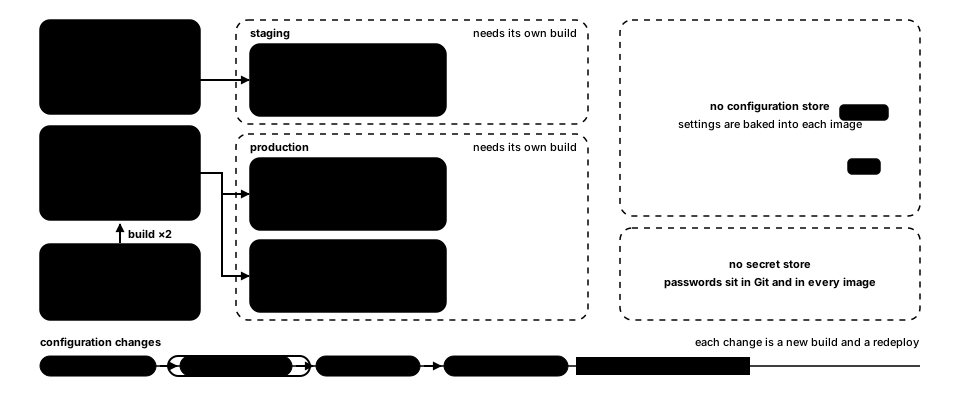
External Configuration Store
Keep configuration out of the deployment package, in a central store read at runtime.
Migration & Modernization
Evolve legacy systems step by step, without a big-bang rewrite.
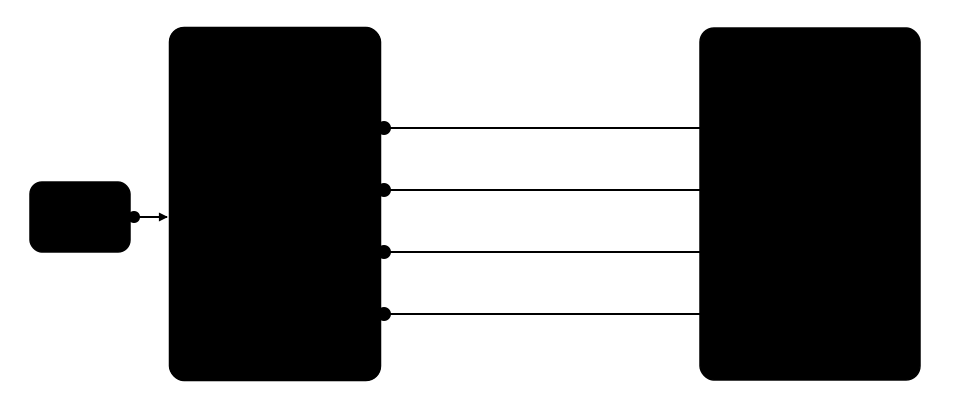
Strangler Fig
Put a facade in front of the legacy system and move routes to new services one at a time.
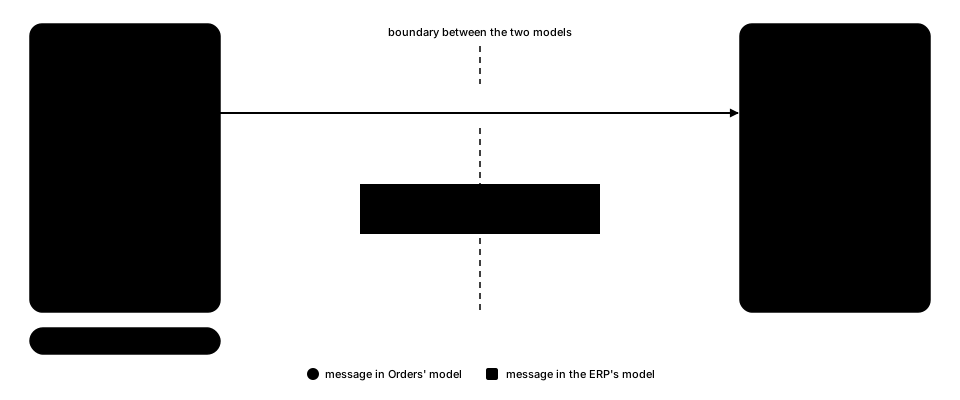
Anti-Corruption Layer
A translation layer that keeps a legacy model from leaking into the new domain.
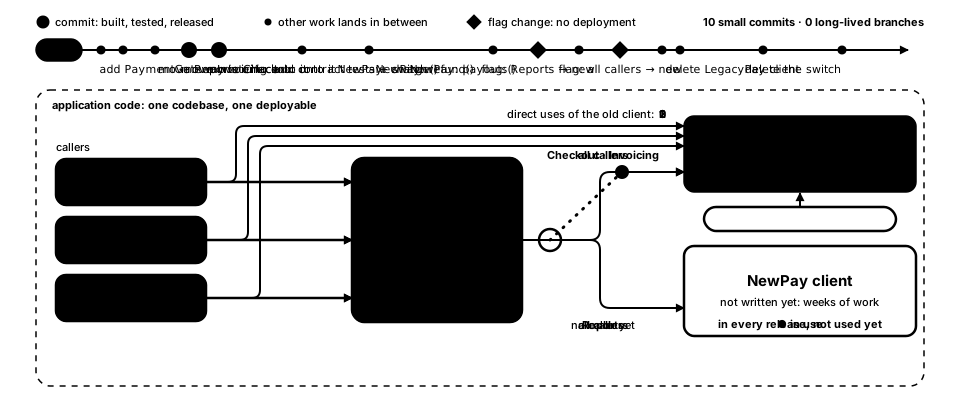
Branch by Abstraction
Introduce an abstraction, build the new implementation behind it, then switch over.
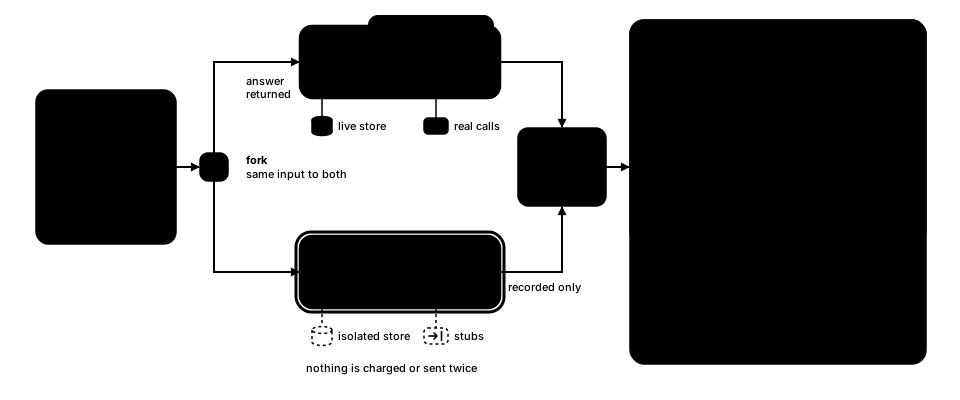
Parallel Run
Run old and new side by side on the same inputs and compare results before cutting over.
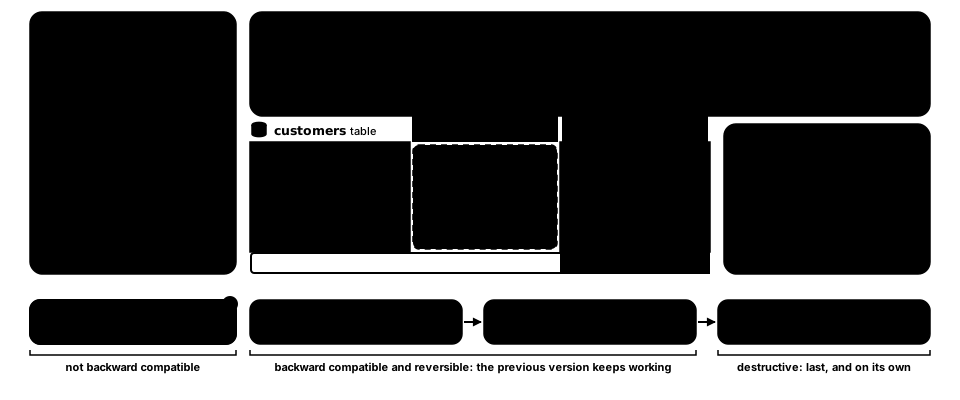
Expand and Contract
Change a schema or API in backward-compatible steps: expand, migrate, then contract.
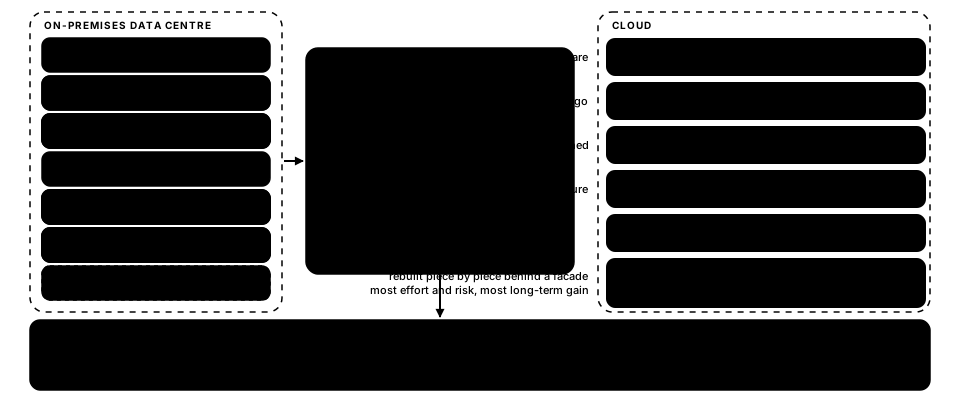
Cloud Migration Strategies (7 Rs)
Rehost, replatform, refactor, repurchase, relocate, retain or retire: pick one per workload.
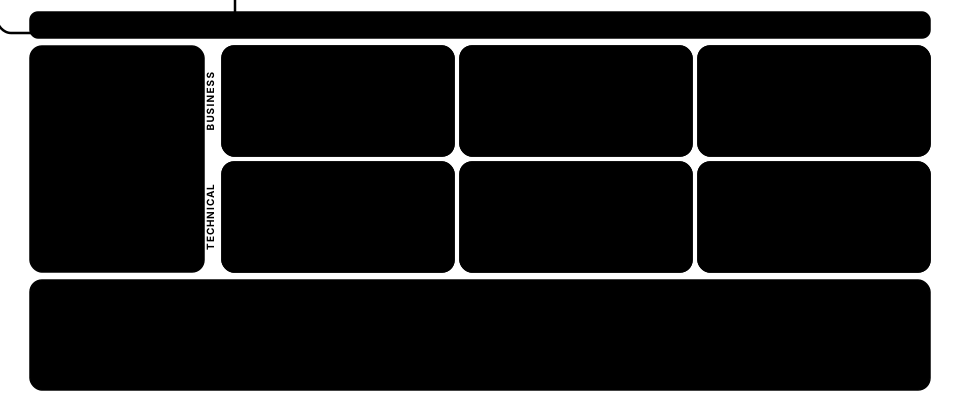
AWS Cloud Adoption Framework (CAF)
Six perspectives and their foundational capabilities that show what an organisation must build, beyond technology, to adopt the cloud.
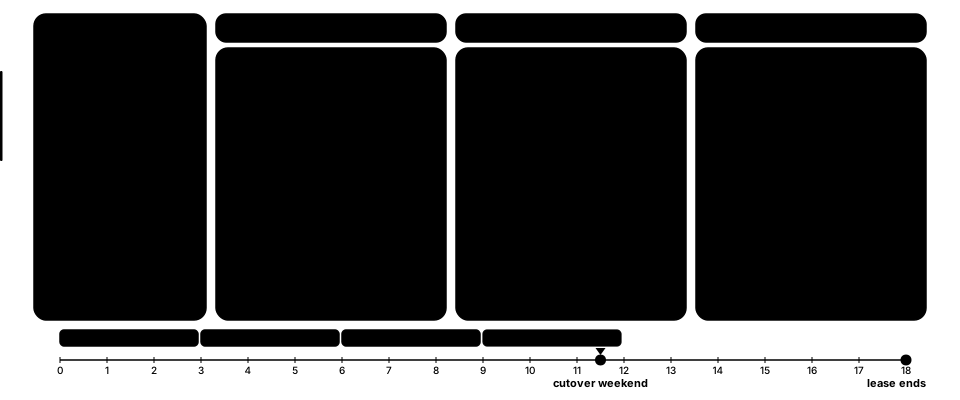
AWS Migration Process
Assess, mobilize, then migrate and modernize: a business case, a landing zone and migration waves that move a portfolio to AWS.
Observability & Operations
See what the system is doing, and why, when something goes wrong.
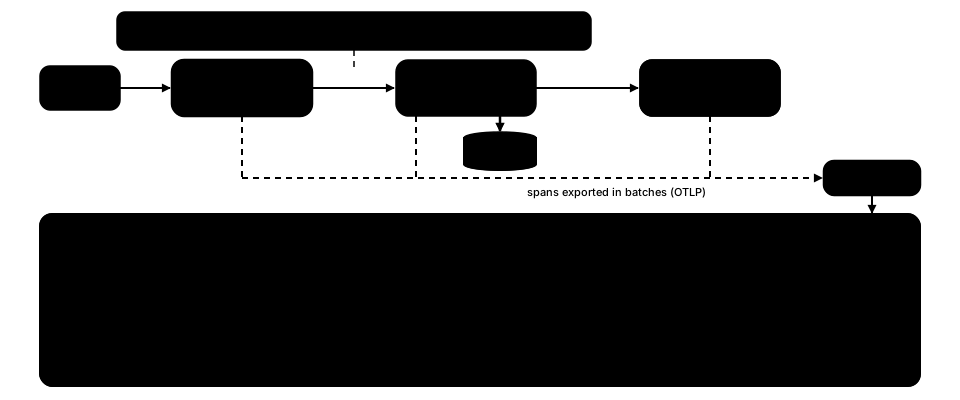
Distributed Tracing
Propagate a trace context across services and assemble the spans into one timeline.
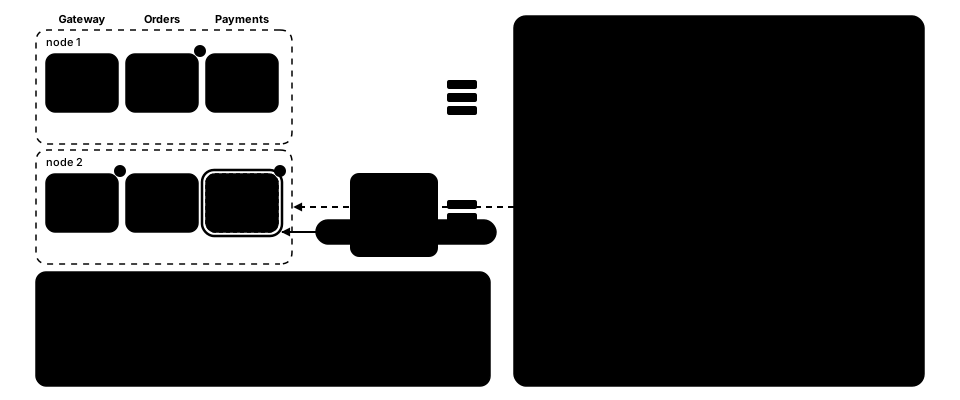
Centralized Logging
Ship structured logs from every service to one searchable store, correlated by request ID.
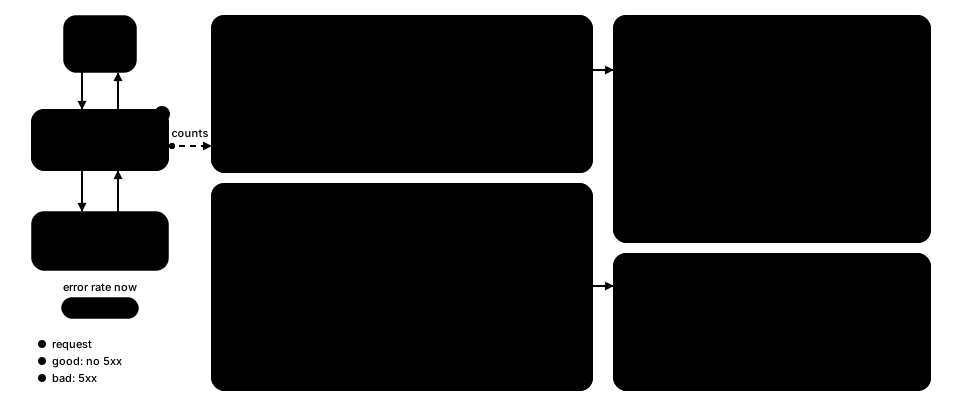
SLOs & Error Budgets
Measure SLIs against an objective and alert on error-budget burn rate, not on every blip.
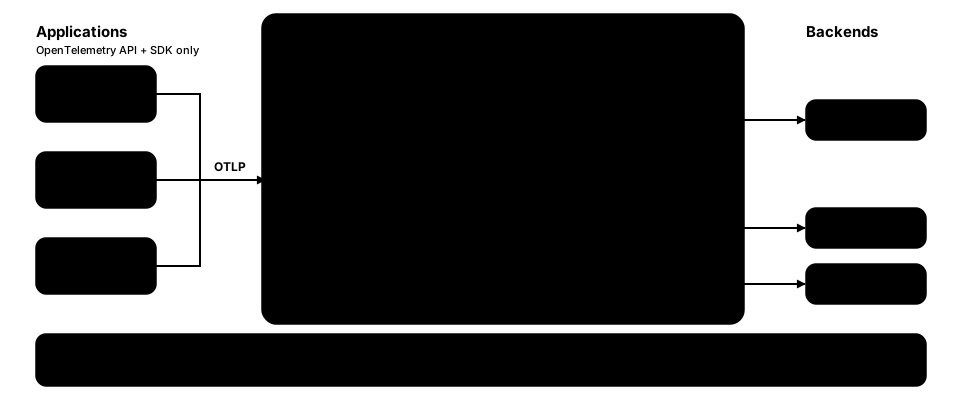
Telemetry Pipeline (OpenTelemetry)
Receive, process and export traces, metrics and logs through one vendor-neutral collector.
DevOps & SRE Principles
How teams ship changes often and keep production reliable: the principles, measures and practices behind DevOps and site reliability engineering.
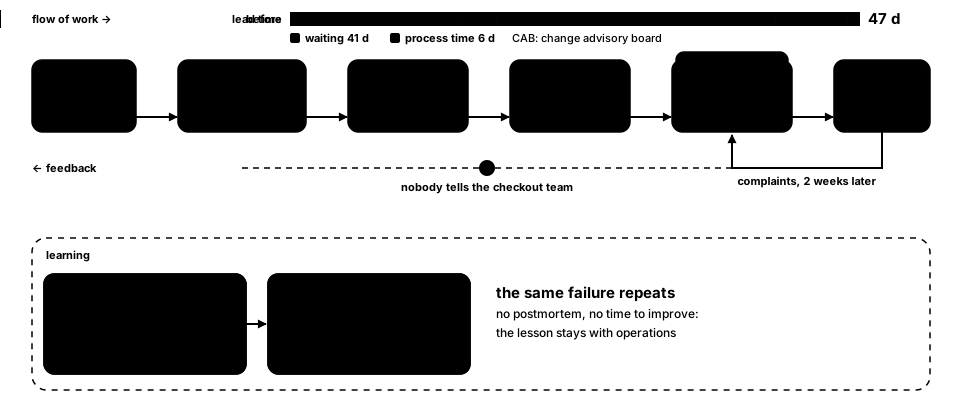
The Three Ways
DevOps in three principles: speed the flow of work to customers, amplify feedback back to the team, and keep learning.

DORA Metrics
Measure software delivery by throughput and stability: how often and how fast changes reach production, and how often they fail.
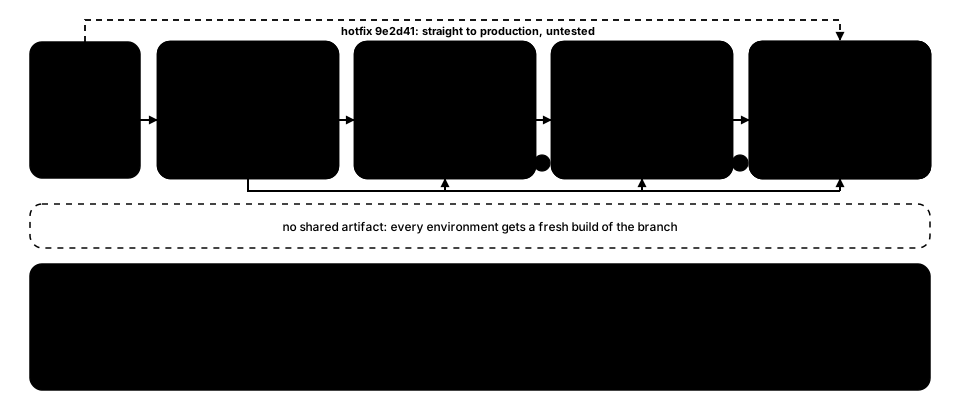
Continuous Delivery
Keep every change releasable: a deployment pipeline builds once, tests in stages and promotes the same artifact to production.
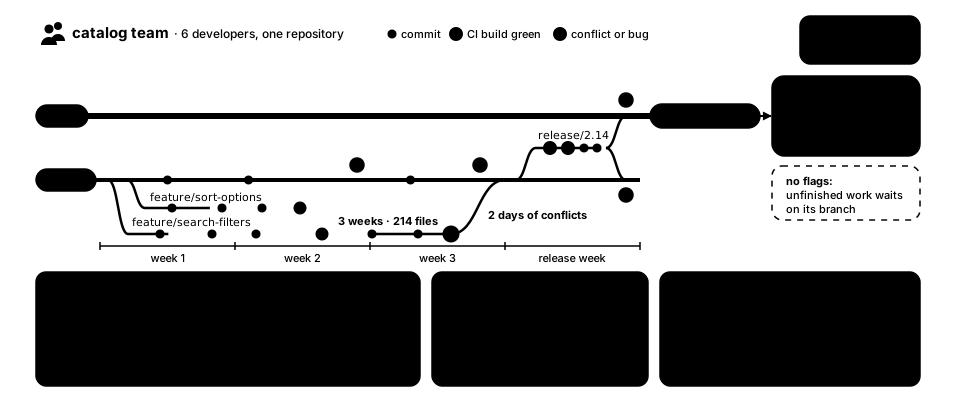
Trunk-Based Development
Everyone merges small changes into one main branch at least daily; feature flags hide unfinished work instead of long branches.
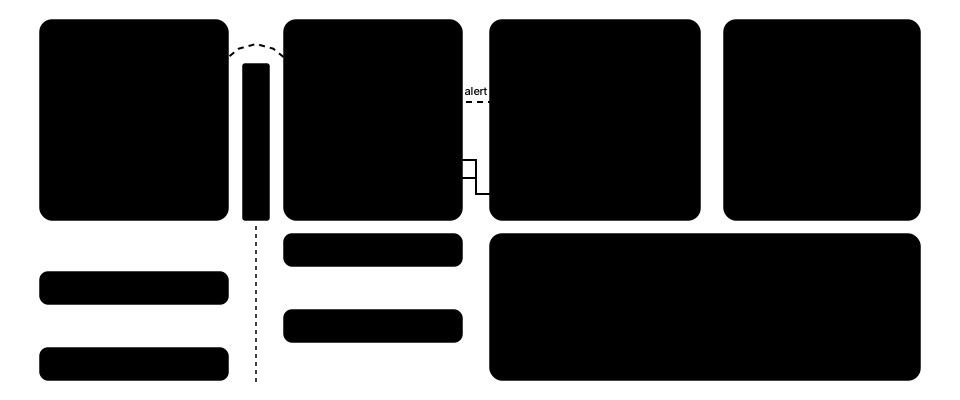
You Build It, You Run It
The team that builds a service runs it in production, on call, so the people who can fix a problem hear about it first.
Golden Signals, RED & USE
What to measure and alert on: latency, traffic, errors and saturation, RED for request-driven services and USE for resources.

Eliminating Toil
Find the manual, repetitive operations work that grows with the system, measure it, cap it and automate it away.
Incident Management
A practised response when production breaks: declare early, assign roles, mitigate first and keep everyone informed.

Blameless Postmortems
Learn from every incident without blame: a timeline, the contributing factors and tracked action items, shared widely.

SPACE & DevEx
Measure developer productivity without counting code: surveys and system data on satisfaction, flow, feedback loops and cognitive load.
Value Stream Mapping
Draw how a change travels from idea to customer, compare the time spent working with the time spent waiting, and remove the biggest wait.
CALMS
A lens for assessing a DevOps adoption: culture, automation, lean, measurement and sharing, and the dimension that holds the others back.

Testing Pyramid
Many fast unit tests, fewer integration and contract tests, a few end-to-end tests: feedback stays fast and failures point at the cause.
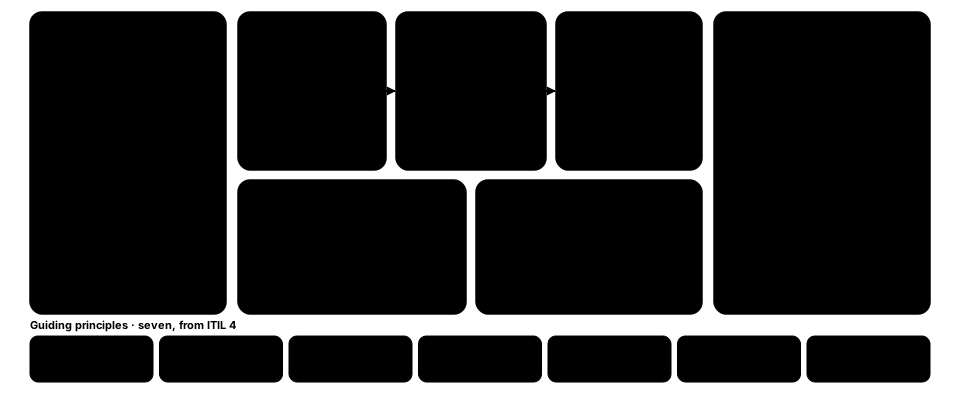
ITIL 4
IT service management with ITIL 4: the service value system, guiding principles and change enablement that work with DevOps, not against it.
Platform Engineering
Design principles and frameworks for the internal platform: how to build it, organise teams around it and keep it secure, well-architected and affordable.
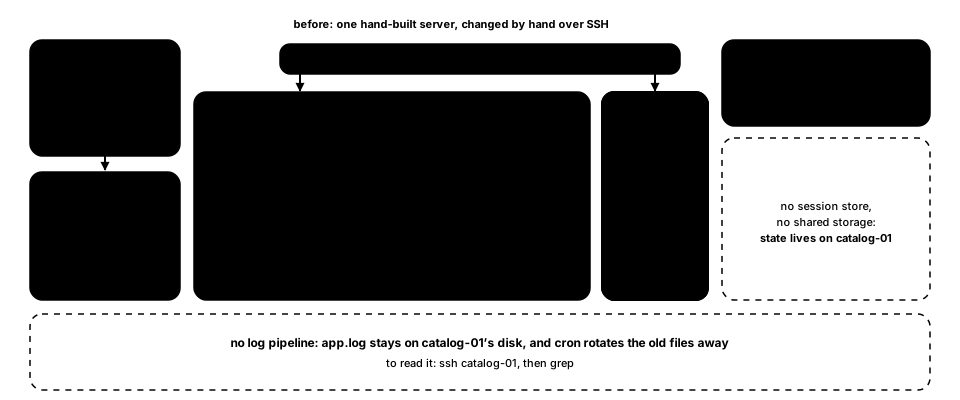
The Twelve-Factor App
Twelve rules for apps that deploy cleanly anywhere: config in the environment, stateless processes, separate build, release and run.
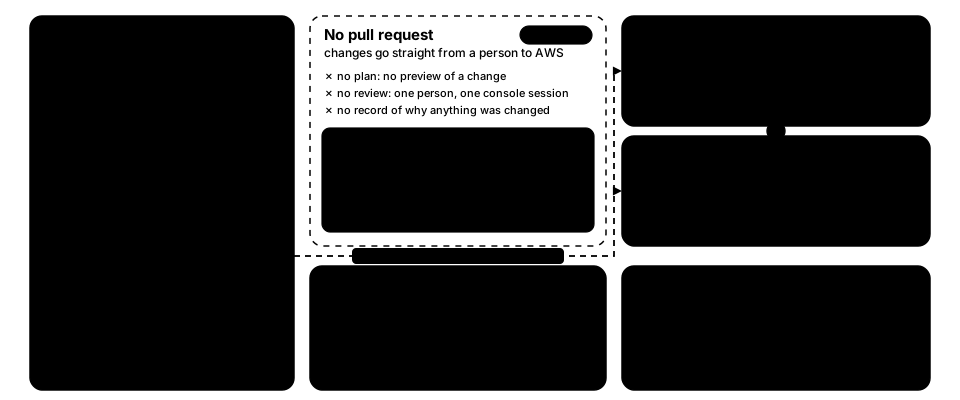
Infrastructure as Code
Define infrastructure in version-controlled code: review a plan, apply it the same way in every environment and catch drift.
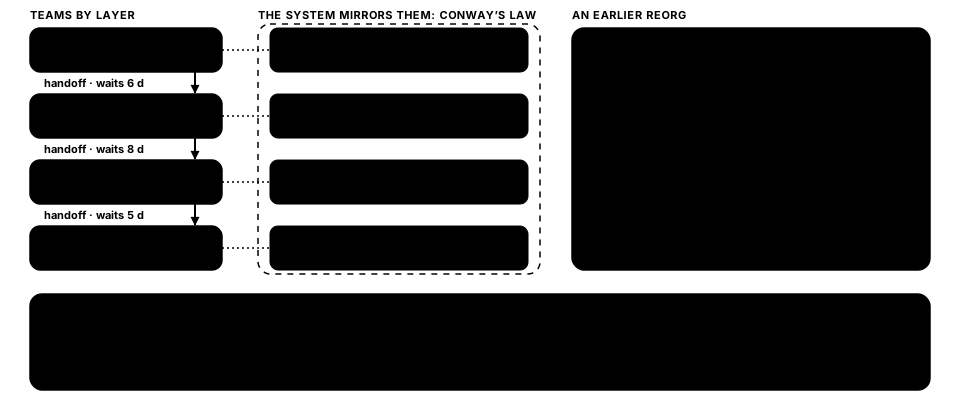
Team Topologies
Four team types and three interaction modes that organise teams around the flow of change and keep cognitive load in check.

Platform as a Product
An internal developer platform run like a product: developers are its customers, self-service is its interface, adoption is earned.
Golden Paths
A paved, supported route for common tasks: one template creates a service with its pipeline, infrastructure and monitoring.
Well-Architected Framework
Review a workload against six pillars, from operational excellence to sustainability, and decide on the trade-offs between them.

FinOps
Cloud cost as a shared responsibility: allocate spend to the teams that cause it, optimise it and track the cost per unit of value.
Supply Chain Security (SLSA)
Prove that what you deploy was built from your source: build provenance, SBOMs, signatures and a check before every deploy.
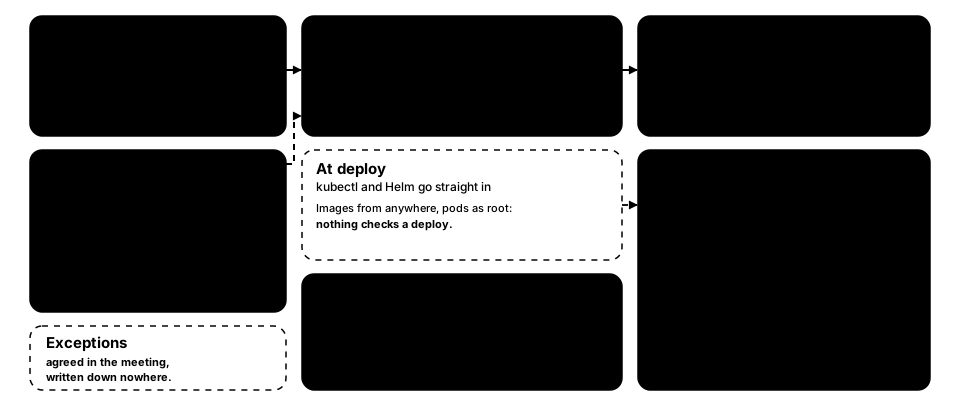
Policy as Code
Write rules as code and check them automatically in CI and at deploy time, so guardrails replace manual approval gates.
Algorithms & Data Structures
The must-know fundamentals: how code searches, sorts, recurses and walks graphs, and what each costs as data grows.
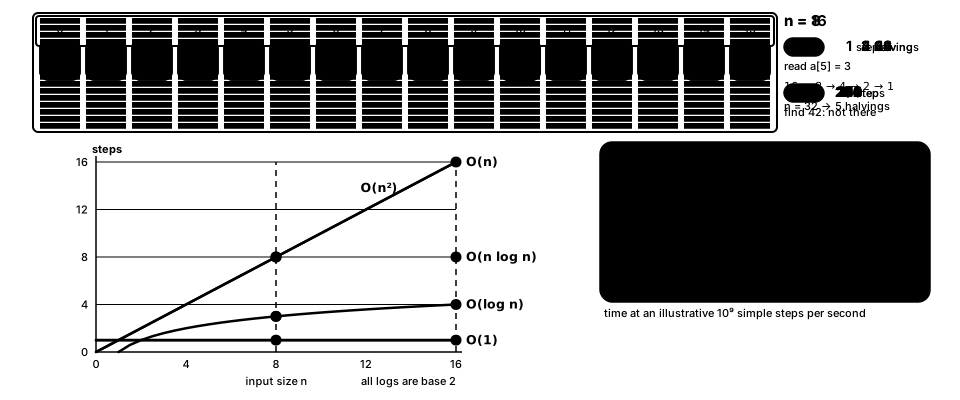
Big-O Notation
How an algorithm's cost grows with its input: O(1), O(log n), O(n), O(n log n) and O(n²) side by side as n grows.
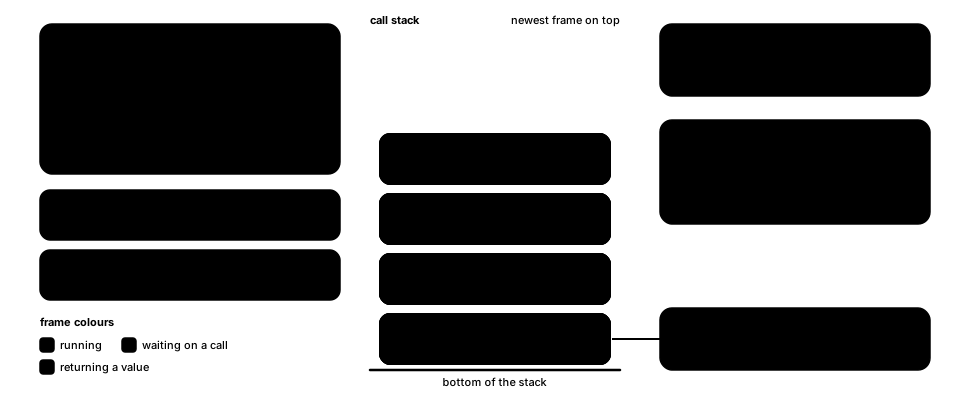
Recursion & the Call Stack
A function calls itself on a smaller input; each call waits on the stack until a base case returns and the answers unwind.
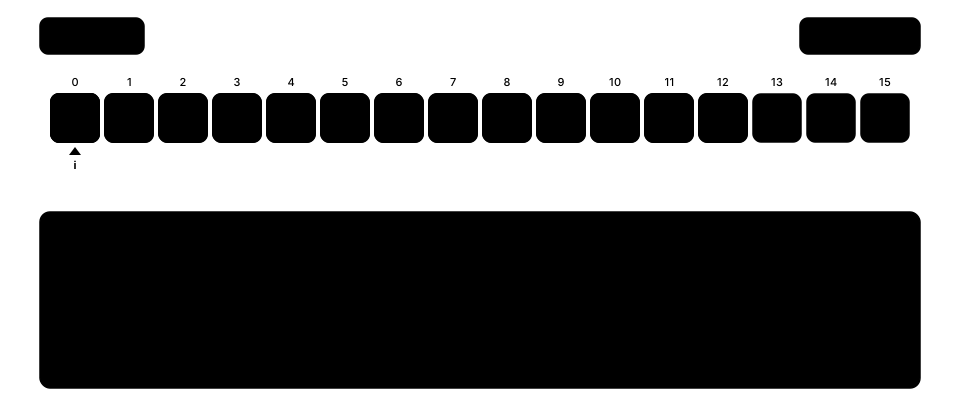
Binary Search
Halve a sorted range with every check: about 20 steps find one item among a million, where a scan may need a million.
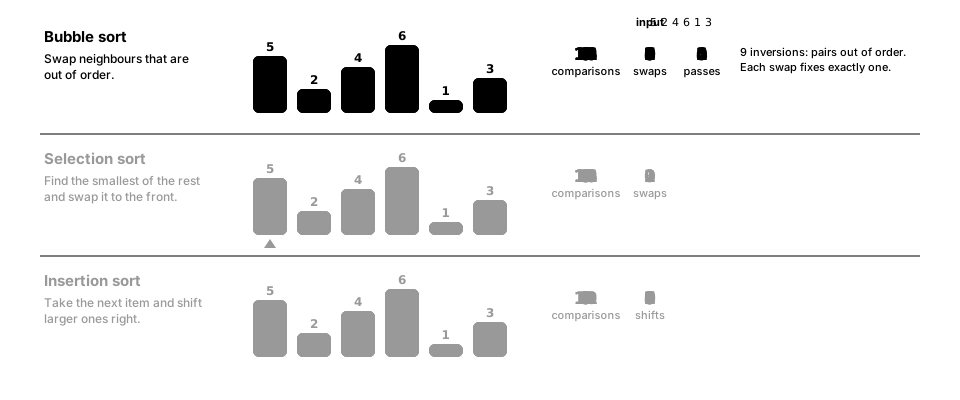
Bubble, Selection & Insertion Sort
The three simple O(n²) sorts compared, and why insertion sort still runs inside fast library sorts on short runs.
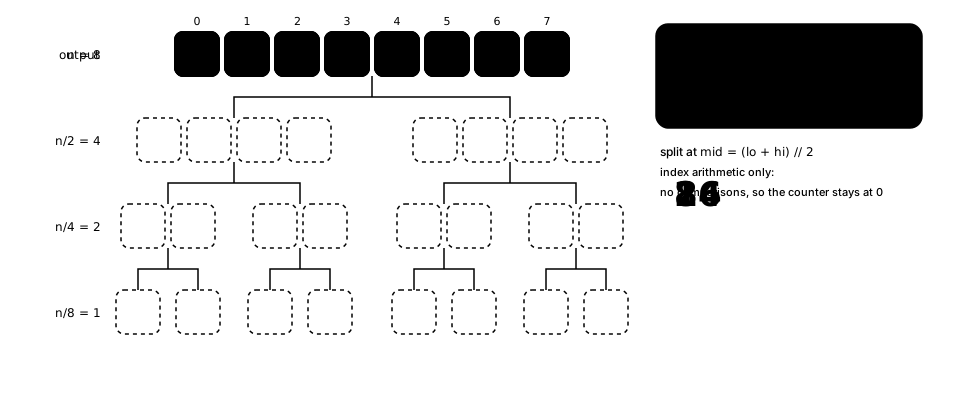
Merge Sort
Split the list until single items remain, then merge sorted halves back together: O(n log n) every time, and stable.
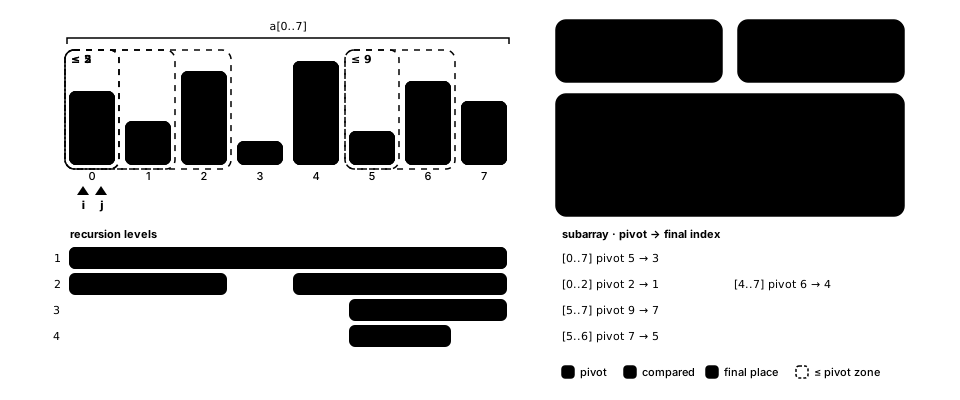
Quicksort
Partition around a pivot, smaller values left and larger right, then sort each side: fast in place, O(n²) when pivots are bad.
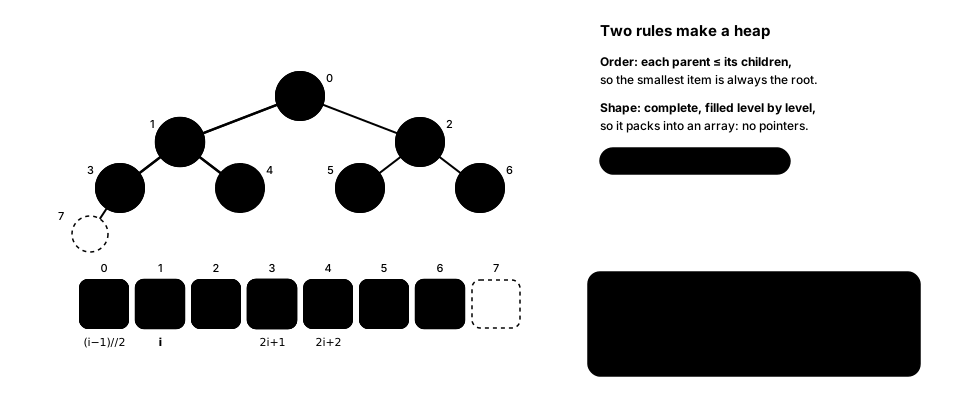
Binary Heap & Heapsort
A complete binary tree packed into an array keeps the smallest item on top: O(log n) push and pop, the classic priority queue.
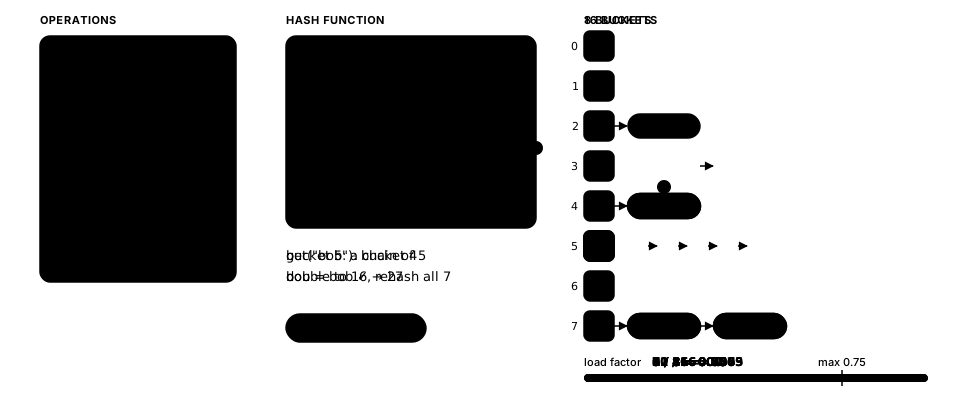
Hash Table
Hash each key straight to a bucket for O(1) average lookups; colliding keys share a bucket, and the table grows as it fills.
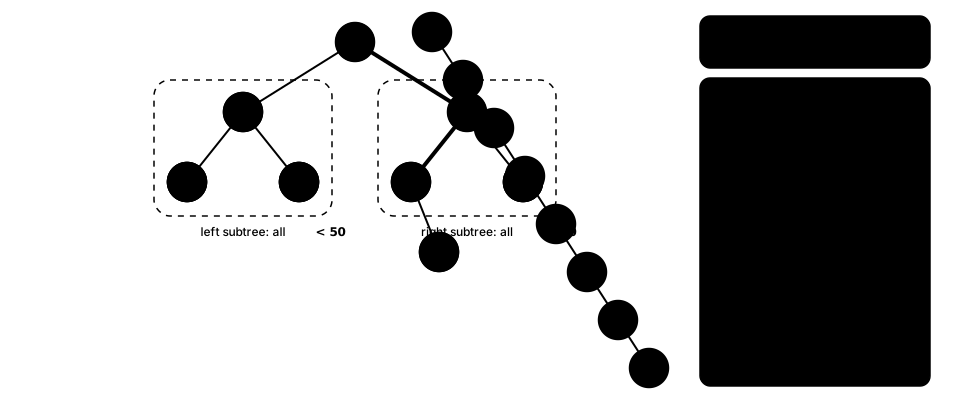
Binary Search Tree
Smaller keys left, larger right: O(log n) search and insert while the tree stays balanced, O(n) once it degrades into a list.
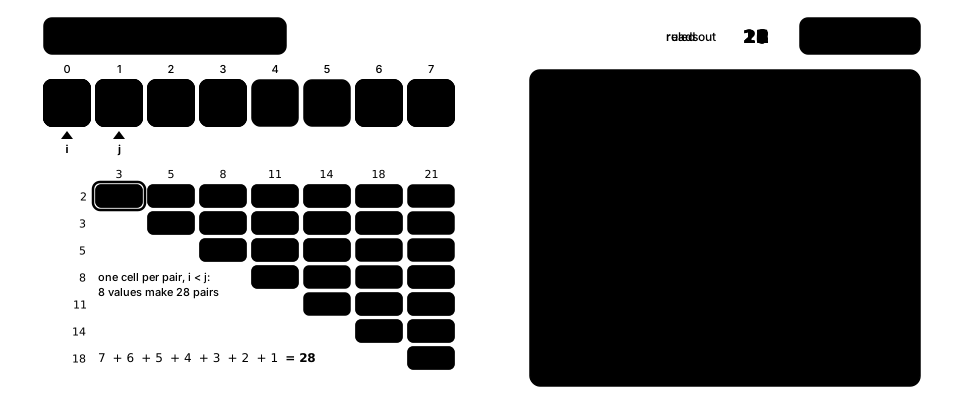
Two Pointers
Move two indices through an array, toward each other or one chasing the other, to solve pair and partition problems in one pass.
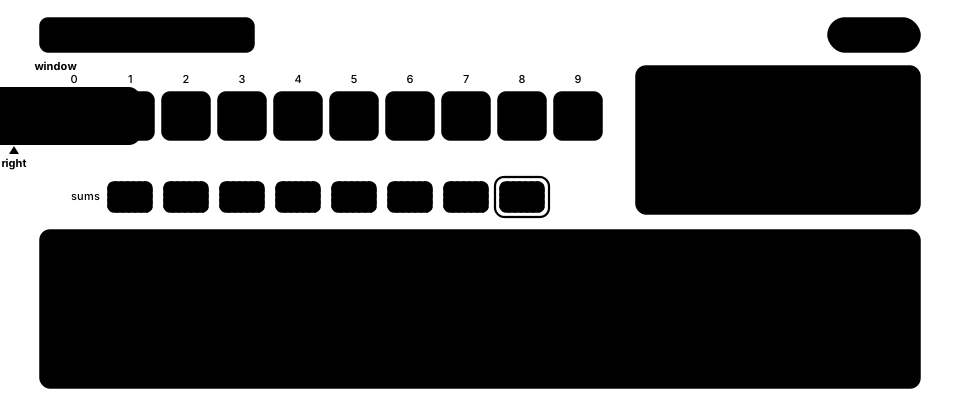
Sliding Window
Slide a window along a sequence, adding the item that enters and dropping the one that leaves, instead of re-scanning each window.
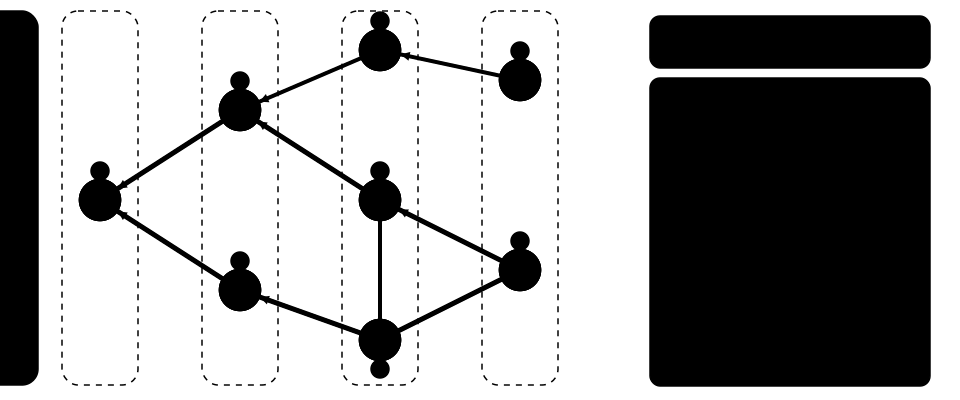
Breadth-First Search
Explore a graph level by level from a queue; the first time BFS reaches a node, it has found a path with the fewest edges.
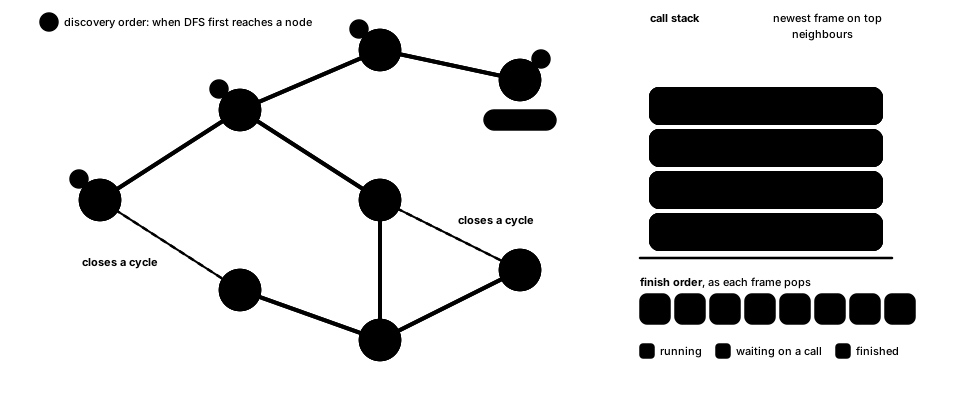
Depth-First Search
Follow one path as deep as it goes, then backtrack; a stack or recursion remembers where to resume, and finds cycles too.
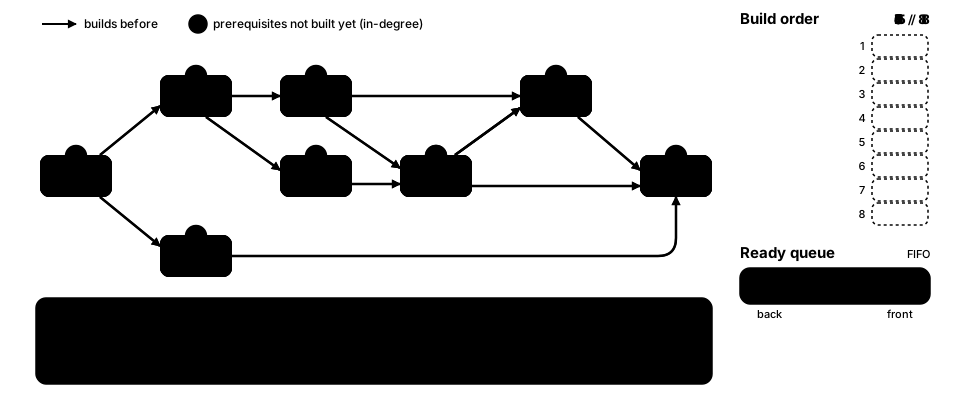
Topological Sort
Order tasks so every dependency comes before what needs it, as build tools and package managers do; a cycle makes it impossible.
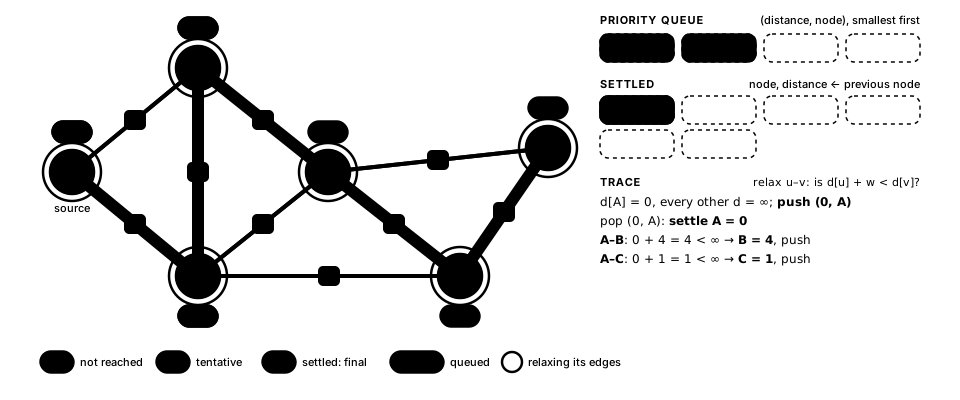
Dijkstra's Shortest Path
Settle the closest unsettled node, relax its edges, repeat: shortest paths from one source when no edge weight is negative.
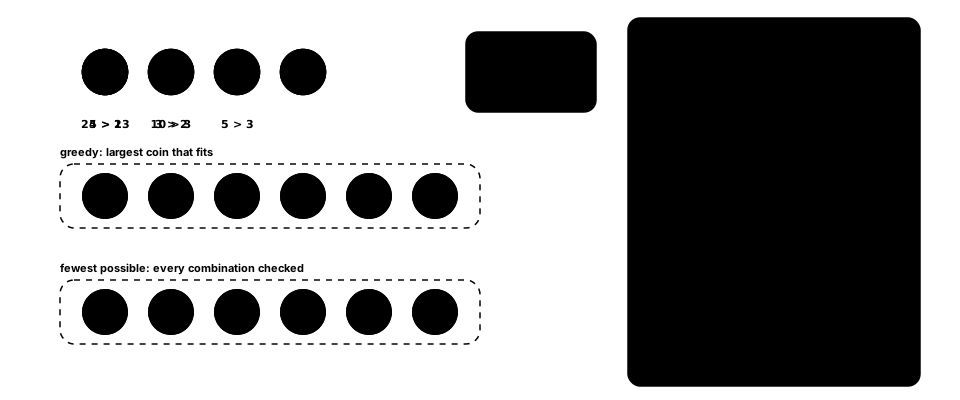
Greedy Algorithms
Take the choice that looks best right now and never revisit it: optimal for some problems, quietly wrong for others.
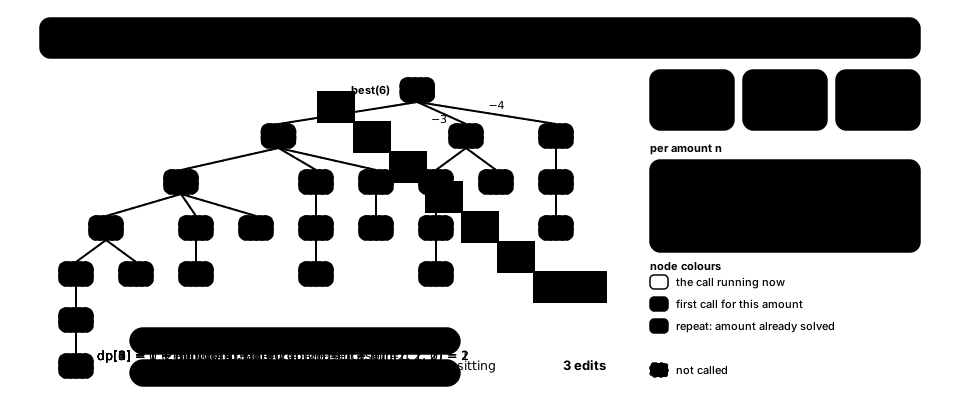
Dynamic Programming
Solve each overlapping subproblem once and reuse its answer, top-down with memoization or bottom-up with a table.
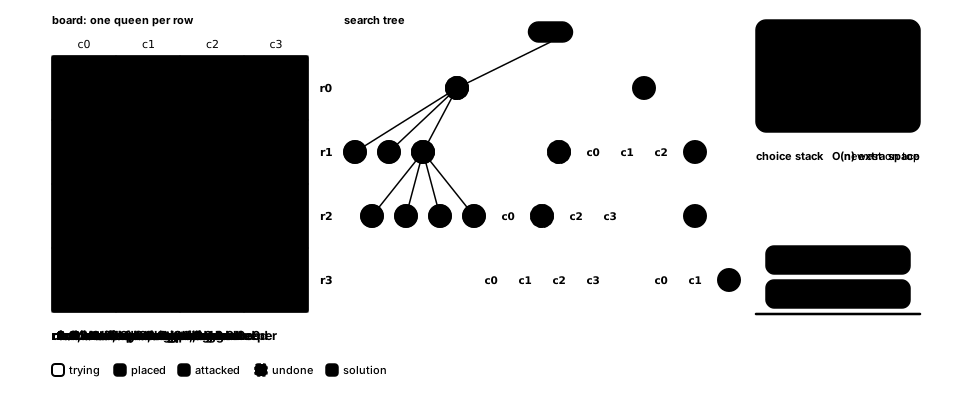
Backtracking
Build a solution one choice at a time and undo any choice that hits a dead end: N-Queens, sudoku, permutations.
Design Patterns (GoF)
The 23 classic object-oriented patterns from the Gang of Four: how objects are created, composed and made to work together.
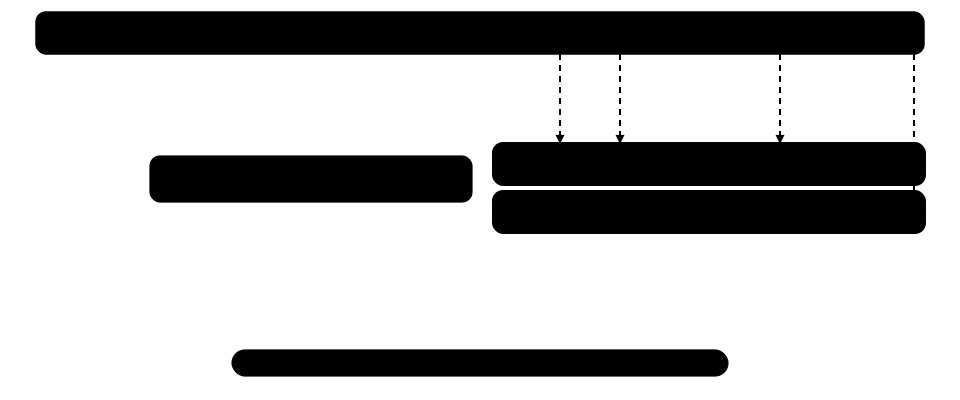
Abstract Factory
Create families of related objects through one interface, so swapping the whole family never touches client code.
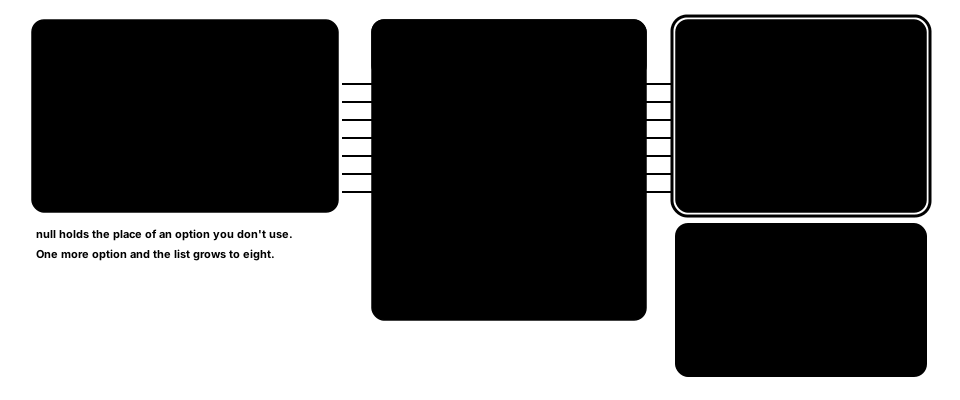
Builder
Assemble a complex object step by step and validate it once at the end, instead of calling a constructor with ten arguments.
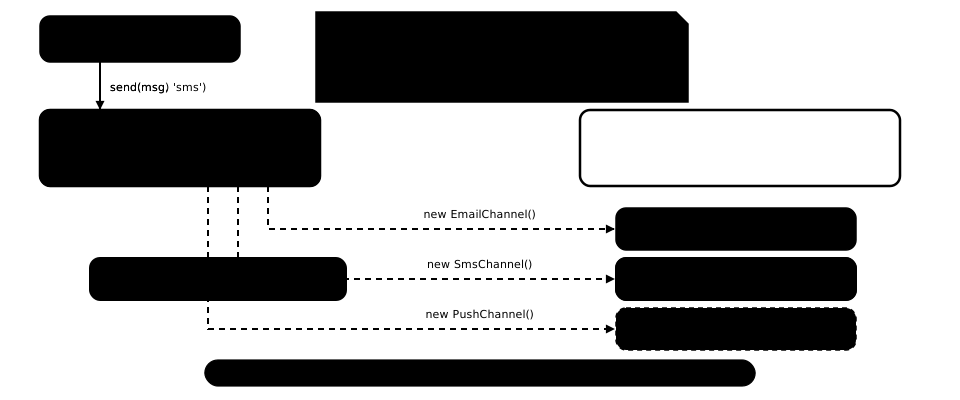
Factory Method
Let subclasses decide which class to create: the base class codes against an interface and calls an overridable create method.

Prototype
Create new objects by copying a configured prototype instead of building them from scratch, and know when a copy must go deep.
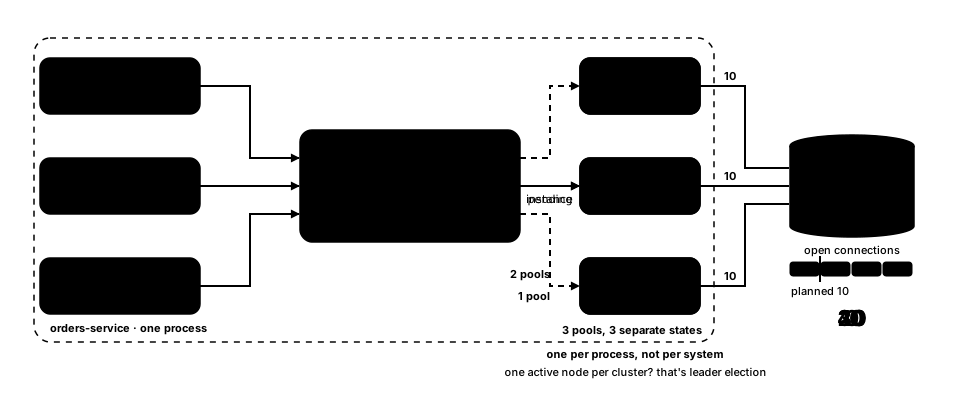
Singleton
Guarantee one instance with a global access point, and why injecting one shared instance usually serves that need better.
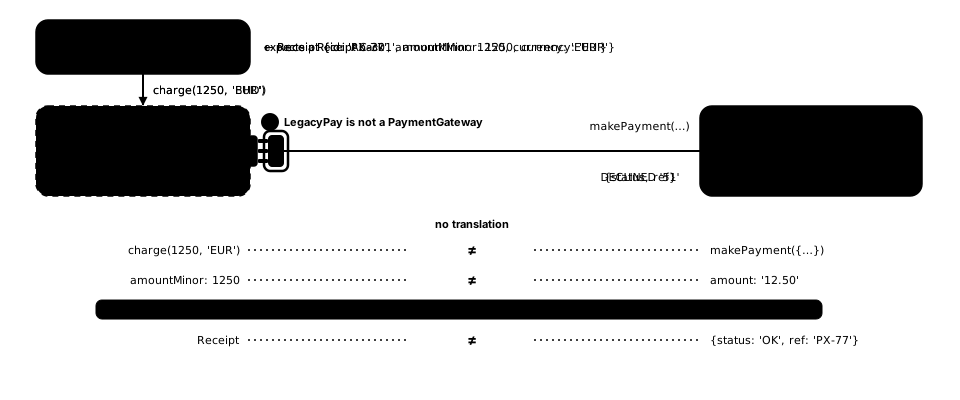
Adapter
Wrap an incompatible interface so existing code can use it unchanged: the classic fix for a third-party or legacy API.
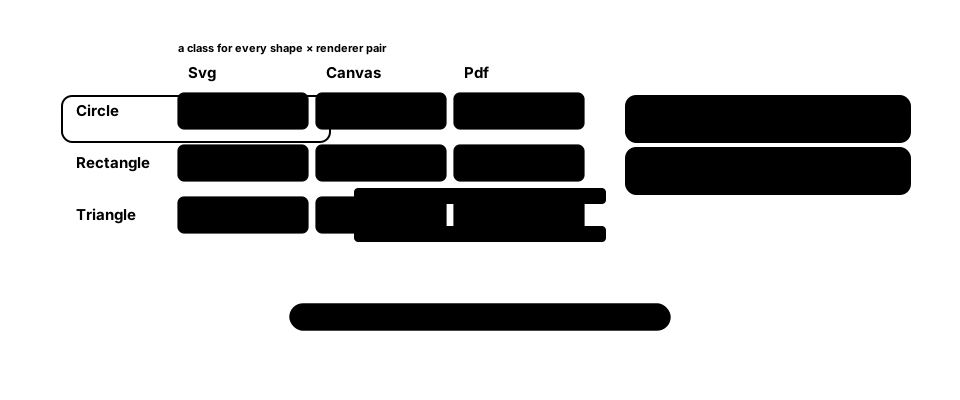
Bridge
Split an abstraction from its implementation so both vary independently: m shapes and n renderers need m + n classes, not m × n.
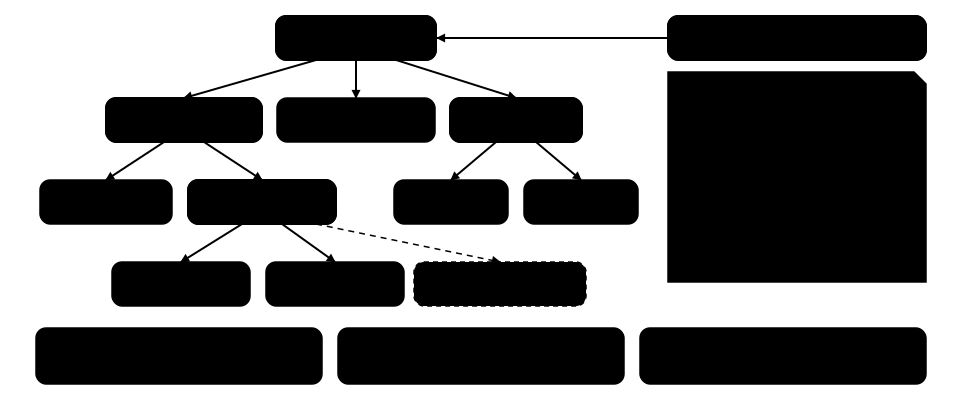
Composite
Treat single objects and groups of objects through one interface, so a whole tree answers a question the way one leaf does.
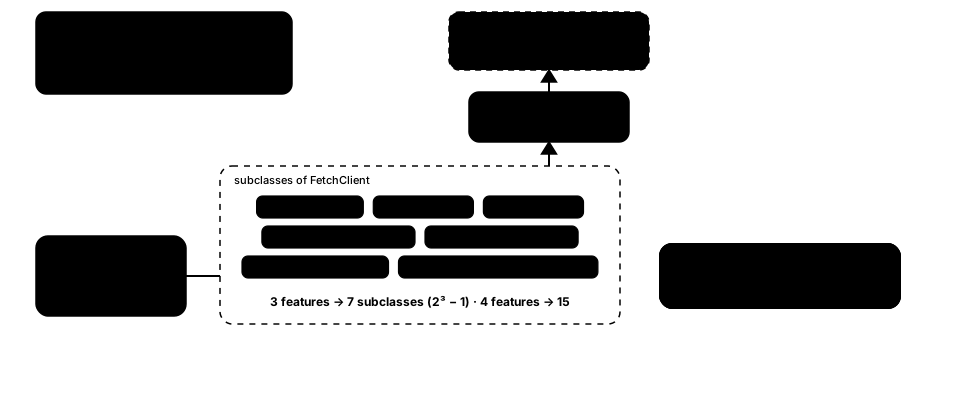
Decorator
Wrap an object to add behaviour at runtime, stacking wrappers instead of multiplying subclasses for every combination.
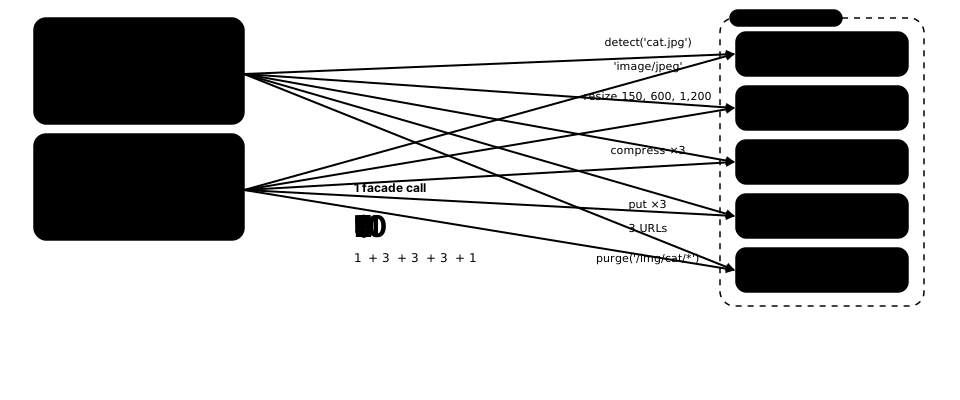
Facade
Give a complex subsystem one simple entry point, so callers make one call instead of orchestrating many classes.
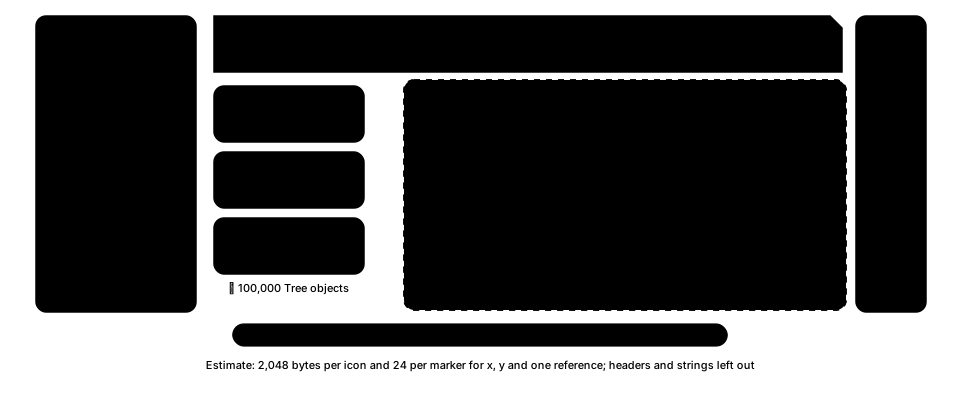
Flyweight
Share the common, immutable part of many similar objects and keep only what differs in each one, to cut memory.
Proxy
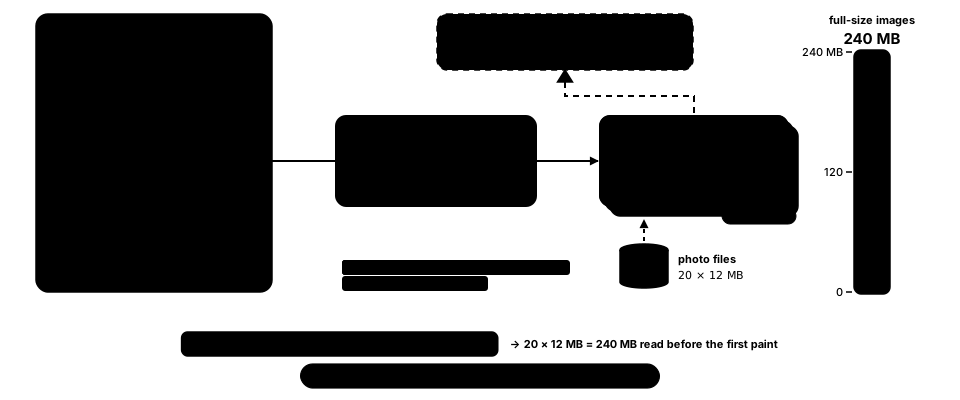
Stand in for another object with the same interface to control access to it: lazy loading, caching, access checks, remoting.
Chain of Responsibility
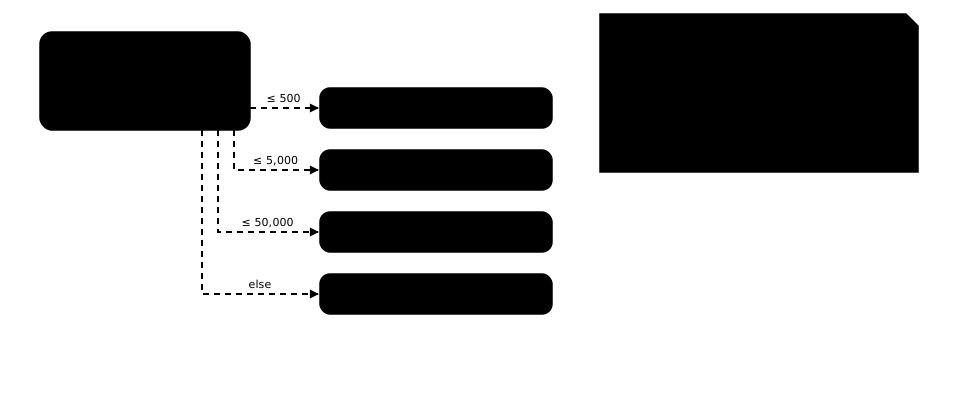
Pass a request along a chain of handlers until one handles it, so the sender never needs to know which one will.
Command
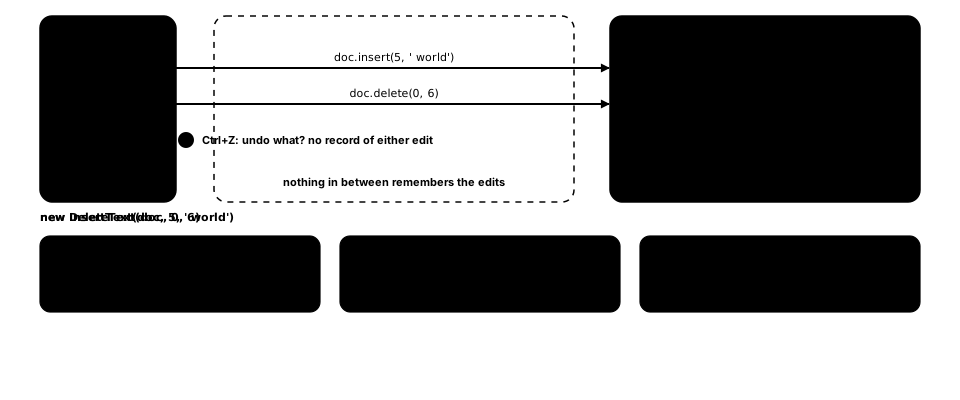
Turn a request into an object that can be queued, logged, undone and redone, decoupling who asks from who acts.
Interpreter
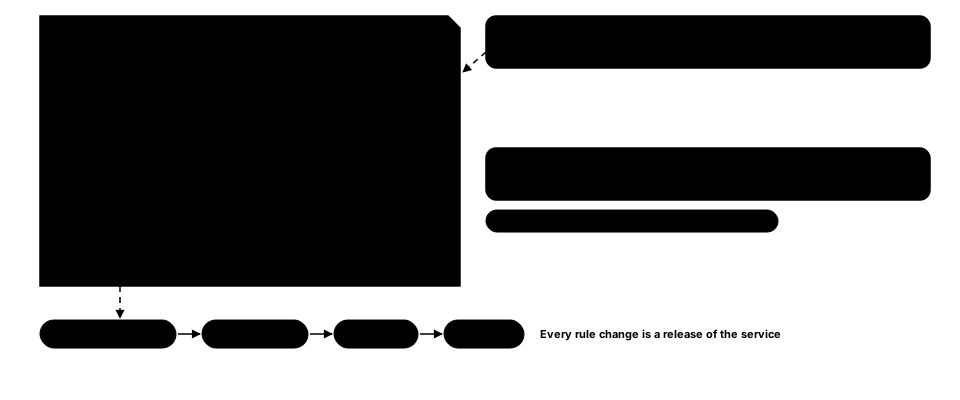
Represent a small language's grammar as classes and evaluate a sentence by walking its syntax tree.
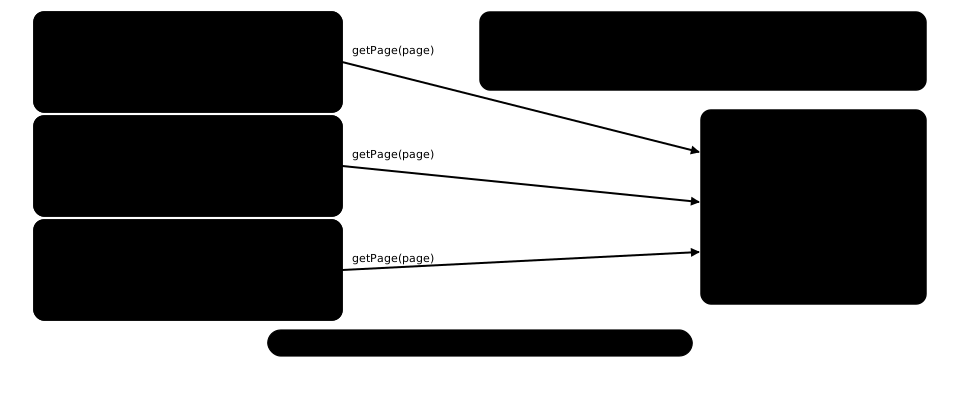
Iterator
Walk a collection one element at a time without exposing how it is stored: an array, a tree or a stream that never ends.
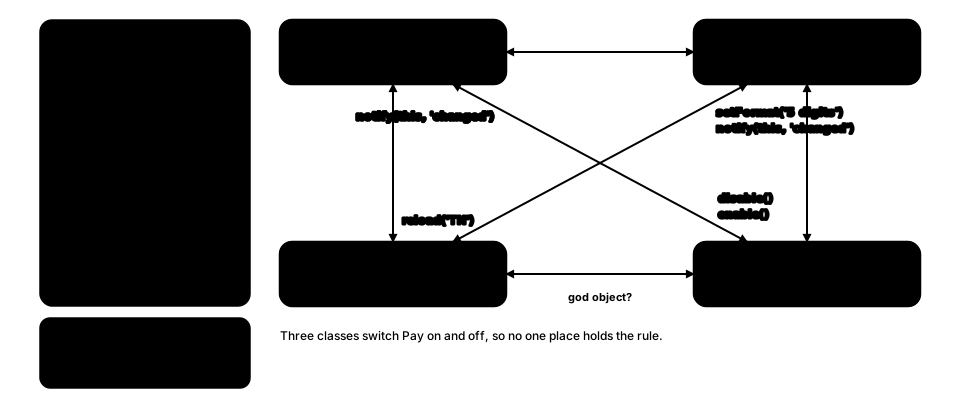
Mediator
Route the interactions between objects through one mediator, so many-to-many dependencies become one-to-many.
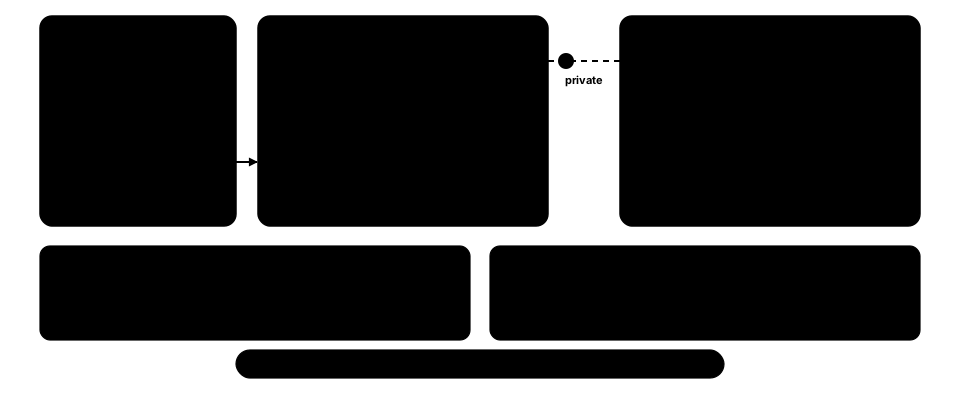
Memento
Capture an object's state in a snapshot only it can read, so it can be restored later without breaking encapsulation.
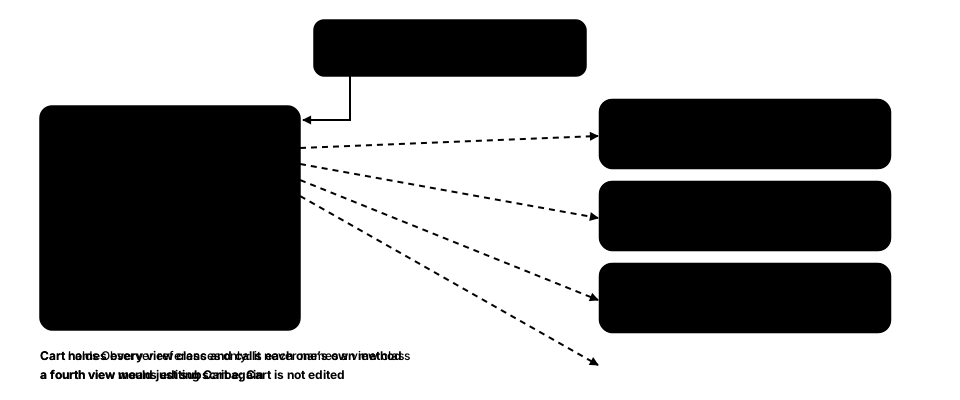
Observer
A subject notifies its subscribed observers of every change, so one change updates many dependents it never names.
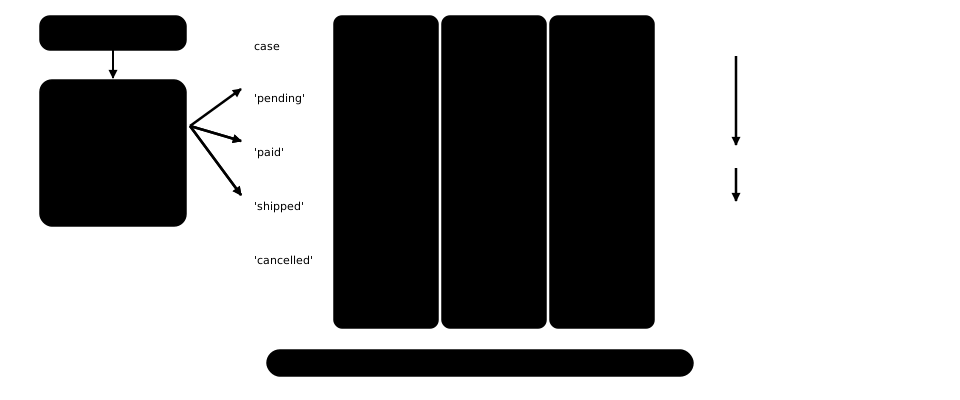
State
Let an object change its behaviour when its state changes by delegating to state objects instead of growing switch statements.
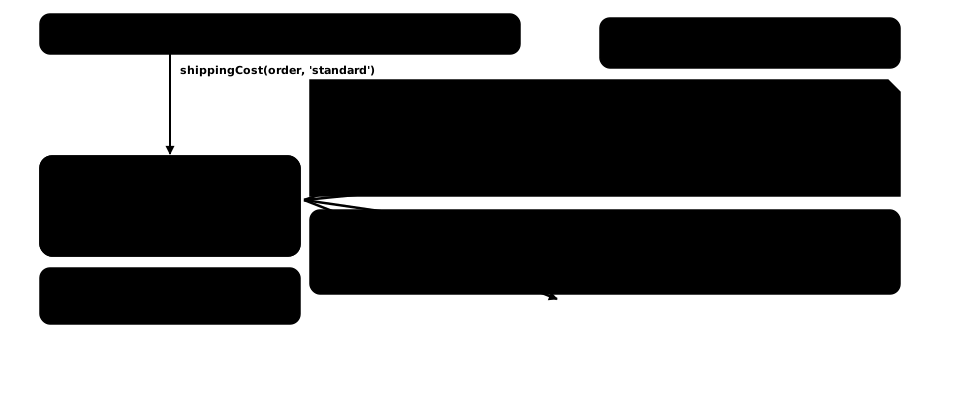
Strategy
Put interchangeable algorithms behind one interface and choose one at runtime, instead of branching inside the caller.
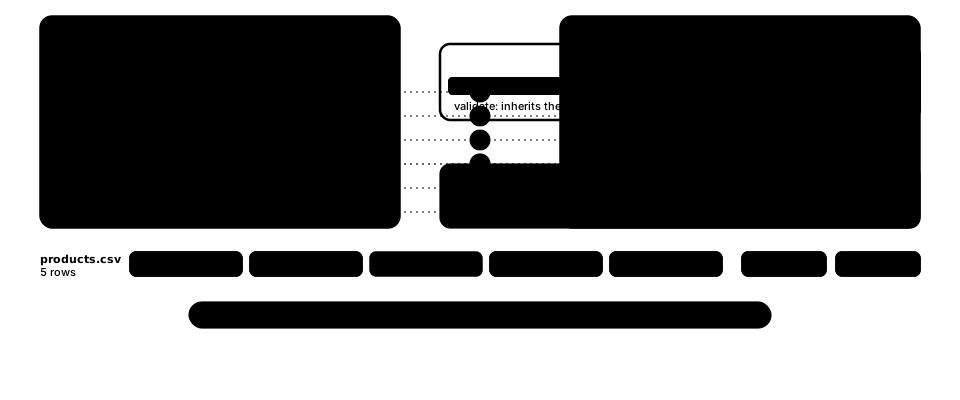
Template Method
Fix an algorithm's skeleton in a base class and let subclasses fill in individual steps, without changing their order.
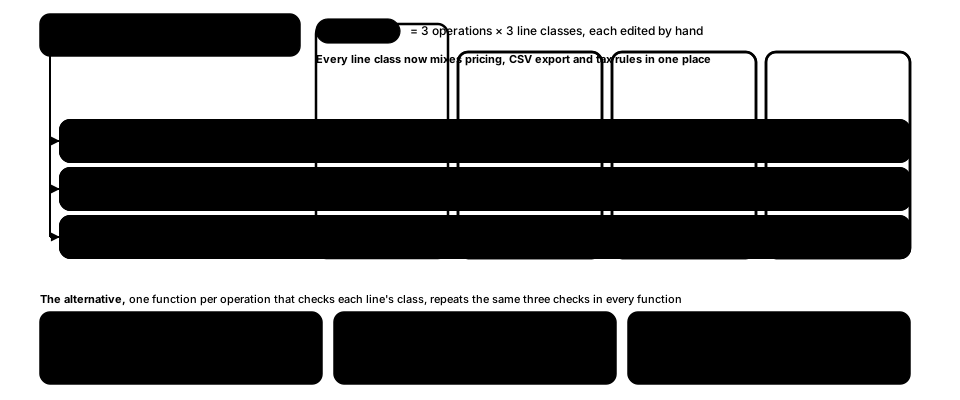
Visitor
Add new operations to a stable set of classes without editing them: each operation is a visitor that every element accepts.
System Components
The off-the-shelf building blocks of real systems: how each one works inside, where it sits in a solution and when to choose it.
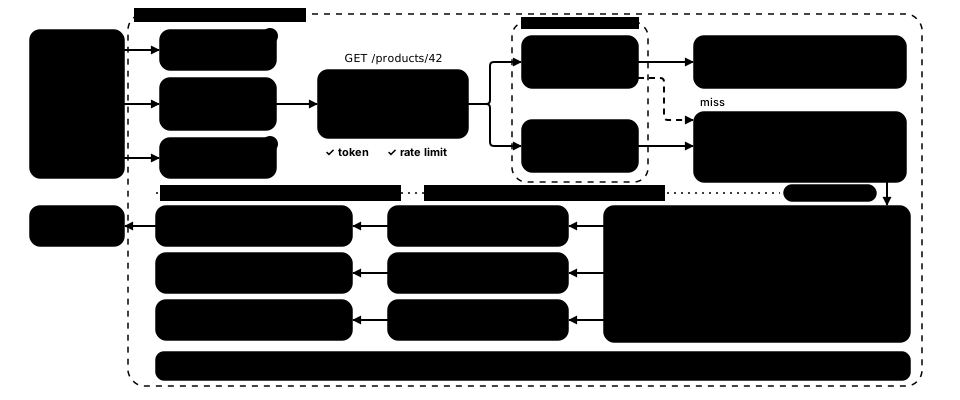
System Map
One request and one event through a typical system: DNS, CDN, load balancer, gateway, services, cache, database, queue and search.
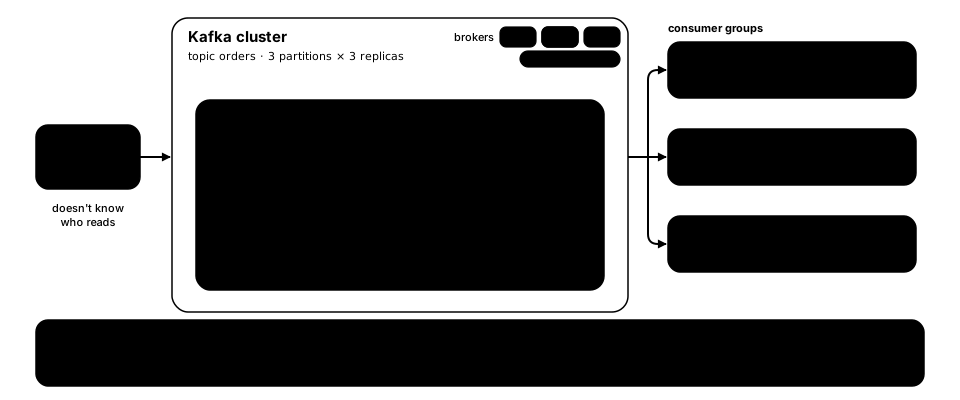
Apache Kafka
A partitioned, replicated commit log: producers append events, consumer groups read at their own pace and can replay history.
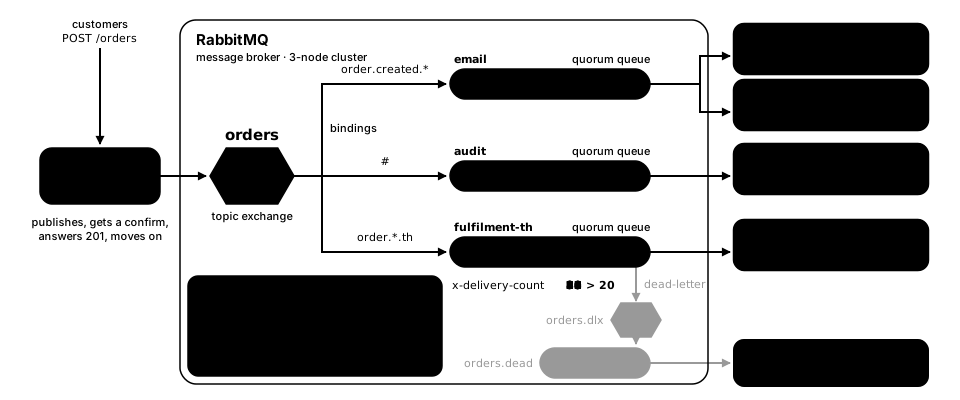
RabbitMQ
A message broker: exchanges route each message into queues, and a consumer holds it until it acknowledges or rejects it.
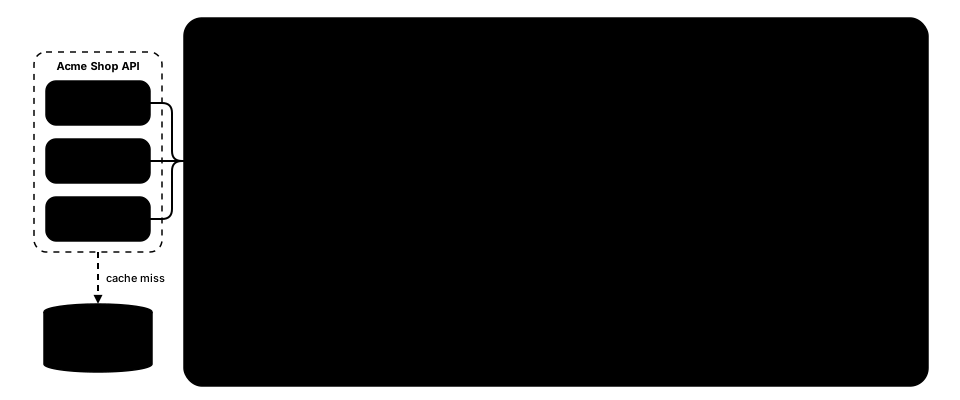
Redis & Valkey
An in-memory data-structure server: cache, session store, rate limiter, leaderboard and lightweight queue in one process.
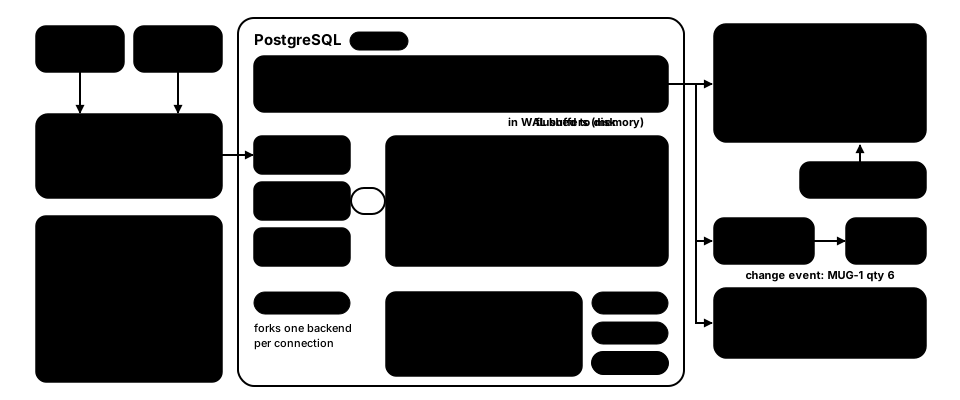
PostgreSQL
A relational database: ACID transactions with MVCC, a write-ahead log for durability and replication, SQL and rich indexes.
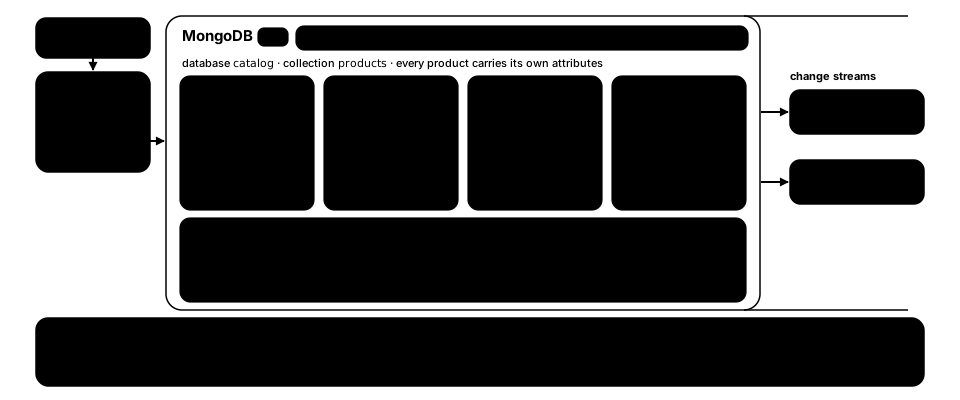
MongoDB
A document database: JSON-like documents with flexible schemas, replica sets for failover and sharding to scale out.
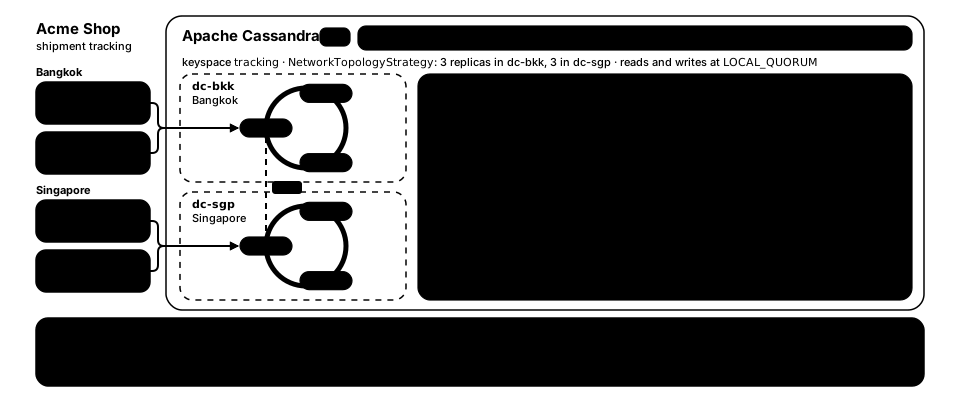
Apache Cassandra
A wide-column database built for heavy writes across data centres: a token ring, tunable consistency and LSM storage.
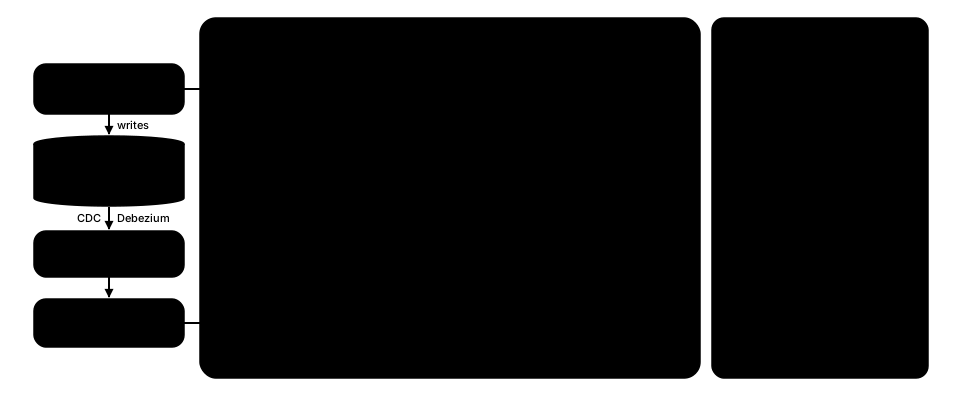
Elasticsearch & OpenSearch
Search engines built on inverted indexes: full-text queries ranked by relevance, and aggregations over sharded indexes.
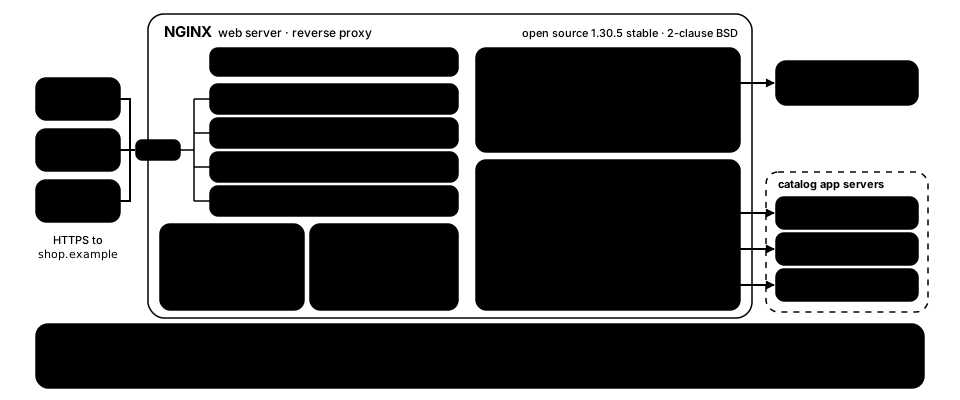
NGINX
A reverse proxy and web server: TLS termination, load balancing, caching and rate limiting in front of applications.
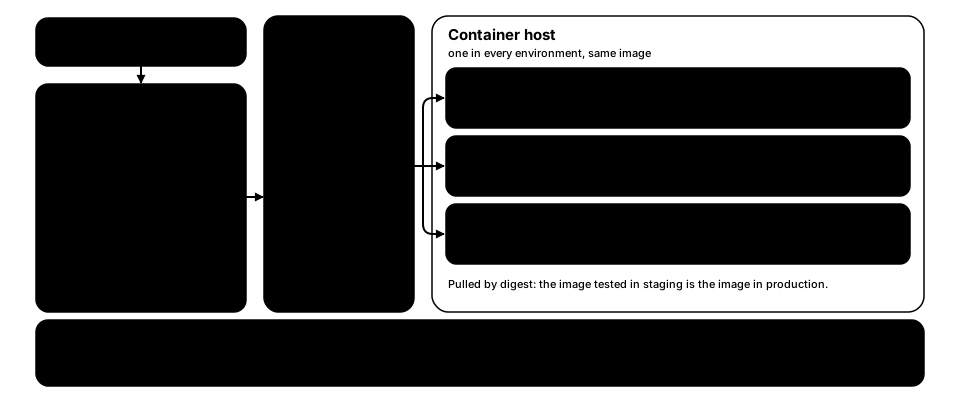
Docker & Containers
Package an app and its dependencies as an image and run it as an isolated process: layers, registries, namespaces, cgroups.
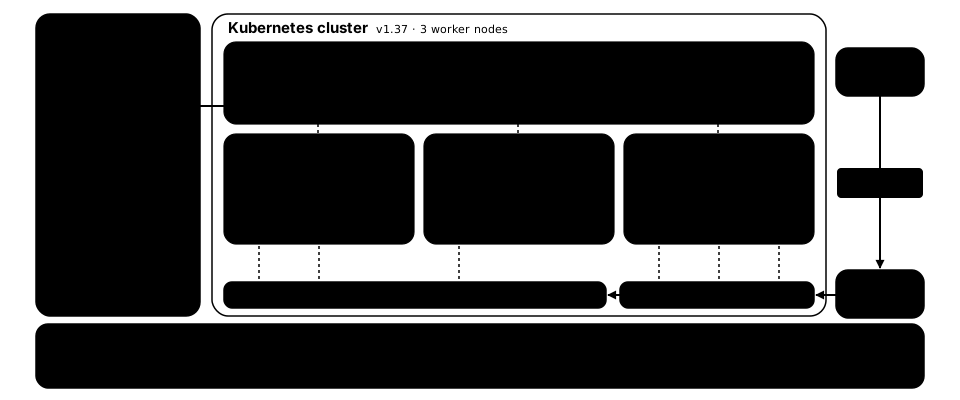
Kubernetes
A container orchestrator: you declare the desired state, and controllers keep pods scheduled, healthy and reachable.
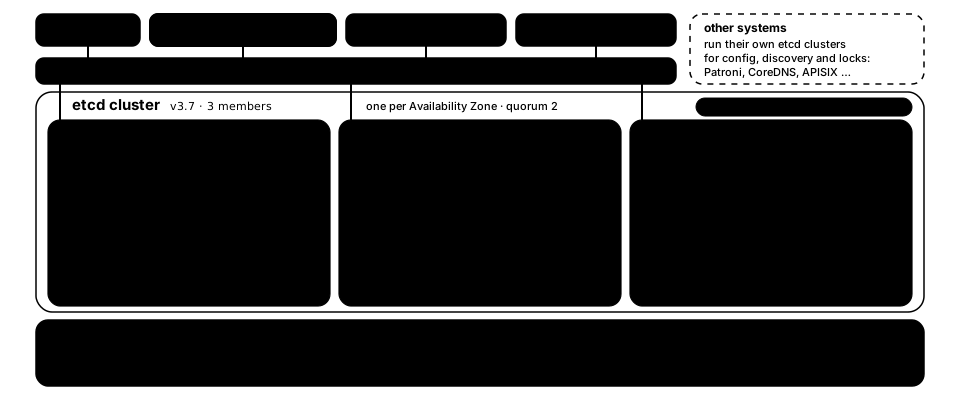
etcd
A strongly consistent key-value store on Raft that clusters use for configuration, service discovery, locks and leader election.
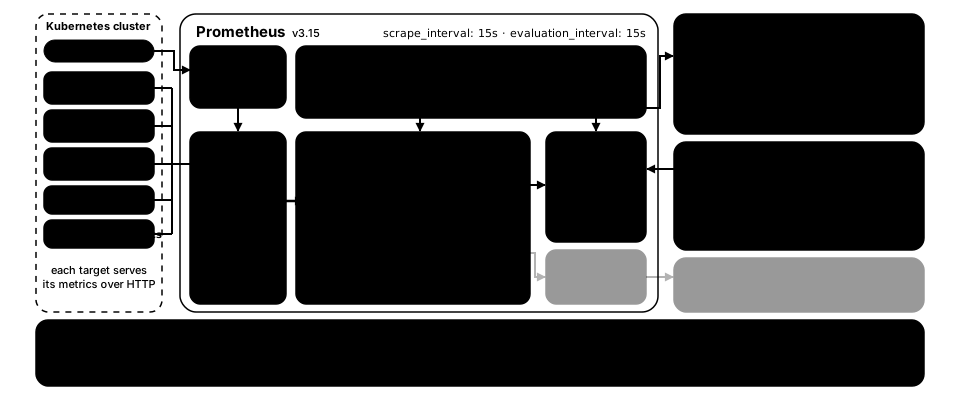
Prometheus & Grafana
Pull-based monitoring: scrape metrics into a time-series database, query them with PromQL, alert, and chart them in Grafana.
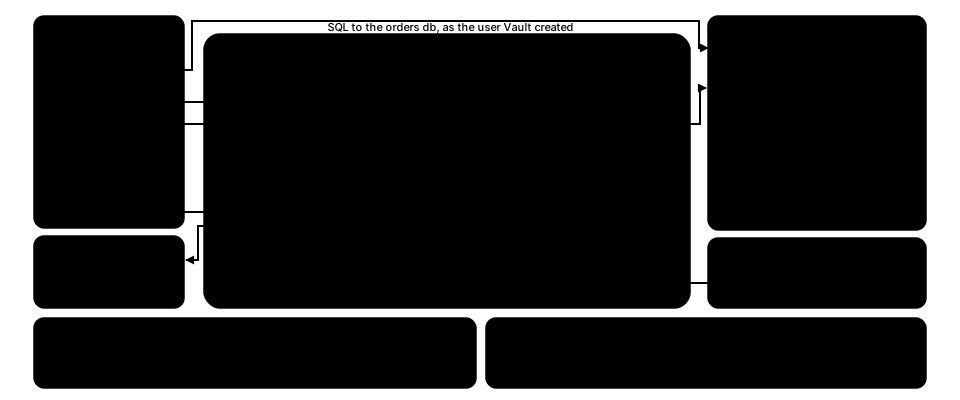
HashiCorp Vault
A secrets manager: authenticate workloads, hand out short-lived credentials, encrypt data and audit every access.
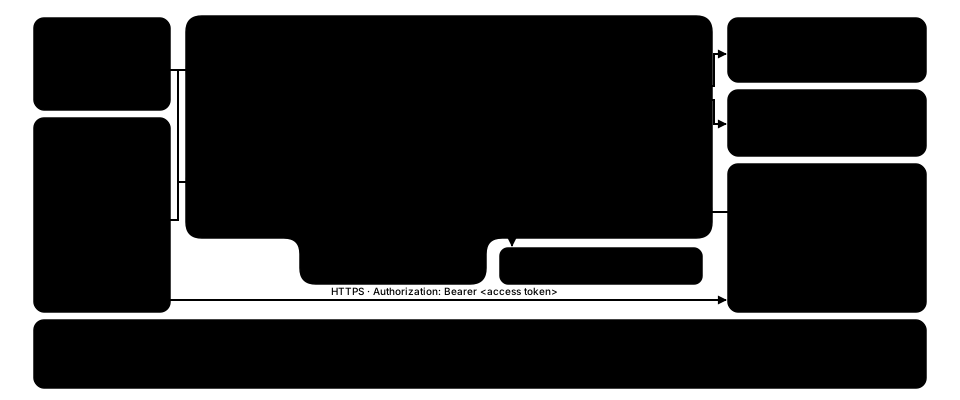
Keycloak
An open-source identity provider: user sign-in, federation and single sign-on, issuing OpenID Connect and SAML tokens.
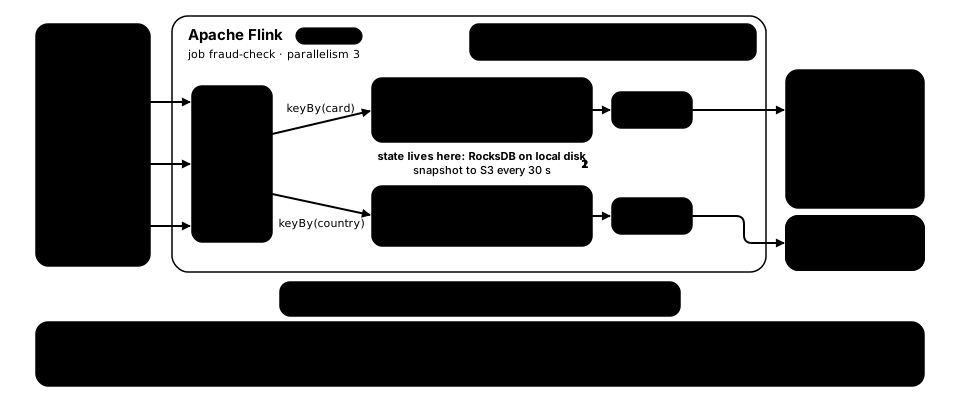
Apache Flink
A stream processor: stateful operators over unbounded streams, with event time, windows and exactly-once checkpoints.
AWS Services
Amazon Web Services' managed building blocks: how each service works, what it takes off your hands and how services combine into solutions.
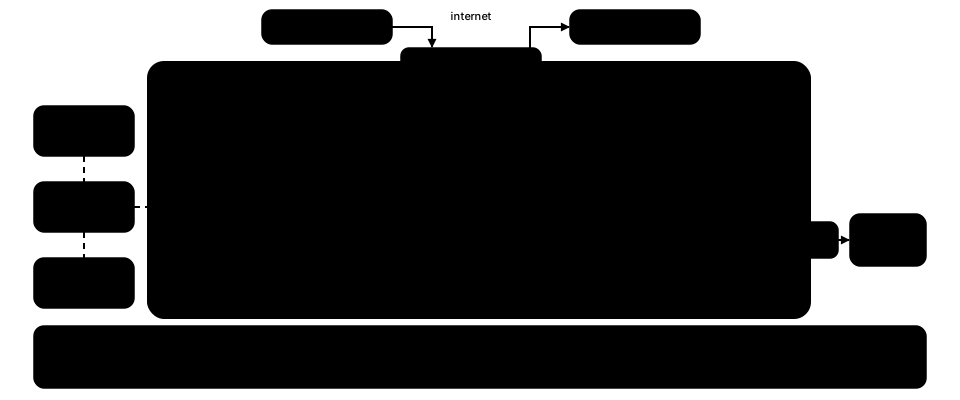
Amazon VPC
Your private network in AWS: subnets in each Availability Zone, route tables, gateways, security groups and endpoints.
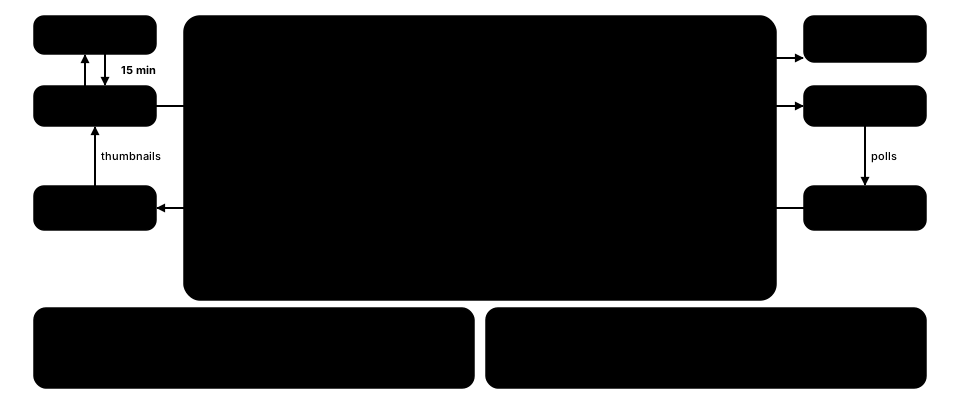
Amazon S3
Object storage: objects in buckets, addressed by key, stored across Availability Zones, with storage classes, versioning and events.
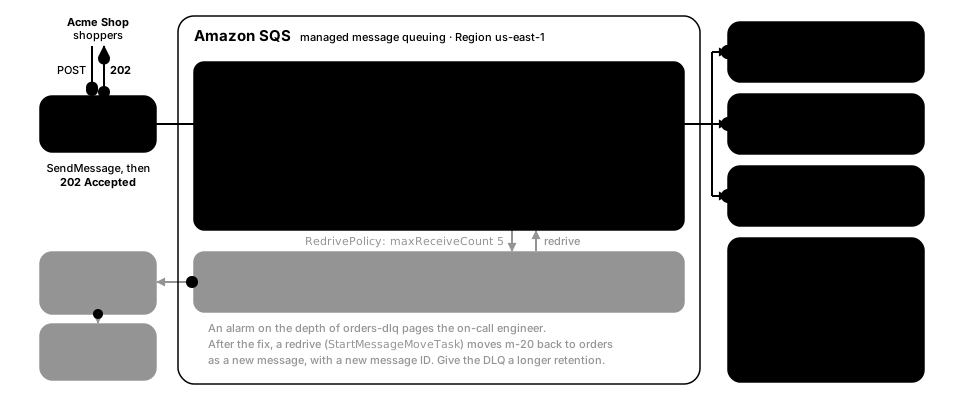
Amazon SQS
A managed message queue: consumers poll, a visibility timeout hides messages in flight, and repeated failures go to a dead-letter queue.
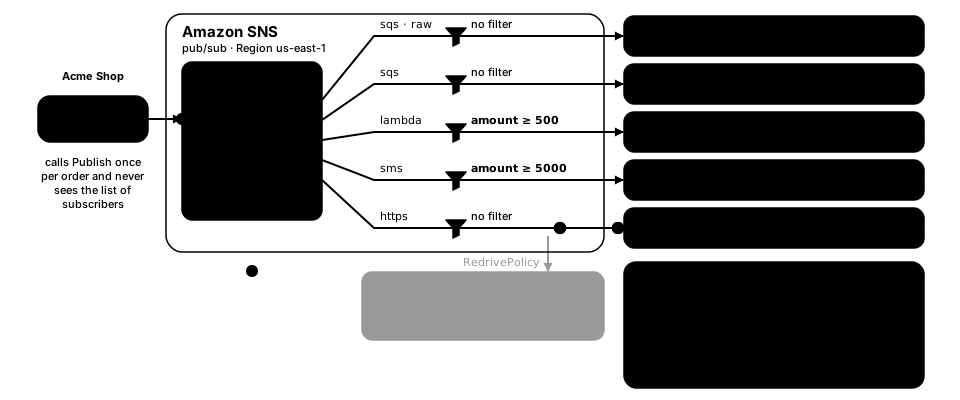
Amazon SNS
Managed publish-subscribe: a message published to a topic fans out to queues, functions, HTTP endpoints, email and SMS.
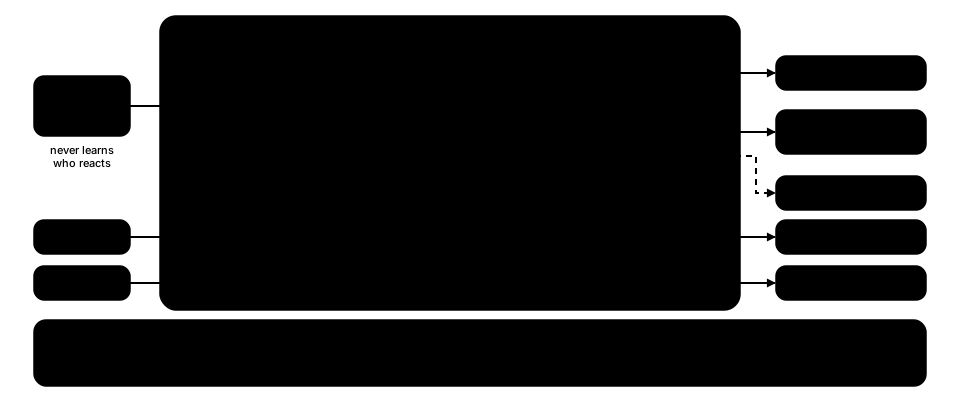
Amazon EventBridge
An event bus: rules match events from AWS services, SaaS apps and your own code by content and route them to targets.
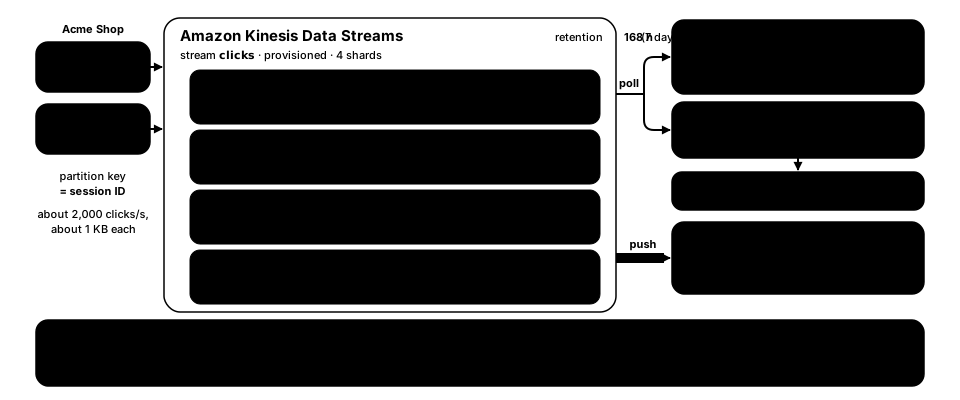
Amazon Kinesis Data Streams
Managed streaming: records go to shards by partition key, and consumers read each shard in order and can replay it.
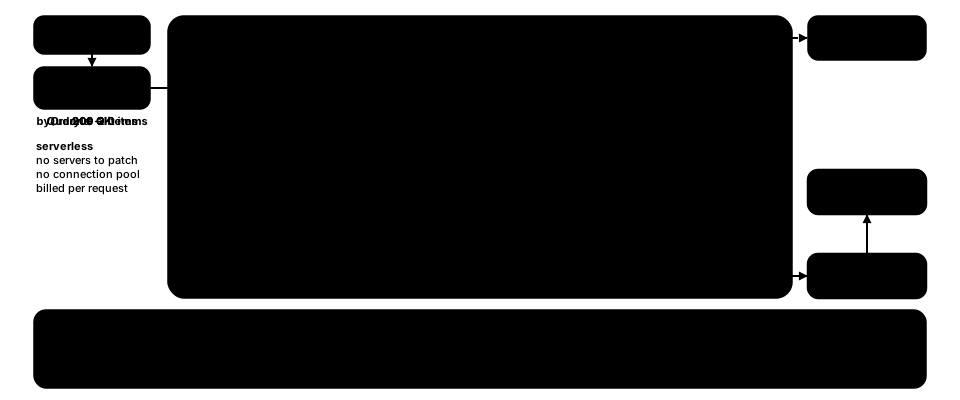
Amazon DynamoDB
A serverless key-value and document database: the partition key spreads items across partitions for single-digit-millisecond reads.
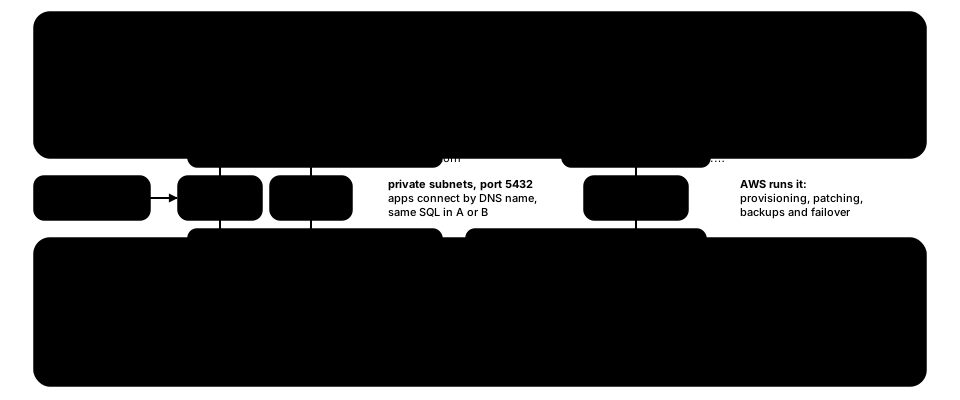
Amazon RDS & Aurora
Managed relational databases: backups, Multi-AZ failover and read replicas, and Aurora's storage shared across three zones.
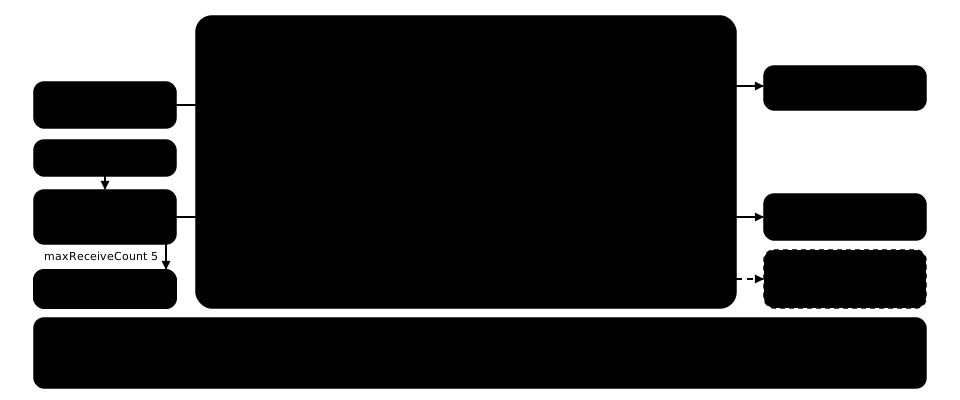
AWS Lambda
Functions as a service: code runs per event in managed execution environments that scale out with concurrency.
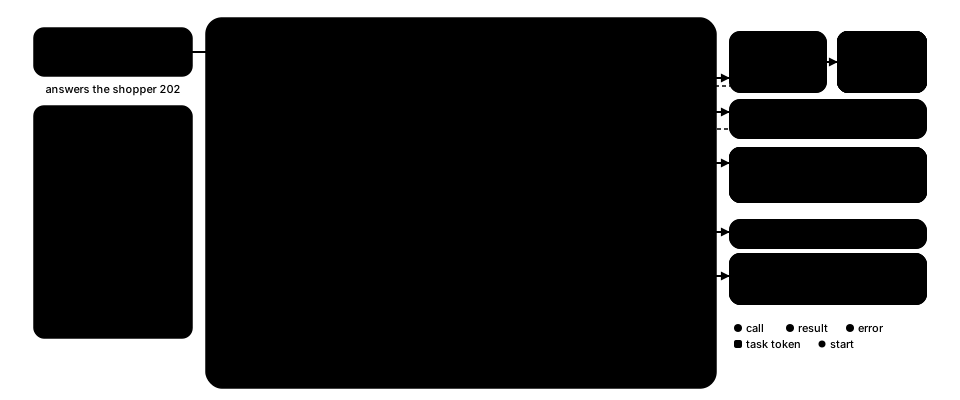
AWS Step Functions
Workflows as state machines: sequence, branch, retry, wait and run in parallel across services, with every step recorded.
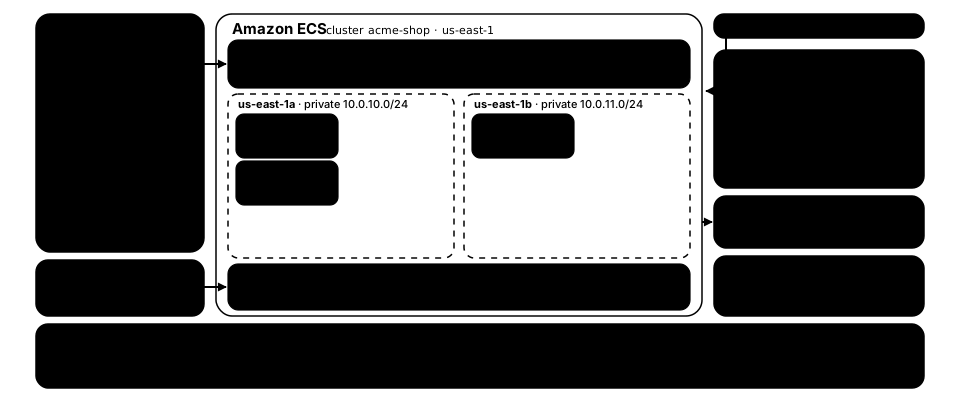
Amazon ECS & Fargate
Run containers on AWS: task definitions, services that keep tasks running behind a load balancer, on EC2 or serverless Fargate.
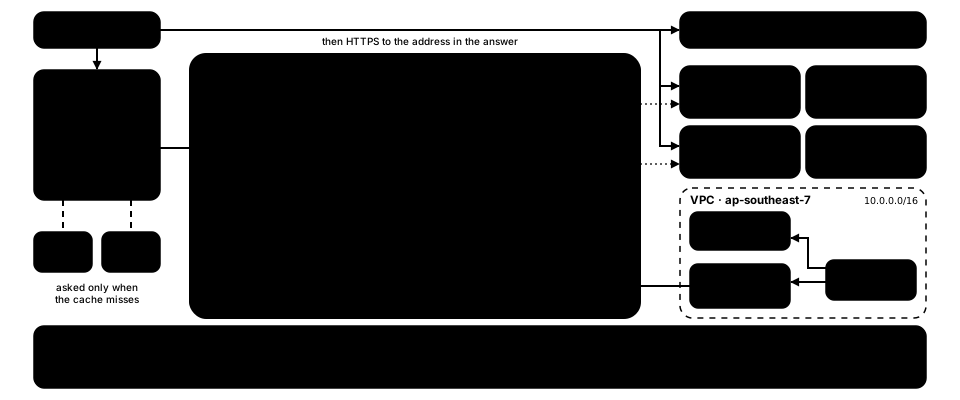
Amazon Route 53
Managed DNS: hosted zones, routing policies (weighted, latency, failover, geolocation) and health checks.
AWS IAM
Who may do what in AWS: principals, policies and roles that hand out temporary credentials, and how a request is evaluated.
Amazon Cognito
Sign-up and sign-in for your app's users: user pools issue OpenID Connect tokens, identity pools trade them for AWS credentials.
Amazon CloudWatch
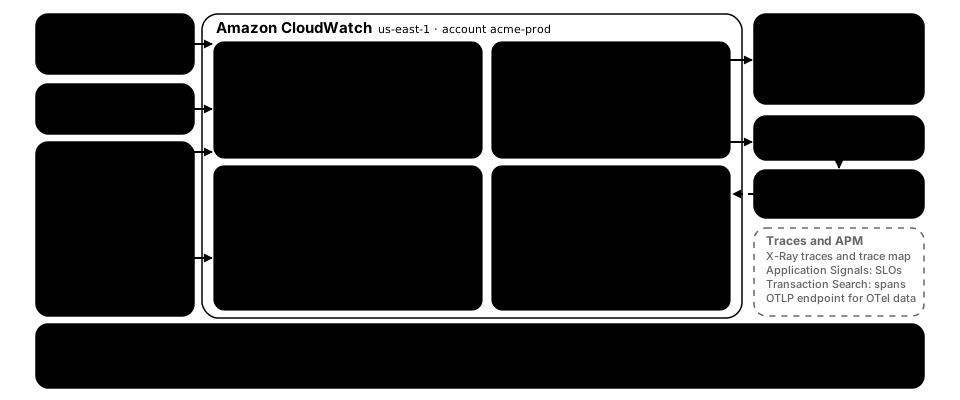
Metrics, logs, alarms and dashboards for AWS resources and your applications, in one monitoring service.
No patterns match that filter.